Public or re-public? - That is the Question
Considering that the adherents of a republic rarely know what they want instead of the Monarchy and have they hardly ever wasted a thought on what “republic” really means. The origin of the term is “res publica” or the "common cause".
Now have a look, what our republicans are doing: They sell the common good and privatise public property. To be more precise: They privatise the profit, but socialise the deficits.
The public transport in Melbourne is a good example. Transport Minister Lynne Kosky, I am sure a life long republican just like the present Prime Minister, publicly said she is not interested in running the public transport system in Victoria. Her recent tour of public transport in Europe was about private deals not public benefit. In fact the much praised public commission model for transport in Zürich was rejected out of hand by Mrs Kosky. Far better to do deals protected by “commercial–in–confidence” secrecy.
Do you recall Mr. Iemma, the man who would sell The Man from Snowy River? (He was behind the plan to sell off the Snowy River Power scheme). Now New South Welsh Premier, Morris Iemma, despite promising before the last state election not to privatise the NSW electricity system, is in a tussle with the NSW union movement who actually expected him to keep his promise. This has put Emperor Kev I in a difficult position, caught between the powerful NSW right wing and the equally powerful NSW union movement. Oh! as for the public ... they don’t even get a look in.
Mr Iemma and Mr Rudd may be republicans but they cannot privatise public assets fast enough. More deals to be done behind closed doors … even the promise not to privatise the power system was made behind closed doors between the Union and Mr Iemma.
The public were never and are not part of the discussions in any way.
PPP = private profit preferred …
If you cannot trust the public service and the public assets to the politicians, why would you give them total power by making one of them president of a republic? To whom would they sell the country?
Thursday, 1 May 2008


Saturday, 26 April 2008
Why wasn't the Queen invited to Villers-Bretonneux?

What a difference one person can make. Almost exactly to the day a year ago the Canadians commemorated their war dead at Vimy. On 9th April 2007 a monument was re-dedicated to remember the bitter Battle of Vimy Ridge in which more than 3,500 Canadian soldiers died. To quote a report: Although it was the first day of the official part of the presidential campaign in France, the main TV news broadcast from France 2 in Paris, rebroadcast by SBS in Australia on Tuesday morning, 10 April 2007, began with film of what the presenter called a rare event: Queen Elizabeth II was on the soil of France.
He went on to describe her appearance was “en tant que souveraine du Canada”. Her Majesty was in France, as Queen of Canada, to preside over the ceremonies to rededicate the great Canadian Memorial of the Battle of Vimy Ridge, fought ninety years ago. The refurbished memorial was originally dedicated by King Edward VIII, as King of Canada, and it stands on what will forever be Canadian land, a mark of the gratitude France bears for Canada for that great victory.
In the presence of over 15,000 Canadians, The Queen, in English and in French, paid tribute to the Canadians who took the ridge, a German stronghold which she said had become a "symbol of futility and despair". "It was a stunning victory," she said. "In capturing this formidable objective, the Canadian Corps transformed Vimy Ridge from a symbol of despair into a source of inspiration. After two-and-a half years of deadly stalemate, it now seemed possible that the Allies would prevail and peace might one day be restored".
Nothing of this kind took place, when on ANZAC Day 2008 the Australians commemorated their war dead. The Age: It was the first Anzac Day dawn service in the Somme, an official ceremony that many hope will carry on in tandem with the Gallipoli tradition — and remind Australians of the 46,000 compatriots who fought and died on the Western Front. …
At dawn yesterday, … 3000 Australian men and women joined their French brothers and sisters on a Somme hilltop to keep the promise made by a long-dead mayor. …
Alan Griffin, Kevin Rudd's … Veterans' Affairs Minister, made clear to the crowd the need for a national realignment of understanding: "It must be said that our strong connection with the Anzacs at Gallipoli has, over the years, overshadowed our commemoration of the Australians who gave so much on the Western Front."
Unlike last year there was no Queen. Obviously the Queen of Australia was not invited to address the people who had gathered in Villers-Bretonneux. There was no Prime Minister, neither an Australian, nor French, and there was hardly any media coverage, except by the Australian media. The French evening news of France 2 that had so prominently reported on the Queen of Canada’s speech, did not even mention that there was an Australian commemoration gathering.
The BBC last year reported: The Queen has paid tribute to thousands of Canadian troops who lost their lives in World War I as she unveiled a restored monument in France. The memorial remembers the bitter Battle of Vimy Ridge in which more than 3,500 Canadian soldiers died. She was joined at the memorial, near Lille, by Canadian Prime Minister Stephen Harper and his French counterpart, Dominique de Villepin. The ceremony featured prayers, the Last Post and a minute's silence. And this year? The BBC followed their French colleagues’ example and ignored the Australians.
What a difference a person makes. Had the Australian government invited the Queen of Australia to lead the commemoration, it would have received the attention that the war dead deserved. After all: many, if not most of them, died for King and Country. Even if the Australian republicans deny this fact, it remains deep in the heart of the First World War.

What a difference one person can make. Almost exactly to the day a year ago the Canadians commemorated their war dead at Vimy. On 9th April 2007 a monument was re-dedicated to remember the bitter Battle of Vimy Ridge in which more than 3,500 Canadian soldiers died. To quote a report: Although it was the first day of the official part of the presidential campaign in France, the main TV news broadcast from France 2 in Paris, rebroadcast by SBS in Australia on Tuesday morning, 10 April 2007, began with film of what the presenter called a rare event: Queen Elizabeth II was on the soil of France.
He went on to describe her appearance was “en tant que souveraine du Canada”. Her Majesty was in France, as Queen of Canada, to preside over the ceremonies to rededicate the great Canadian Memorial of the Battle of Vimy Ridge, fought ninety years ago. The refurbished memorial was originally dedicated by King Edward VIII, as King of Canada, and it stands on what will forever be Canadian land, a mark of the gratitude France bears for Canada for that great victory.
In the presence of over 15,000 Canadians, The Queen, in English and in French, paid tribute to the Canadians who took the ridge, a German stronghold which she said had become a "symbol of futility and despair". "It was a stunning victory," she said. "In capturing this formidable objective, the Canadian Corps transformed Vimy Ridge from a symbol of despair into a source of inspiration. After two-and-a half years of deadly stalemate, it now seemed possible that the Allies would prevail and peace might one day be restored".
Nothing of this kind took place, when on ANZAC Day 2008 the Australians commemorated their war dead. The Age: It was the first Anzac Day dawn service in the Somme, an official ceremony that many hope will carry on in tandem with the Gallipoli tradition — and remind Australians of the 46,000 compatriots who fought and died on the Western Front. …
At dawn yesterday, … 3000 Australian men and women joined their French brothers and sisters on a Somme hilltop to keep the promise made by a long-dead mayor. …
Alan Griffin, Kevin Rudd's … Veterans' Affairs Minister, made clear to the crowd the need for a national realignment of understanding: "It must be said that our strong connection with the Anzacs at Gallipoli has, over the years, overshadowed our commemoration of the Australians who gave so much on the Western Front."
Unlike last year there was no Queen. Obviously the Queen of Australia was not invited to address the people who had gathered in Villers-Bretonneux. There was no Prime Minister, neither an Australian, nor French, and there was hardly any media coverage, except by the Australian media. The French evening news of France 2 that had so prominently reported on the Queen of Canada’s speech, did not even mention that there was an Australian commemoration gathering.
The BBC last year reported: The Queen has paid tribute to thousands of Canadian troops who lost their lives in World War I as she unveiled a restored monument in France. The memorial remembers the bitter Battle of Vimy Ridge in which more than 3,500 Canadian soldiers died. She was joined at the memorial, near Lille, by Canadian Prime Minister Stephen Harper and his French counterpart, Dominique de Villepin. The ceremony featured prayers, the Last Post and a minute's silence. And this year? The BBC followed their French colleagues’ example and ignored the Australians.
What a difference a person makes. Had the Australian government invited the Queen of Australia to lead the commemoration, it would have received the attention that the war dead deserved. After all: many, if not most of them, died for King and Country. Even if the Australian republicans deny this fact, it remains deep in the heart of the First World War.
Wednesday, 23 April 2008
The Australia of the 21st century is a Monarchy
"The Australia of the 21st century will be a republic," Prime Minister Rudd told the ABC's 7.30 Report on Monday, 21st April on Her Majesty's 82nd Birthday. Mr Rudd told Kerry O'Brian he would proceed slowly.
92 Years of the 21st century are left, that gives the Prime Minister plenty of time to consider his options. But his threat will hang over us for these 92 years, since he may have the hope that by the turn of the century one of his granddaughters might be the first president of "an" [undefined] Australian republic. Meanwhile republicans will think on the best possible way to achieve their dream. How many referenda will it take?
Australia will be a republic within two years if delegates to the 2020 summit in Canberra have their way.
But what, if they fail again in 2010? Will they launch another offensive in 2013? Have a referendum with every federal election until one day one referendum might get the result they want? Or will they wait for the death of Her Majesty, as the old republican activist Malcolm Turnbull advised them?
What about the idea to make the Monarchy in Australia more approachable, more relevant and more visible to the people? It is not Her Majesty's fault that neither she nor another member of our Royal Family don't spend more time on the 5th continent. The Queen acts on Her - Australian federal and state - ministers' advice.
In between the referenda the republicans could think about the flag they might like to give the Australian republic. Here is a suggestion, which would be a suitable symbolism of the republic's outlook.

After all, isn't the purpose of the change "to get rid of the old colonial ties" and replace the Union Jack with something more appropriate? Critics may argue that Queensland might be overrepresented in the new republic's flag, but we should honour the efforts especially one Queenslander puts into the "republic question".
"The Australia of the 21st century will be a republic," Prime Minister Rudd told the ABC's 7.30 Report on Monday, 21st April on Her Majesty's 82nd Birthday. Mr Rudd told Kerry O'Brian he would proceed slowly.
92 Years of the 21st century are left, that gives the Prime Minister plenty of time to consider his options. But his threat will hang over us for these 92 years, since he may have the hope that by the turn of the century one of his granddaughters might be the first president of "an" [undefined] Australian republic. Meanwhile republicans will think on the best possible way to achieve their dream. How many referenda will it take?
Australia will be a republic within two years if delegates to the 2020 summit in Canberra have their way.
But what, if they fail again in 2010? Will they launch another offensive in 2013? Have a referendum with every federal election until one day one referendum might get the result they want? Or will they wait for the death of Her Majesty, as the old republican activist Malcolm Turnbull advised them?
What about the idea to make the Monarchy in Australia more approachable, more relevant and more visible to the people? It is not Her Majesty's fault that neither she nor another member of our Royal Family don't spend more time on the 5th continent. The Queen acts on Her - Australian federal and state - ministers' advice.
In between the referenda the republicans could think about the flag they might like to give the Australian republic. Here is a suggestion, which would be a suitable symbolism of the republic's outlook.

After all, isn't the purpose of the change "to get rid of the old colonial ties" and replace the Union Jack with something more appropriate? Critics may argue that Queensland might be overrepresented in the new republic's flag, but we should honour the efforts especially one Queenslander puts into the "republic question".
Tuesday, 22 April 2008
Please keep off the "Astroturf"

Grassroots community groups help ordinary citizens, pressure governments and frame debates.
Where would we be if groups such as the National Trust or anti-pollution groups had not fought vested interests in the 1960s and 1970s to protect our historic buildings or environment.
But a new game is afoot ... so-called "astroturfing".
Astroturf is an artificial grass and astroturf groups are artificial "grassroots" groups set up to push an business or political group's agenda while pretending to be independent or community group.
Such astroturf groups are everywhere these days. You see them quoted in the newspapers and they attend conferences such as Mr Rudd's 2020 Summit pretending to be the voice of the people, but actually pushing their backer's agenda.
Such groups as Get Up! ... A group that is officially unaligned but which had 118 delegates out of the 1000 summiteers at that 2020 Summit. Piers Akerman: "Incredibly, 118 of the chosen delegates are GetUp! members, including our Executive Director Brett Solomon." He gained fame for his extraordinary performance at the Summit: “Is anyone actually going to argue that we shouldn't be a republic?” summiteer Brett Solomon of grassroots political movement GetUp asked the 100 delegates in the summit's governance session. One lonely figure shot up a defiant hand, prompting laughter around the room. A remarkable way to deal with a differing opinion, which speaks volumes for his respect for people having a dissenting point of view.
It may be unaligned (which i doubt), but it is stridently pro Kevin and anti-monarchy. It has all the signs of being an ALP astroturf group!
Beware of "grassroots" groups that seem to be little more than fronts for political or business interests and pretending to represent the community.
The whole 2020 Summit seems to have been the ultimate astroturfing exercise ... a group supposedly representing the people of Australia but in fact hand crafted to ensure a predictable outcome.
All they could demonstrate was that their ability to organise a vote was more advanced than that of the Monarchists. They achieved a one hundred precent vote in favour of "a" republic at the Summit, which is ridiculous when opinion polls show that their support base in the population is just 45 percent.
However, their performance was a wakeup call for the Monarchists. The loyal supporters could certainly learn from the grassroot skills of the republicans of this country who like so much signing their posts with "Viva la révolution!". In doing so they not only mix Spanish and French in one senctence, but also show how little they know about the Australians.

Grassroots community groups help ordinary citizens, pressure governments and frame debates.
Where would we be if groups such as the National Trust or anti-pollution groups had not fought vested interests in the 1960s and 1970s to protect our historic buildings or environment.
But a new game is afoot ... so-called "astroturfing".
Astroturf is an artificial grass and astroturf groups are artificial "grassroots" groups set up to push an business or political group's agenda while pretending to be independent or community group.
Such astroturf groups are everywhere these days. You see them quoted in the newspapers and they attend conferences such as Mr Rudd's 2020 Summit pretending to be the voice of the people, but actually pushing their backer's agenda.
Such groups as Get Up! ... A group that is officially unaligned but which had 118 delegates out of the 1000 summiteers at that 2020 Summit. Piers Akerman: "Incredibly, 118 of the chosen delegates are GetUp! members, including our Executive Director Brett Solomon." He gained fame for his extraordinary performance at the Summit: “Is anyone actually going to argue that we shouldn't be a republic?” summiteer Brett Solomon of grassroots political movement GetUp asked the 100 delegates in the summit's governance session. One lonely figure shot up a defiant hand, prompting laughter around the room. A remarkable way to deal with a differing opinion, which speaks volumes for his respect for people having a dissenting point of view.
It may be unaligned (which i doubt), but it is stridently pro Kevin and anti-monarchy. It has all the signs of being an ALP astroturf group!
Beware of "grassroots" groups that seem to be little more than fronts for political or business interests and pretending to represent the community.
The whole 2020 Summit seems to have been the ultimate astroturfing exercise ... a group supposedly representing the people of Australia but in fact hand crafted to ensure a predictable outcome.
All they could demonstrate was that their ability to organise a vote was more advanced than that of the Monarchists. They achieved a one hundred precent vote in favour of "a" republic at the Summit, which is ridiculous when opinion polls show that their support base in the population is just 45 percent.
However, their performance was a wakeup call for the Monarchists. The loyal supporters could certainly learn from the grassroot skills of the republicans of this country who like so much signing their posts with "Viva la révolution!". In doing so they not only mix Spanish and French in one senctence, but also show how little they know about the Australians.
Sunday, 20 April 2008
Rudd's Brave New World for Australia

That is what they always wanted: an unanimous vote for “a” republic. Australian republicans have never admitted their defeat in the 1999 referendum, when 55 percent of the Australian people said NO to their republican model.
Instead they accused John Howard of having “rigged” the referendum. But nobody knows better what "rigging" means than republicans. With republican politicians now in power in Canberra as well as in the other capital cities, they can show their true colours. Prime Minister Kevin Rudd wanted “Australia’s best and brightest” at the 2020 Summit this weekend. It is obvious, that the organisers considered only republicans as good and bright enough to get an invitation. No-one of the victorious No camp was considered worthy to be among the 1000 participants. Oh, wrong, ONE woman was a Monarchist. The republic motion was passed by 99.9 percent. What a travestie to a real debate.
“Is anyone actually going to argue that we shouldn't be a republic?” summiteer Brett Solomon of grassroots political movement GetUp asked the 100 delegates in the summit's governance session.
One lonely figure shot up a defiant hand, prompting laughter around the room.
What else can you expect from a handpicked audience to which Monarchists weren’t invited. Likeminded masses cannot accept dissent. This is the true face of the republic. Hysteria and a totalitarian approach to people who hold a different opinion. They are ridiculed away, they have to disappear from the scene, they don’t exist anymore.
It is good to know that at present not a hysterical audience at a summit of unelected non-delegates decide on Australia’s future, but the Australian people have to approve changes to our Constitution. And – so far – we don’t know, which model should replace our Australian Monarchy. Monarchists cannot be excluded from campaigning for the Monarchy. It s clearer then ever: Freedom wears a Crown.

That is what they always wanted: an unanimous vote for “a” republic. Australian republicans have never admitted their defeat in the 1999 referendum, when 55 percent of the Australian people said NO to their republican model.
Instead they accused John Howard of having “rigged” the referendum. But nobody knows better what "rigging" means than republicans. With republican politicians now in power in Canberra as well as in the other capital cities, they can show their true colours. Prime Minister Kevin Rudd wanted “Australia’s best and brightest” at the 2020 Summit this weekend. It is obvious, that the organisers considered only republicans as good and bright enough to get an invitation. No-one of the victorious No camp was considered worthy to be among the 1000 participants. Oh, wrong, ONE woman was a Monarchist. The republic motion was passed by 99.9 percent. What a travestie to a real debate.
“Is anyone actually going to argue that we shouldn't be a republic?” summiteer Brett Solomon of grassroots political movement GetUp asked the 100 delegates in the summit's governance session.
One lonely figure shot up a defiant hand, prompting laughter around the room.
What else can you expect from a handpicked audience to which Monarchists weren’t invited. Likeminded masses cannot accept dissent. This is the true face of the republic. Hysteria and a totalitarian approach to people who hold a different opinion. They are ridiculed away, they have to disappear from the scene, they don’t exist anymore.
It is good to know that at present not a hysterical audience at a summit of unelected non-delegates decide on Australia’s future, but the Australian people have to approve changes to our Constitution. And – so far – we don’t know, which model should replace our Australian Monarchy. Monarchists cannot be excluded from campaigning for the Monarchy. It s clearer then ever: Freedom wears a Crown.
Monday, 14 April 2008

New Governor-General a declared Monarchist
I know it sounds a bit odd, but the present Governor of Queensland, Quentin Bryce, whom the Queen will soon appoint as Her Governor-General in Australia, has described herself as a Monarchist. "I have a great admiration for the monarch and I do value and respect our democratic system of government," she said according to The Age.
In these days, when the buzzing republicans jump from one corner of their media offices to the next to deliver their recycled articles, such a sentence seems to come from outer space. Should not everybody who represents the Queen of Australia and swears the Oath of Allegiance to Her, be a loyal servant of the Crown? Appointments of state governors in recent years seemed to go the other way with the annointed candidate making very doubtful allegations about their loyalty.
With republicans now heading the federal as well as state governments it was the media’s hope that the new governor-general would be one from the republican mould, one who would give the coup de grace to the institution that is so dear to the Australian people that they voted in 1999 to retain the Monarchy.
Republicans may not like to be reminded of this fact, but nearly 55 pc said No to the proposed republican model. And since this is Australia and not the Republic of Zimbabwe nor the People's Republic of Bielarus, nor the People's Republic of China, claiming the referendum was rigged, is offensive. A question was put on the ballot papers, which explicitly highlighted the proposed changes: To alter the Constitution to establish the Commonwealth of Australia as a republic with the Queen and Governor-General being replaced by a President appointed by a two-thirds majority of the members of the Commonwealth Parliament.
How can anybody claim the question was too difficult?
What will the republicans do when the next referendum fails to deliver their republic - have a regular vote every five years? Recent opinion polls may please republicans, but they also indicate that it will be an uphill battle to destroy the Crown of Australia. The republicans may have the full support of the media, what they haven't won is the referendum.
Saturday, 12 April 2008
Her Majesty, World Citizen
 One of the republicans' main objections to the Monarchy is their claim that we don't have an “Australian head of state”. Constitutional Monarchists say that we do indeed have an “Australian head of state” – the Governor General - and that the Queen is the Australian sovereign. This definition is, of course, rejected by republicans for it would discredit their effort to abolish the Monarchy.
I on the other hand, want to point out that the Queen is not a foreigner, but an Australian. She is also Canadian, Barbadian, Jamaican, Scottish, Irish, English and even French, when one considers her status as Duke of Normandy (for the Channel Islands).
She may not have an Australian passport – in fact, I doubt that she has a passport at all, not even a British one - but she has served this country since ascending to the throne. She is as free a person, as we once were and will never be again.
The Queen embodies the time, when everybody could travel without a passport. Before World War I travellers on the Orient Express could board a train in Istanbul and get off the train in Calais to board a ship to Britain without visa and passports. A passport was a request to assist and protect the bearer of the passport. Today travel documents are become high tech instruments, but not to make travelling easier or more convenient, but to control the passport holder and restrict our free movement. The currently standardized biometrics used for the new type of passports with electronic identification systems are facial recognition, fingerprint recognition, and iris recognition. A biometric identifier held on an electronic chip gives those who can read the data total access to the stored information. Those who issue these new passports give the illusion they could prevent terrorist attacks. In fact they give total control of all our movements. Passport holders are constantly watched and monitored but for what real purpose?
Does this give the Queen a privilege she should not have? On the contrary: Her Majesty not being a passport holder is a reminder to politicians – and in fact to all of us – that we should resist electronic documents of all sorts. We should aim to get the same freedom that Her Majesty still enjoys. As I said: She embodies this freedom.
Passports don’t prove anything. Having the passport of a certain country does not mean that you are a citizen who contributes in a positive way to the society that issued the passport. It just states that the passport was issued by a certain country, how you received this little booklet is of no importance. You may have received it because your parent(s) belonged to this state, you may have been naturalised, you may have been forced to accept it, because you lost your home country and fled to the new one, giving you no choice, but to accept it. However, you may have bought your way into the country that issued the passport either by bribing officials or by promising to “invest money” in your new country. And certainly there are those who use – false – passports to achieve something they would not be able to do with another passport. Does your passport show that you render a special loyalty to the state that issued the passport? Also, this piece of paper can give no proof for that.
The Queen of Australia may not have an Australian passport, but Her loyalty towards Australia has never been in doubt. The Queen represents the type of international citizen that politicians around the world resent.
 The biometric passport has an updated design since its first launch and additional security features. The updated features include pages with intricate designs, complex watermarks and a chip antenna.
 One of the republicans' main objections to the Monarchy is their claim that we don't have an “Australian head of state”. Constitutional Monarchists say that we do indeed have an “Australian head of state” – the Governor General - and that the Queen is the Australian sovereign. This definition is, of course, rejected by republicans for it would discredit their effort to abolish the Monarchy.
I on the other hand, want to point out that the Queen is not a foreigner, but an Australian. She is also Canadian, Barbadian, Jamaican, Scottish, Irish, English and even French, when one considers her status as Duke of Normandy (for the Channel Islands).
She may not have an Australian passport – in fact, I doubt that she has a passport at all, not even a British one - but she has served this country since ascending to the throne. She is as free a person, as we once were and will never be again.
The Queen embodies the time, when everybody could travel without a passport. Before World War I travellers on the Orient Express could board a train in Istanbul and get off the train in Calais to board a ship to Britain without visa and passports. A passport was a request to assist and protect the bearer of the passport. Today travel documents are become high tech instruments, but not to make travelling easier or more convenient, but to control the passport holder and restrict our free movement. The currently standardized biometrics used for the new type of passports with electronic identification systems are facial recognition, fingerprint recognition, and iris recognition. A biometric identifier held on an electronic chip gives those who can read the data total access to the stored information. Those who issue these new passports give the illusion they could prevent terrorist attacks. In fact they give total control of all our movements. Passport holders are constantly watched and monitored but for what real purpose?
Does this give the Queen a privilege she should not have? On the contrary: Her Majesty not being a passport holder is a reminder to politicians – and in fact to all of us – that we should resist electronic documents of all sorts. We should aim to get the same freedom that Her Majesty still enjoys. As I said: She embodies this freedom.
Passports don’t prove anything. Having the passport of a certain country does not mean that you are a citizen who contributes in a positive way to the society that issued the passport. It just states that the passport was issued by a certain country, how you received this little booklet is of no importance. You may have received it because your parent(s) belonged to this state, you may have been naturalised, you may have been forced to accept it, because you lost your home country and fled to the new one, giving you no choice, but to accept it. However, you may have bought your way into the country that issued the passport either by bribing officials or by promising to “invest money” in your new country. And certainly there are those who use – false – passports to achieve something they would not be able to do with another passport. Does your passport show that you render a special loyalty to the state that issued the passport? Also, this piece of paper can give no proof for that.
The Queen of Australia may not have an Australian passport, but Her loyalty towards Australia has never been in doubt. The Queen represents the type of international citizen that politicians around the world resent.
 The biometric passport has an updated design since its first launch and additional security features. The updated features include pages with intricate designs, complex watermarks and a chip antenna.
Wednesday, 9 April 2008
Monarchists promise fight over republic
The headline of an AAP article was prominently placed on the opening site of
Yahoo!7News
The news agency referred to a statement of Prof. David Flint AM, which he had sent out on 8th April:
Debate gerrymandered
...no debate due to the gerrymander...
“The media has a vested interest in change - change equates to news and news is the life blood of the media,” declared Paul Kelly as editor-in chief of The Australian in 1993 when he was addressing a forum on constitutional change.
Having extracted some sort of commitment to some republican debate, the Australian media were beside themselves the day after the Prime Minister’s audience with The Queen.
Over a photograph of The Queen and Mr Rudd, the front page of the print version of The Australian, 8 April, 2008 carried this headline “Rudd to push debate on republic”.
The Sydney Morning Herald, again only in the print version, tucked the story with the photograph on the fourth page under this line, “Rudd raises republic as he sets off to see Queen.”
We suppose this was done discreetly in case anyone thought the Herald was returning to the monarchism of its long distant youth.
But what had the PM said?. There was some personal testimony to “lifelong republicanism” - as though it were some sort of genetic disorder.
Then he welcomed a “debate” this year. But that won’t be at the 2020 Summit - the republican gerrymander there would leave old style Queensland politicians – from both sides –green with envy. There will be no debate, just republican monologues there, except of course for the delightful sole monarchist the Hon. Helen Sham Ho.
In any event the PM said that the government “would be looking at how that debate develops.”
We have three pieces of advice to the Prime Minister.
First, please don’t refer to “the” republic as you did in London. Since the failure of the Keating-Turnbull model , the republicans still haven’t worked out what sort of republic they want. So it’s still “a” republic, that is, any sort of vague undefined republic.
Really, Prime Minister, couldn’t you get these republicans to at least say what they want?
Second, remember there is no interest in this among the rank and file. Labor voting electorates were among the strongest No voters in 1999.
Third, we promise you a fight of monumental proportions to keep our constitutional system and our flag. Don’t underestimate us, Mr Prime Minister – on this we are more in touch with the people.
Fourth, it would be an act of gross financial delinquency to spend one more cent of taxpayer’ funds on this.
No more money should be diverted from schools, hospitals and water to subsidise the republicans in this folly.
And while they are at it, the republicans might also work out some reason why the issue should be re-opened. They’ll need to do better than the editor of The (Adelaide) Advertiser who said among the reasons were that India, China and Australia were richer, and then there was the outrage of 9/11. We still do not see the connection.
Seriously, if the vote had gone the other way in 1999, does anyone think we would get another bite at the cherry.
We’d be ridiculed if we argued that.
The headline of an AAP article was prominently placed on the opening site of
Yahoo!7News
The news agency referred to a statement of Prof. David Flint AM, which he had sent out on 8th April:
Debate gerrymandered
...no debate due to the gerrymander...
“The media has a vested interest in change - change equates to news and news is the life blood of the media,” declared Paul Kelly as editor-in chief of The Australian in 1993 when he was addressing a forum on constitutional change.
Having extracted some sort of commitment to some republican debate, the Australian media were beside themselves the day after the Prime Minister’s audience with The Queen.
Over a photograph of The Queen and Mr Rudd, the front page of the print version of The Australian, 8 April, 2008 carried this headline “Rudd to push debate on republic”.
The Sydney Morning Herald, again only in the print version, tucked the story with the photograph on the fourth page under this line, “Rudd raises republic as he sets off to see Queen.”
We suppose this was done discreetly in case anyone thought the Herald was returning to the monarchism of its long distant youth.
But what had the PM said?. There was some personal testimony to “lifelong republicanism” - as though it were some sort of genetic disorder.
Then he welcomed a “debate” this year. But that won’t be at the 2020 Summit - the republican gerrymander there would leave old style Queensland politicians – from both sides –green with envy. There will be no debate, just republican monologues there, except of course for the delightful sole monarchist the Hon. Helen Sham Ho.
In any event the PM said that the government “would be looking at how that debate develops.”
We have three pieces of advice to the Prime Minister.
First, please don’t refer to “the” republic as you did in London. Since the failure of the Keating-Turnbull model , the republicans still haven’t worked out what sort of republic they want. So it’s still “a” republic, that is, any sort of vague undefined republic.
Really, Prime Minister, couldn’t you get these republicans to at least say what they want?
Second, remember there is no interest in this among the rank and file. Labor voting electorates were among the strongest No voters in 1999.
Third, we promise you a fight of monumental proportions to keep our constitutional system and our flag. Don’t underestimate us, Mr Prime Minister – on this we are more in touch with the people.
Fourth, it would be an act of gross financial delinquency to spend one more cent of taxpayer’ funds on this.
No more money should be diverted from schools, hospitals and water to subsidise the republicans in this folly.
And while they are at it, the republicans might also work out some reason why the issue should be re-opened. They’ll need to do better than the editor of The (Adelaide) Advertiser who said among the reasons were that India, China and Australia were richer, and then there was the outrage of 9/11. We still do not see the connection.
Seriously, if the vote had gone the other way in 1999, does anyone think we would get another bite at the cherry.
We’d be ridiculed if we argued that.
Tuesday, 8 April 2008
Brendan Nelson: Living costs more important than republic
At least someone got it right. In an ABC interview.
Federal Opposition Leader, Brendan Nelson said he is against Australia becoming a republic and does not think it should be on the political agenda. "I mean the real priorities at the moment are petrol, groceries and home loan interest rates and making sure small business can survive."
And as someone who is depending on public transport, I should add that the misery of the train service is appalling and cries for an immediate solution. The agony of Melbourne's public transport is effecting hundreds of thousands of people while the absence of an Australian republic means, a millionaire is denied buying his/her way into the job.
The recent press speculation and statements of Mr Rudd regarding the possibility of an Australian republic are merely the latest round of the ongoing debate fostered for its own reasons by factions within the Labor party (especially as a diversionary tactic) and within a group that sees itself as an intellectual “elite”.
But like Brendan Nelson I am a Royalist and a Constitutional Monarchist not out of some nostalgic love of a long gone British Empire, but for the simple fact that a Constitutional Monarch provides a stable and bipartisan head of state as well a sense of continuity that republican forms of government struggle to find.
The media seems determined to portray Monarchists as old fashioned and worse just old fuddy duddies whereas in fact the polls show consistently that the core group for republicans are 30-40 year old males whilst the Monarchy has a greater level of support amongst a wider demographic.
At least someone got it right. In an ABC interview.
Federal Opposition Leader, Brendan Nelson said he is against Australia becoming a republic and does not think it should be on the political agenda. "I mean the real priorities at the moment are petrol, groceries and home loan interest rates and making sure small business can survive."
And as someone who is depending on public transport, I should add that the misery of the train service is appalling and cries for an immediate solution. The agony of Melbourne's public transport is effecting hundreds of thousands of people while the absence of an Australian republic means, a millionaire is denied buying his/her way into the job.
The recent press speculation and statements of Mr Rudd regarding the possibility of an Australian republic are merely the latest round of the ongoing debate fostered for its own reasons by factions within the Labor party (especially as a diversionary tactic) and within a group that sees itself as an intellectual “elite”.
But like Brendan Nelson I am a Royalist and a Constitutional Monarchist not out of some nostalgic love of a long gone British Empire, but for the simple fact that a Constitutional Monarch provides a stable and bipartisan head of state as well a sense of continuity that republican forms of government struggle to find.
The media seems determined to portray Monarchists as old fashioned and worse just old fuddy duddies whereas in fact the polls show consistently that the core group for republicans are 30-40 year old males whilst the Monarchy has a greater level of support amongst a wider demographic.
Monday, 7 April 2008

The Queen of Australia has been on the throne for 56 years.
Kevin Rudd is a republican – Where’s the surprise?
On the day when the Australian Prime Minister was to have an audience with Queen Elizabeth, Queen of Australia, the media down under could not help themselves reprinting the bits of a BBC interview, in which Rudd answered questions concerning a (!) republic. “I am sure we will get to it in due season," he said in response to persistent questioning in a BBC interview. Asked whether he would be disappointed if he ended his term in office without Australia becoming a republic, Mr Rudd said his party had long been committed to that outcome.
"That remains unchanged," he said. "What I also said prior to the last election is that for us this is not a top-order priority." The Age
Republicanism was included in the ALP’s platform at the 1991 national conference, the chairman observing that the motion had been carried without enthusiasm. Nobody expected Labor to revise their platform after the republican’s defeat at the 1999 referendum, however, not everything that is written into a platform has to become political reality. The Swedish Social Democrats wrote the demand for the abolition of the Monarchy into their platform in the 1920s, instead, every Swedish Prime Minister ever since had good working relations with the highly respected Swedish Kings. There was neither the “popular demand” for a republic, nor the need to abolish the Crown.
The same applies to Australia. With the latest opinion polls showing only 45 p.c. of the Australians want “a” republic, the Kevin Rudd senses that another push for “a” republic in Australia is doomed to fail.
Party policy and policy for the interests of the country and the people are not necessarily the same. Therefore the non-partisan institution of the Monarchy is invaluable. Good to know, that Her Majesty’s Australian Prime Minister does not rush to give into pressure from lobbyists and partisan advocates of “a” republic.
More appalling than Kevin Rudd’s answers were the BBC’s questions, which The Age called “persistent”. Was the reporter trying to create a scoop? Everybody knows the Australian Prime Minister’s position in the republic discussion. Surely the interviewer would have read all his statements in preparing for the interview. Why this stubborn insistence on this question?
Monday, 31 March 2008
King Simeon as EU-president?
This weekend Spanish news reported about the possibility of King Simeon II of the Bulgarians becoming the EU's first permanent president.(http://www.monarquiaconfidencial.com/pg_Articulo.aspx?IdObjeto=301). The King who in 1943 succeeded his father, Tsar Boris III, to the throne and who has also served his country as Prime Minister (2001/05) is a potential candidate like Luxembourg’s Prime Minister Jean-Claude Juncker and former British Prime Minister Tony Blair or former Belgian Prime Minister Guy Verhofstadt.
Should the new treaty of Lisbon which was signed in December 2007 in the Portuguese capital be ratified this year by all 27 EU members by 1st January 2009 a permanent “EU president” will replace the rotating presidency. So far, every half a year one EU member state assumes the presidency of the Council of the European Union (EU).
The person holding the new office will be appointed by the European Council for a term of 30 months, with the possibility of a second term.
More than any politician King Simeon II of the Bulgarians would be qualified to hold this office. As a member of the House of Saxe-Coburg he is related to all European Royal Houses, he speaks seven languages fluently, is above party lines and had experienced the political bargaining business when he was Bulgarian Prime Minister.
Above all: The King’s candidacy could be the only way to prevent the EU going irreversibly the republican way.
The Treaty of Lisbon is essentially a constitution for a "country" called Europe, although the EU Constitution was rejected by French and Dutch voters in 2005. Despite these facts British Prime Minister Gordon Brown, insisted that the Treaty of Lisbon was shorn of all constitutional content and that it preserved key aspects of British sovereignty.
The Christian Science Monitor in its March 24, 2008 edition - http://www.csmonitor.com/2008/0324/p09s01-coop.html said:
“With its flag, anthem, currency, institutions, regulations, and directives, the EU has long been indistinguishable from a nation-state-in-waiting. Now the Lisbon Treaty gives it those requisites of nationhood it's always lacked: a president, a foreign minister (and diplomatic corps), a powerful new interior department, a public prosecutor and full treaty-making powers. Add to those its common system of criminal justice, an embryonic federal police force, and the faintly sinister-sounding European Gendarmerie Force, and what this union becomes is a monolithic state with great power pretensions. Most alarmingly, though, is that the Lisbon Treaty can be extended indefinitely without recourse to further treaties or referendums.”
All hopes rest in the King – as so often.
This weekend Spanish news reported about the possibility of King Simeon II of the Bulgarians becoming the EU's first permanent president.(http://www.monarquiaconfidencial.com/pg_Articulo.aspx?IdObjeto=301). The King who in 1943 succeeded his father, Tsar Boris III, to the throne and who has also served his country as Prime Minister (2001/05) is a potential candidate like Luxembourg’s Prime Minister Jean-Claude Juncker and former British Prime Minister Tony Blair or former Belgian Prime Minister Guy Verhofstadt.

Should the new treaty of Lisbon which was signed in December 2007 in the Portuguese capital be ratified this year by all 27 EU members by 1st January 2009 a permanent “EU president” will replace the rotating presidency. So far, every half a year one EU member state assumes the presidency of the Council of the European Union (EU).
The person holding the new office will be appointed by the European Council for a term of 30 months, with the possibility of a second term.
More than any politician King Simeon II of the Bulgarians would be qualified to hold this office. As a member of the House of Saxe-Coburg he is related to all European Royal Houses, he speaks seven languages fluently, is above party lines and had experienced the political bargaining business when he was Bulgarian Prime Minister.
Above all: The King’s candidacy could be the only way to prevent the EU going irreversibly the republican way.
The Treaty of Lisbon is essentially a constitution for a "country" called Europe, although the EU Constitution was rejected by French and Dutch voters in 2005. Despite these facts British Prime Minister Gordon Brown, insisted that the Treaty of Lisbon was shorn of all constitutional content and that it preserved key aspects of British sovereignty.
The Christian Science Monitor in its March 24, 2008 edition - http://www.csmonitor.com/2008/0324/p09s01-coop.html said:
“With its flag, anthem, currency, institutions, regulations, and directives, the EU has long been indistinguishable from a nation-state-in-waiting. Now the Lisbon Treaty gives it those requisites of nationhood it's always lacked: a president, a foreign minister (and diplomatic corps), a powerful new interior department, a public prosecutor and full treaty-making powers. Add to those its common system of criminal justice, an embryonic federal police force, and the faintly sinister-sounding European Gendarmerie Force, and what this union becomes is a monolithic state with great power pretensions. Most alarmingly, though, is that the Lisbon Treaty can be extended indefinitely without recourse to further treaties or referendums.”
All hopes rest in the King – as so often.
Sunday, 9 March 2008

Two presidents celebrate the Portuguese King's arrival in Brazil 200 years ago
Somehow it is unreal that two presidents join hands to celebrate the arrival of a royal court 200 years ago. But this event took place in Brazil. The Portuguese President Aníbal Cavaco Silva and his Brazilian counterpart, Luiz Inácio Lula da Silva, met on Saturday 8th March 2008 to commemorate the transfer of the Portuguese court and cabinet to Rio de Janeiro.

In 1807 Prince Regent Dom João, later King João VI, had resisted the invasion of French troops into his country. But the Portuguese forces were no match for Emperor Napoléon I. The Portuguese government set sail for Bahia in the Portuguese colony Brazil. They reached the colony’s capital Rio de Janeiro on 8th March 1808 and set up court in the new world. After the defeat of Napoléon the Regent proclaimed “the United Kingdom of Portugal, Brazil and the Algarve”. After the death of Queen Mary I in 1816, for whom he had acted as regent for nearly two decades, he was crowned in Brazil King João VI of Portugal and Dom João I of Brazil.
His eldest son and heir, Dom Pedro (1798-1834) was left behind in Brazil as regent, when King João VI left for Portugal in 1821. Dom Pedro led the independence movement of the country and proclaimed Brazil’s independence on 22nd September 1822. He was proclaimed Emperor on his 24th Birthday, 24th October 1822, and was crowned on 1st December 1822.

Brazil lost its Monarchy in a military coup in 1889, a combined operation of power hungry officers and rich landlords who resented that the Regent, Crown Princess Isabel, had abolished slavery. Only in 1993 did the people get the opportunity to say in a referendum if they wanted their Monarchy back. 6 840 551 Brazilians cast their vote in favour of the Monarchy, the republican system won, but was actually supported by only 49.2 percent of the votes cast.
The bi-centenary celebrations also had a royal touch. The Portuguese and the Brazilian descendents of King João VI were present in Rio de Janeiro to commemorate the arrival of the Portuguese court in 1808. Duke Dom Duarte Pio, Head of the Royal House of Bragança and next in line to the Portuguese Throne, attended mass in exactly the same Church - Igreja do Rosário dos Homens Pretos -, where his great great grandfather went on his arrival in Rio de Janeiro to attend the Te Deum.
 Dom Duarte there met his distant cousin, Dom Luiz of Orléans-Bragança, whose great-great-great-grandfather was equally King João VI, who could be Brazil's Emperor should the people prefer the Monarchy to a republic.
 More photos
Sunday, 24 February 2008
The ABC and the Monarchy
The ABC is reluctant to show documentaries on our Royal Family. Yet, when they do they are usually a great success.
They are such a great success that the ABC shop has a whole "Monarchy section" with products all related to our Australian Royal Family.
Isn't it funny that these DVDs must be selling extraordinarily well, otherwise the ABC shop wouldn't give them a place of their own.
Have a look yourself what's on stock
http://shop.abc.net.au/browse/product.asp?productid=732228
The ABC is reluctant to show documentaries on our Royal Family. Yet, when they do they are usually a great success.
They are such a great success that the ABC shop has a whole "Monarchy section" with products all related to our Australian Royal Family.
Isn't it funny that these DVDs must be selling extraordinarily well, otherwise the ABC shop wouldn't give them a place of their own.
Have a look yourself what's on stock
http://shop.abc.net.au/browse/product.asp?productid=732228
Friday, 15 February 2008

Tuesday, 12 February 2008

Republic in Action
France has come a huge step closer to Bonapartism, this time in disguise of Sarkozysm. The new emperor’s son, Jean Sarkozy, staged a coup against the head of the ruling UMP in Neuilly-sur-Seine, David Martinon, just four weeks before the French local elections. David Martinon is not just anybody, but spokesman of the Elysée Palace, where Jean’s dad happens to be residing as president. And Neuilly is not any part of Paris, but the richest and considered the most “chic”, where Nicolas Sarkozy started his political career. Young Jean looks to be a little bit young to become Mayor of Neuilly, but 21 may be the right age for the Prince Impérial to stretch his wings.
David Martinon misjudged the court of l’empereur Sarkozy. Being considered close to the president’s ex-wife, Cécilia Sarkozy, Martinon fell out of grace at the palace and had to pay the price for bad opinion polls. Since an early honeymoon after he was elected in May 2007, when 68 percent approved of M. Sarkozy, the polls plummeted further and further. This month Sarkozy's approval rating had fallen to its lowest point since he was elected. Pollster IPSOS said it had fallen 10 points to 39 per cent, while rival CSA said it had dropped six points to 42 per cent. Even in the UMP’s stronghold Neuilly-sur-Seine opinion polls saw a rival list of candidates ahead of the president’s party.
Last Sunday evening Nicolas Sakozy tried to sound like a statesman and addressed the nation explaining why it was perfectly alright that the French people had no say in the Lisbon Treaty. The new EU treaty was signed on 13th December 2007 in the Portuguese capital and is the EU’s answer to the refusal of the French and Dutch voters to accept the EU Constitution. The new treaty was passed by the French Assembly and the Senate last week and will become effective on 14th February. Sarkozy put it plainly: He had promised the French people in his election manifesto that he would have a new treaty passed by parliament rather than holding a referendum with uncertain outcome. He kept this election promise. He did not promise more democracy, but “reforms”. Change is all that matters. The local elections on 9th March, which he styled a “national test”, may bring a result he will not like.
The French president shows all signs of a politician who overrates his ego. He might soon face the people whom he did not dare to ask about their approval to the new EU treaty on the streets to fight an unpopular policy – and an unpopular president. His presidency looks more like Napoléon’s court than the model republic all those advocates of this “modern” form of state proclaim. Sarkozy shows how old this republican model really looks like.
Sunday, 10 February 2008
Portugal's King in waiting: Dom Duarte Pio
 Portugal was the first country in the 20th century to lose her Monarchy, yet the claimant to the Portuguese throne hopes the country will be the first in the 21st century to win back the Monarchy. Dom Duarte Pio, Duke of Bragança, is confident of re-gaining the throne that was taken away from the Royal House of Bragança in 1910 because recent opinion polls demonstrated that up to 30 percent of the people would not mind having a King instead of a president. This high approval rate for a Crowned Head of State is not just nostalgia, but is to a large extent Dom Duarte’s good reputation as someone who cares about the country and the environment. Since the 1970s he has advocated organic farming, he is an outspoken critic of the destruction of the landscape in rural areas, where holiday homes replace farm houses. He travels the country and listens to the people, but not as a politician who wants to catch their votes, but as someone who cares. Though the Monarchist People’s Party (Partido Popular Monárquico – PPM) has deputies in the national assembly, the King in waiting keeps his distance even to his most loyal supporters. He knows as King it would be dangerous to be affiliated with a single party. He is above party lines and has supporters in nearly all democratic parties.
On the other hand he formed a non-partisan organisation, the Causa Real, the Royal Cause, which has 10,000 members all over Portugal. Recently the organisation elected a new chairman: Paulo Teixeira Pinto. He had served Portuguese presidents and prime ministers in the last 30 years before quitting politics and becoming secretary general of Portugal’s Central Bank. Then he joined the country’s biggest finance group. After leaving the Millenium Bank he re-organised his personal life and became a solicitor. He seems to be determined to promote the Cause Real to a new level and make it a vehicle for Dom Duarte’s claims to the throne.
Born on 15th May 1945 in Berne/Switzerland, Dom Duarte and his family were banned from entering Portugal until in 1950 the National Assembly repealed the laws of exile. In 1951 Dom Duarte visited Portugal for the first time accompanied by his aunt the Infanta Filippa. In 1952 he moved to Portugal permanently with his parents and his two brothers.
From 1957 to 1959 Dom Duarte was enrolled in the Colégio Nuno Álvares in Santo Tirso in Northern Portugal. In 1960 he entered the Military College in Lisbon. He attended the Instituto Superior de Agronomia (now part of the Technical University of Lisbon) where he received a degree in agricultural sciences. Later he attended the Graduate Institute of Development Studies of the University of Geneva.
From 1968 to 1971 Dom Duarte did military service and worked as a helicopter pilot in the Portuguese Air Force in Angola. In 1972 he participated with a multi-ethnic Angolan group in the organization of an independent list of candidates to the National Assembly. This resulted in his expulsion from Angola by order of the then Portuguese Prime Minister Marcelo Caetano. He assumed the rights and duties as Head of Portugal's Royal Family on the death of his father, Dom Duarte Nuno, on 24th December 1976.
When Dom Duarte married the Portuguese noblewoman Isabel de Herédia on 13th May 1995 the country enjoyed the first royal wedding since the marriage of King Dom Luís in 1862. The ceremony, televised throughout Portugal and other Portuguese speaking countries including Brazil, Angola and Mozambique, was celebrated in the Monastery of Jerónimos in Lisbon and presided over by the Patriarch of Lisbon, Cardinal António Ribeiro, and attended by the president of the republic, Mário Soares, the president of the National Assembly, the then prime minister Aníbal Cavaco Silva, who was elected president of Portugal in January 2006.
The birth of Infante Afonso, Prince of Beira, on 25th March 1996 was the first royal birth in Portugal since the birth of Dom Manuel II, Portugal’s last King, in 1889. With two more children born in 1997, Infanta Maria Francisca, and Infante Dinis, Duke of Porto, in 1999 the succession is secure and the Portuguese Royal Family will florish in the 21st century, ready to ascend to the throne.
Official website of the Portuguese Royal Family
Video on the Portuguese Royal Family
The Royal Wedding in 1995 (part 1 of 18 parts!):

King Manuel II (1889-1932)
 Portugal was the first country in the 20th century to lose her Monarchy, yet the claimant to the Portuguese throne hopes the country will be the first in the 21st century to win back the Monarchy. Dom Duarte Pio, Duke of Bragança, is confident of re-gaining the throne that was taken away from the Royal House of Bragança in 1910 because recent opinion polls demonstrated that up to 30 percent of the people would not mind having a King instead of a president. This high approval rate for a Crowned Head of State is not just nostalgia, but is to a large extent Dom Duarte’s good reputation as someone who cares about the country and the environment. Since the 1970s he has advocated organic farming, he is an outspoken critic of the destruction of the landscape in rural areas, where holiday homes replace farm houses. He travels the country and listens to the people, but not as a politician who wants to catch their votes, but as someone who cares. Though the Monarchist People’s Party (Partido Popular Monárquico – PPM) has deputies in the national assembly, the King in waiting keeps his distance even to his most loyal supporters. He knows as King it would be dangerous to be affiliated with a single party. He is above party lines and has supporters in nearly all democratic parties.
On the other hand he formed a non-partisan organisation, the Causa Real, the Royal Cause, which has 10,000 members all over Portugal. Recently the organisation elected a new chairman: Paulo Teixeira Pinto. He had served Portuguese presidents and prime ministers in the last 30 years before quitting politics and becoming secretary general of Portugal’s Central Bank. Then he joined the country’s biggest finance group. After leaving the Millenium Bank he re-organised his personal life and became a solicitor. He seems to be determined to promote the Cause Real to a new level and make it a vehicle for Dom Duarte’s claims to the throne.
Born on 15th May 1945 in Berne/Switzerland, Dom Duarte and his family were banned from entering Portugal until in 1950 the National Assembly repealed the laws of exile. In 1951 Dom Duarte visited Portugal for the first time accompanied by his aunt the Infanta Filippa. In 1952 he moved to Portugal permanently with his parents and his two brothers.
From 1957 to 1959 Dom Duarte was enrolled in the Colégio Nuno Álvares in Santo Tirso in Northern Portugal. In 1960 he entered the Military College in Lisbon. He attended the Instituto Superior de Agronomia (now part of the Technical University of Lisbon) where he received a degree in agricultural sciences. Later he attended the Graduate Institute of Development Studies of the University of Geneva.
From 1968 to 1971 Dom Duarte did military service and worked as a helicopter pilot in the Portuguese Air Force in Angola. In 1972 he participated with a multi-ethnic Angolan group in the organization of an independent list of candidates to the National Assembly. This resulted in his expulsion from Angola by order of the then Portuguese Prime Minister Marcelo Caetano. He assumed the rights and duties as Head of Portugal's Royal Family on the death of his father, Dom Duarte Nuno, on 24th December 1976.
When Dom Duarte married the Portuguese noblewoman Isabel de Herédia on 13th May 1995 the country enjoyed the first royal wedding since the marriage of King Dom Luís in 1862. The ceremony, televised throughout Portugal and other Portuguese speaking countries including Brazil, Angola and Mozambique, was celebrated in the Monastery of Jerónimos in Lisbon and presided over by the Patriarch of Lisbon, Cardinal António Ribeiro, and attended by the president of the republic, Mário Soares, the president of the National Assembly, the then prime minister Aníbal Cavaco Silva, who was elected president of Portugal in January 2006.
The birth of Infante Afonso, Prince of Beira, on 25th March 1996 was the first royal birth in Portugal since the birth of Dom Manuel II, Portugal’s last King, in 1889. With two more children born in 1997, Infanta Maria Francisca, and Infante Dinis, Duke of Porto, in 1999 the succession is secure and the Portuguese Royal Family will florish in the 21st century, ready to ascend to the throne.
Official website of the Portuguese Royal Family
Video on the Portuguese Royal Family
The Royal Wedding in 1995 (part 1 of 18 parts!):

King Manuel II (1889-1932)
Wednesday, 6 February 2008

On Wednesday 6 February 2008, the Governor-General, His Excellency Major General Michael Jeffery AC CVO MC sent the following message to Her Majesty The Queen on the occasion of the 56th Anniversary of Her Accession to the Throne:
"It gives me great pleasure, on behalf of the people of Australia, to send to Your Majesty loyal and affectionate greetings on the Anniversary of Your Accession to the Throne”.
On a much more enthusiastic note the Canadian Government asked all Canadians to celebrate the accession of the Queen of Canada to the throne:
Statement by the Hon. Jason Kenney, PC, MP, Secretary of State (Multiculturalism and Canadian Identity) on Accession Day
OTTAWA, ONTARIO--(Marketwir e - Feb. 5, 2008) -
February 6 marks the anniversary of Her Majesty Queen Elizabeth II's accession to the throne as Queen of Canada.
For more than 50 years, Her Majesty has been a constant reminder of our heritage as a constitutional monarchy and of our unique identity-of our origins and of our constant evolution.
As Prime Minister Stephen Harper said last year, Her Majesty Queen Elizabeth II's "lifelong dedication to duty and self-sacrifice have been a source of inspiration and encouragement to the many countries that make up the Commonwealth and to the people of Canada."
I would like to take the opportunity presented by Accession Day to encourage all Canadians to express their pride in our identity as a constitutional monarchy and in the democratic heritage left to us by our forbears.
For more information, please contact
Office of the Honourable Jason Kenney, PC, MP,
Secretary of State (Multiculturalism and Canadian Identity)
Alykhan Velshi, Director of Communications
819-934-1122
Thursday, 31 January 2008
Centenário do Regicídio - Centenary of the Assassination of the Portuguese King and Crown Prince
On February 1st, 1908 King Carlos I. and Crown Prince Luis Filipe were assassinated in Lisbon.


Two Portuguese republicans Manuel Buiça and Alfredo Costa killed King Carlos I (45) and Crown Prince Luís Filipe (22). Queen Amélia and the second son, Dom Manuel, Duke of Beja (18), survived the assassination with slight injuries. Manuel was proclaimed King Manuel II. Two years later – in 1910 – revolutionaries forced him to flee to Gibraltar. Aged 43 he died in Twickenham on 2nd July 1932.
The republican system pushed Portugal into anarchy, violence, bankruptcy and finally into the Salazar dictatorship which lasted until 1974.
http://au.youtube.com/watch?v=TjEGx1RSWoI
Portuguese Monarchists of the Aliança Internacional Monárquica Portuguesa created an impressive website for the 100th anniversary of this tragedy: www.regicidio.org . Listen to the Royal Anthem, a gun salute and photos of the coffins of the King and Crown Prince.
The Cardinal Patriarch of Portugal will hold a requiem to commemorate the assassinated King and Crown Prince on 1st February 2008 in the Basilica Sao Vicente de Fora in Lisbon:
http://au.youtube.com/watch?v=ctygcCaFZVQ
To watch today's Royal Family of Portugal click:
http://au.youtube.com/watch?v=5K_VpFaUDwA
On February 1st, 1908 King Carlos I. and Crown Prince Luis Filipe were assassinated in Lisbon.


Two Portuguese republicans Manuel Buiça and Alfredo Costa killed King Carlos I (45) and Crown Prince Luís Filipe (22). Queen Amélia and the second son, Dom Manuel, Duke of Beja (18), survived the assassination with slight injuries. Manuel was proclaimed King Manuel II. Two years later – in 1910 – revolutionaries forced him to flee to Gibraltar. Aged 43 he died in Twickenham on 2nd July 1932.
The republican system pushed Portugal into anarchy, violence, bankruptcy and finally into the Salazar dictatorship which lasted until 1974.
http://au.youtube.com/watch?v=TjEGx1RSWoI
Portuguese Monarchists of the Aliança Internacional Monárquica Portuguesa created an impressive website for the 100th anniversary of this tragedy: www.regicidio.org . Listen to the Royal Anthem, a gun salute and photos of the coffins of the King and Crown Prince.
The Cardinal Patriarch of Portugal will hold a requiem to commemorate the assassinated King and Crown Prince on 1st February 2008 in the Basilica Sao Vicente de Fora in Lisbon:
http://au.youtube.com/watch?v=ctygcCaFZVQ
To watch today's Royal Family of Portugal click:
http://au.youtube.com/watch?v=5K_VpFaUDwA
Tuesday, 29 January 2008
Malcolm Turnbull's hopes lie in the Queen's Death
According to my Dictionary of Contemporary English “news” is: Facts that are reported about a recent event or events; new information; news to someone or something which one has not heard before.
Keeping this explanation in mind consider the headlines Malcolm Turnbull has made over the long Australia Day weekend: Queen must die or abdicate for republic (Perth Now, 28 Jan. 2008) or Queen's death will reignite republic debate: Turnbull (ABC, 28 Jan. 2008), Queen's exit may revive republic debate, (The Age, 28 Jan. 2008) and all national and local media covered the same story: Malcolm Turnbull, now opposition treasury spokesperson, said Australians would not vote for a republic while the country's monarch reigned.
But where’s the news? Malcolm Turnbull keeps repeating this “story” year in year out. There’s not even a variations of words:
THE Queen must die or abdicate before a republic referendum becomes an option for the Coalition, former republican leader Malcolm Turnbull has said.
"The next time would be when the Queen's reign came to an end, whether she abdicated or died," he told AAP. (October 20, 2007)
“Republic after Queen's reign” (Macquarie National News, July 29, 2007), "And my view in 1999, and it remains my view, was that the next time when you could win a referendum on the republic would be at the end of the Queen’s reign," Mr Turnbull said.
MALCOLM TURNBULL: I said in 99 when the referendum was on that a 'no' vote means no for a long time and I said then that I thought it would be unlikely that there would be enough of a sense of a mood for change until the reign of the Queen came to an end.
ABC interview on The Insiders on Sunday, 24 July 2005.
The former journalist Malcolm Turnbull still uses his old contacts. Mates in the media get him the attention other people and other, more worthy causes can only dream of. He gets the headlines for something that is neither new nor original. It is the same old story repeated like a mantra in the hope that it will some day be heard. He is as boring as his requests for a republic in Australia.
According to my Dictionary of Contemporary English “news” is: Facts that are reported about a recent event or events; new information; news to someone or something which one has not heard before.
Keeping this explanation in mind consider the headlines Malcolm Turnbull has made over the long Australia Day weekend: Queen must die or abdicate for republic (Perth Now, 28 Jan. 2008) or Queen's death will reignite republic debate: Turnbull (ABC, 28 Jan. 2008), Queen's exit may revive republic debate, (The Age, 28 Jan. 2008) and all national and local media covered the same story: Malcolm Turnbull, now opposition treasury spokesperson, said Australians would not vote for a republic while the country's monarch reigned.
But where’s the news? Malcolm Turnbull keeps repeating this “story” year in year out. There’s not even a variations of words:
THE Queen must die or abdicate before a republic referendum becomes an option for the Coalition, former republican leader Malcolm Turnbull has said.
"The next time would be when the Queen's reign came to an end, whether she abdicated or died," he told AAP. (October 20, 2007)
“Republic after Queen's reign” (Macquarie National News, July 29, 2007), "And my view in 1999, and it remains my view, was that the next time when you could win a referendum on the republic would be at the end of the Queen’s reign," Mr Turnbull said.
MALCOLM TURNBULL: I said in 99 when the referendum was on that a 'no' vote means no for a long time and I said then that I thought it would be unlikely that there would be enough of a sense of a mood for change until the reign of the Queen came to an end.
ABC interview on The Insiders on Sunday, 24 July 2005.
The former journalist Malcolm Turnbull still uses his old contacts. Mates in the media get him the attention other people and other, more worthy causes can only dream of. He gets the headlines for something that is neither new nor original. It is the same old story repeated like a mantra in the hope that it will some day be heard. He is as boring as his requests for a republic in Australia.
Wednesday, 23 January 2008
Monarchy “under the pressure of well-fanned fanaticism”
The original essay was recently published in a Jacobite Forum. The author was kind enough to give his permission to re-publish his thoughts and he “touch[ed] it up just a little bit”. I hope you will find his thoughts as inciting as I do.
Stelios Rigopoulos, born in London in 1948, is of mixed Greek (Constantinopolitan - Byzantine?) and English parentage. A lifelong Monarchist and Legitimist, he speaks of the European Vocation or Destiny of the Royal House of Stuart, and a Europe of Legitimate Monarchies, quite different from the Europe of Tyrannical Bureaucracy of the European Union of reluctantly acquiescent Unitary States.
What I suppose "N." is trying to say is that with the death of Cardinal KING HENRY IX and the extinction of the Royal House of Stuart in the direct male line, any pretence that the senior heirs of King James VI & I were the "native" legitimate Sovereigns and the very much junior usurping line issuing from Sofie Pfalzgräfin von Simmern, Herzogin von Braunschweig-Lüneburg in Hannover, were the foreign implants by the "grace", rather guile and iniquity, of an illegal assembly calling itself a "parliament", had come to an end and that after a hundred years or so of having been forced on the Three Realms, they had acquired the rights of domicile, so as to be considered "English", "Scottish" or "Irish", rather than German. To use a Greek proverb, "the comb had got to the nits in the hair" and stuck there! I'm very sorry but for a legitimist this sort of logic, or rather hyper-pragmatism of the most facile variety, is nothing more than a web, woven by a very poisonous spider.
Now, I have to confess, that I am truly astonished that a declared republican, like "N." could, in a moment of gullibility, repeat on this Jacobite forum, one of the most cynical ruses of Whig (NOT Hannoverian this time) chicanery. There are times, when the deceits of human invention surpass the temptations of the devil, who must be left with his mouth wide open and gaping at the sheer audacity of ... those who do his work for him! The question is not in fact if the Prince of Orange-Nassau or the four Electors Georg of Hannover could persuade the populace of the British Isles that - abracadabra! - the former were as "English", etc. as the latter (here the Anglican Princess Anne of Denmark made an immediate appeal to the patriotic emotions of the English), but that THEY WERE PROTESTANTS AND DEFENDERS OF THE PROTESTANT RELIGION. That, and that alone, is what mattered. All other criteria are superfluous to the argument.
It is very easy to understand the wrath of Prince Charles Edward Stuart upon learning that his brother Henry had, with the approval of their father, accepted a Cardinal's hat and Holy Orders from the Pope himself. "What would the English think?" (The problem was not the Scots - Presbyterians, Episcopalian Jurors and Non-Jurors and Catholics - nor the Irish, who were regarded by the Westminster regime as lesser mortals - and potential troublemakers -, like the "Colonials" would be later on). His temporary conversion to Anglicanism in September 1752 was motivated solely by the thought of overcoming the "impediment" of his Catholicism, and make himself acceptable to the snooty Protestant Whig establishment. Leading English Catholics, like the Dukes of Norfolk, had after 1715 rushed to conform to the new Hannoverian model and distanced themselves from the Stuarts, even if the latter then still enjoyed official Papal patronage and recognition as the Legitimate Sovereigns of Great Britain and Ireland (Pope Benedict XIV sent a large financial contribution to fund the Jacobite Rising of 1745). But Prince Charles Edward's Anglican conversion was too little, too late and nobody was impressed, least of all the doyen of Oxford Jacobites (and High Tories), Dr. William King. His return to the Church of Rome was motivated, above all, by the need to survive, on the pensions of the Pope and the Most Christian King of France. And yet, from the moment of his succession to the Thrones of his grandfather, KING JAMES II & VII, his staunchest ally was his brother, the Cardinal, who took care to place a crown on his coffin at least, and at last, at his funeral. The least sign of recognition...? So with the demise of the mythical "Bonnie Prince Charlie" and then the death on July 13, 1807 of the Cardinal King, the Stuarts come to an end and the last nail is put in to the history of the Jacobite Movement? This is the Whig version of things, but not the opinion of true Jacobites, whose attention is first and foremost on the person of the King - or Queen - in the legitimate line of succession. Thus, as long as there is a legitimate heir, according to the rules of primogeniture, to the successors of KING JAMES II and VII, deprived, as he was deprived, of his Thrones, in 1689, there is a Jacobite Movement and there are Jacobites.
The "post-Jacobite heresy", which posits an end to Jacobitism, with the end of the direct male line of Royal Stuarts, is not just post-Jacobite but anti-Jacobite. One of my friends in this Jacobite Yahoo! group, a distant cousin of the last two Stuart Kings, has the honesty to say that he is NOT a Jacobite, because he staunchly supports the de facto monarchy of the "House of Windsor". I infinitely prefer such sincerity to the line of argument, which subordinates Jacobitism to other political agendas, as a property of Scottish or Irish or Welsh Nationalism, or English ("Anglo-British") High Toryism. Jacobitism, say the "post-Jacobites", is a historical phenomenon, which no longer has any actual potential or dynamic or validity. It is as dead as the dodo, nor will it be revived like a Jurassic monster. The idea of a Jacobite restoration (and is an actual "restoration" really necessary?) in the person of a Stuart heir, who does not identify primarily with England, or Scotland or Ireland is so unrealistic, or surrealistic, - they say - as to be irrelevant. And so "post-Jacobitism", in order to avoid being overtly "anti-Jacobite", rejecting what it once embraced, falls into the trap of concluding that the inevitable alternatives are to recognise the Hannoverian fait accompli ... or to embrace republicanism.
For "post-Jacobites" of the Hannoverian (I am a "royalist") or semi-Hannoverian (I am a "monarchist") persuasion, the most important factor is that the Sovereign is the symbol of the people or the personification of the Nation, over and above all the volatility of party politics, but especially that the Sovereign is the Defender of the Faith (ah, but which "faith"?) and Supreme Head of the Church of England, as by law established. Thus Anglicanism is in England, what Catholicism is in Spain, Calvinism in the Netherlands, Lutheranism in the Scandinavian Monarchies and Eastern Orthodoxy in the erstwhile Kingdom of the Hellenes. Constitutionally, it is the religion of the majority to which their Constitutional Monarch naturally adheres and must adhere, an application of the doctrine "Cuius regio, eius religio", but in reverse. If the Sovereign or a member of the Royal Family in any of these countries wished to profess a different form of Christianity, immediately a "constitutional problem" arises, which may lead to the royal personage in question being excluded from (the succession to) the Throne, often under the pressure of well-fanned fanaticism, or quite simply the moral indignation of vocal parliamentarians. It is partly to obviate such crises, that marriages with commoners, subjects indeed of the Sovereign, have become increasingly common, and indeed judged by the media in the aforementioned countries, as being preferable, and more in accord with the "democratic" principles, to which "royalty" is now expected to subscribe, with the implicit, and even explicit, threat of the media, "Do what we want, or we'll get rid of you". Clearly, under such conditions, a Monarchy will find itself marginalised, or "virtualised", reduced to an impotent ornamental accessory of a state machine run on precisely the same lines as a republic. The Royal Family will enjoy the status of "celebrities", but nothing more, except for the exorbitant cost of providing them with round-the-clock security, while they dance the night away in the same clubs, that are patronised by the rich and famous of humbler origins, all under the vigilant gaze of the paparazzi.
For "post-Jacobites" who have opted for a republic, their ideal will be a "Social Democracy" of spartan frugality, where the presumed "have nots" will have more than the "haves", because the latter are deemed to have had their fill of privileges and must now learn to do without. The same standards are applied in the religious sphere, and if they are Catholics, then they will tick the little boxes by (their version of) the Schemata of the Second Vatican Council, to see whether the Pope is as infallible as they are, in all their liberal glory. How bothersome that, with the present Holy Father, whom they still call Ratzinger, the Papacy retains all the allure of an absolute monarchy, a Sacra Potestas, reverberating with the centuries of European Christian civilization, unimpeded by the changes of the times. Hopefully, all that will change in the next papacy... Republican "post-Jacobites" outside the sphere of Roman Catholicism are indeed free-wheelers, for whom anything is possible. Was not Prince Charles Edward Stuart the Grand Master of Scottish Masonry, the hereditary chief of the Knights Templar, the mystical Guardian of the Holy Graal, the new Defender of renaiscent Celtic Christianity, purified from Romish excrescences, the last Gaelic Tanist ...? How can any "legitimate heir" fill the void, where so many hopes are placed for the re-establishment of lost ancestral kingdoms?
Boring as it may seem, present-day Jacobites have no political agenda, no programme with which to entice the masses in electoral confrontations. Bearing in mind, that the Legitimate King today is the citizen of a Federal Republic, while tomorrow he may be the Head of State - again after nearly two centuries - of a Sovereign Principality, the political concurrences of the rightful claimant to the Thrones of England, Scotland and Ireland are not so pertinent to the question of his recognition. It is hardly surprising, that not only the present King de jure, but almost all those, male and female, in the entire line of succession to the Thrones, are members of the Catholic Church, discerned also for their fidelity (for example as Knights or Dames of the Sovereign Order of Malta), such exceptions being those born of a mixed Catholic-Orthodox marriage, like the Tsar Simeon II of the Bulgarians, who is Orthodox, though his wife and younger children are Catholics.
Do Jacobites then eschew all participation in politics, in the hope and expectation of a kind of eschatological "second coming"? By no means. Inasmuch as his or her Jacobite conscience permits, since some sort of partial recognition of a de facto situation is perforce implied, it is possible and indeed desirable that individual Jacobites take part in some kind of political involvement or activity within the existing party structures. It is no secret that members of the wider Royal Family in Bavaria are actively involved in the Christian Social Union, the largest party in the (German Republican) State of Bavaria. Members of this Jacobite Yahoo! group, who recognise HIS MAJESTY KING FRANCIS II as their Sovereign, have been candidates in Parliamentary Elections in the "United Kingdom", not, I believe, withholding from their personal profile, their Jacobite convictions. Historically, after 1688, there were Members of both "Houses of Parliament", Tories and anti-Walpole Whigs, who were, in varying degrees, supporters of the exile Stuart Kings.
So beware of the specious argument about the emerging "Englishness" of the Hannoverian usurpers and the diminished appeal of an Italian or German Prince, whose legitimate credentials could not possibly pass the barrier of "British" public opinion. Under the "constitutional" system of the post-1688 pro-mercantilist and anti-bourbonophile inglorious Revolution, the former were retained on the basis of their Protestant identity and the latter excluded, because, quite simply, they were members of a proscribed religion, supposed agents of Papal world domination. From the time of the Hannoverian - i.e. Protestant - imposition (1701) until the end of the Stuart dynasty (1807), approximately a hundred years passed. After a little more than the next hundred years, the Hannoverian usurpers, in whose name the sun was never supposed to set over the "British Empire", confronted a crisis of identity and in the thick of the 1914-1918 War, "self-windsorised" themselves (My God, that must have been painful!) in a doleful attempt to persuade their "subjects" of their pure and unadulterated Englishness, trembling lest their German accent betray their origins and spark off a revolution from which neither the mephistophelean Arthur Bigge (aka "Lord Stamfordham") nor the Archbishop of Canterbury - or the Black and Tans - would be able to save them.
We all know what happened, in 1936, when the brief reign of "Edward Windsor", hitherto the object of popular adulation, the ideal of a very modern prince, so close to the people, came to an abrupt end when he chose to marry an American divorcee (the former, in fact, being more objectionable than the latter). Following the known path into exile in France, he found himself in bonds of mutual admiration with Adolf Hitler. What a paradox then, that certain English and Scottish Monarchists suddenly remembered, when the de facto "British Monarchy" was going through a crisis of institutional morality, that there was still a Jacobite claimant, Crown Prince Rupprecht of Bavaria, KING ROBERT I & IV to Jacobites, who had first-hand experience of little Schicklgruber's tyrannical Aryanist theatricality, and was not in the least impressed. Emotions started to rise to English throats, as they recalled Prince Rupert of the Rhine, the quintessential dashing ENGLISH Cavalier and patron of the Hudson Bay Company. So perhaps the Wittelsbachs are not so very foreign after all ...
Stelios Rigopoulos
The original essay was recently published in a Jacobite Forum. The author was kind enough to give his permission to re-publish his thoughts and he “touch[ed] it up just a little bit”. I hope you will find his thoughts as inciting as I do.
Stelios Rigopoulos, born in London in 1948, is of mixed Greek (Constantinopolitan - Byzantine?) and English parentage. A lifelong Monarchist and Legitimist, he speaks of the European Vocation or Destiny of the Royal House of Stuart, and a Europe of Legitimate Monarchies, quite different from the Europe of Tyrannical Bureaucracy of the European Union of reluctantly acquiescent Unitary States.
What I suppose "N." is trying to say is that with the death of Cardinal KING HENRY IX and the extinction of the Royal House of Stuart in the direct male line, any pretence that the senior heirs of King James VI & I were the "native" legitimate Sovereigns and the very much junior usurping line issuing from Sofie Pfalzgräfin von Simmern, Herzogin von Braunschweig-Lüneburg in Hannover, were the foreign implants by the "grace", rather guile and iniquity, of an illegal assembly calling itself a "parliament", had come to an end and that after a hundred years or so of having been forced on the Three Realms, they had acquired the rights of domicile, so as to be considered "English", "Scottish" or "Irish", rather than German. To use a Greek proverb, "the comb had got to the nits in the hair" and stuck there! I'm very sorry but for a legitimist this sort of logic, or rather hyper-pragmatism of the most facile variety, is nothing more than a web, woven by a very poisonous spider.
Now, I have to confess, that I am truly astonished that a declared republican, like "N." could, in a moment of gullibility, repeat on this Jacobite forum, one of the most cynical ruses of Whig (NOT Hannoverian this time) chicanery. There are times, when the deceits of human invention surpass the temptations of the devil, who must be left with his mouth wide open and gaping at the sheer audacity of ... those who do his work for him! The question is not in fact if the Prince of Orange-Nassau or the four Electors Georg of Hannover could persuade the populace of the British Isles that - abracadabra! - the former were as "English", etc. as the latter (here the Anglican Princess Anne of Denmark made an immediate appeal to the patriotic emotions of the English), but that THEY WERE PROTESTANTS AND DEFENDERS OF THE PROTESTANT RELIGION. That, and that alone, is what mattered. All other criteria are superfluous to the argument.
It is very easy to understand the wrath of Prince Charles Edward Stuart upon learning that his brother Henry had, with the approval of their father, accepted a Cardinal's hat and Holy Orders from the Pope himself. "What would the English think?" (The problem was not the Scots - Presbyterians, Episcopalian Jurors and Non-Jurors and Catholics - nor the Irish, who were regarded by the Westminster regime as lesser mortals - and potential troublemakers -, like the "Colonials" would be later on). His temporary conversion to Anglicanism in September 1752 was motivated solely by the thought of overcoming the "impediment" of his Catholicism, and make himself acceptable to the snooty Protestant Whig establishment. Leading English Catholics, like the Dukes of Norfolk, had after 1715 rushed to conform to the new Hannoverian model and distanced themselves from the Stuarts, even if the latter then still enjoyed official Papal patronage and recognition as the Legitimate Sovereigns of Great Britain and Ireland (Pope Benedict XIV sent a large financial contribution to fund the Jacobite Rising of 1745). But Prince Charles Edward's Anglican conversion was too little, too late and nobody was impressed, least of all the doyen of Oxford Jacobites (and High Tories), Dr. William King. His return to the Church of Rome was motivated, above all, by the need to survive, on the pensions of the Pope and the Most Christian King of France. And yet, from the moment of his succession to the Thrones of his grandfather, KING JAMES II & VII, his staunchest ally was his brother, the Cardinal, who took care to place a crown on his coffin at least, and at last, at his funeral. The least sign of recognition...? So with the demise of the mythical "Bonnie Prince Charlie" and then the death on July 13, 1807 of the Cardinal King, the Stuarts come to an end and the last nail is put in to the history of the Jacobite Movement? This is the Whig version of things, but not the opinion of true Jacobites, whose attention is first and foremost on the person of the King - or Queen - in the legitimate line of succession. Thus, as long as there is a legitimate heir, according to the rules of primogeniture, to the successors of KING JAMES II and VII, deprived, as he was deprived, of his Thrones, in 1689, there is a Jacobite Movement and there are Jacobites.
The "post-Jacobite heresy", which posits an end to Jacobitism, with the end of the direct male line of Royal Stuarts, is not just post-Jacobite but anti-Jacobite. One of my friends in this Jacobite Yahoo! group, a distant cousin of the last two Stuart Kings, has the honesty to say that he is NOT a Jacobite, because he staunchly supports the de facto monarchy of the "House of Windsor". I infinitely prefer such sincerity to the line of argument, which subordinates Jacobitism to other political agendas, as a property of Scottish or Irish or Welsh Nationalism, or English ("Anglo-British") High Toryism. Jacobitism, say the "post-Jacobites", is a historical phenomenon, which no longer has any actual potential or dynamic or validity. It is as dead as the dodo, nor will it be revived like a Jurassic monster. The idea of a Jacobite restoration (and is an actual "restoration" really necessary?) in the person of a Stuart heir, who does not identify primarily with England, or Scotland or Ireland is so unrealistic, or surrealistic, - they say - as to be irrelevant. And so "post-Jacobitism", in order to avoid being overtly "anti-Jacobite", rejecting what it once embraced, falls into the trap of concluding that the inevitable alternatives are to recognise the Hannoverian fait accompli ... or to embrace republicanism.
For "post-Jacobites" of the Hannoverian (I am a "royalist") or semi-Hannoverian (I am a "monarchist") persuasion, the most important factor is that the Sovereign is the symbol of the people or the personification of the Nation, over and above all the volatility of party politics, but especially that the Sovereign is the Defender of the Faith (ah, but which "faith"?) and Supreme Head of the Church of England, as by law established. Thus Anglicanism is in England, what Catholicism is in Spain, Calvinism in the Netherlands, Lutheranism in the Scandinavian Monarchies and Eastern Orthodoxy in the erstwhile Kingdom of the Hellenes. Constitutionally, it is the religion of the majority to which their Constitutional Monarch naturally adheres and must adhere, an application of the doctrine "Cuius regio, eius religio", but in reverse. If the Sovereign or a member of the Royal Family in any of these countries wished to profess a different form of Christianity, immediately a "constitutional problem" arises, which may lead to the royal personage in question being excluded from (the succession to) the Throne, often under the pressure of well-fanned fanaticism, or quite simply the moral indignation of vocal parliamentarians. It is partly to obviate such crises, that marriages with commoners, subjects indeed of the Sovereign, have become increasingly common, and indeed judged by the media in the aforementioned countries, as being preferable, and more in accord with the "democratic" principles, to which "royalty" is now expected to subscribe, with the implicit, and even explicit, threat of the media, "Do what we want, or we'll get rid of you". Clearly, under such conditions, a Monarchy will find itself marginalised, or "virtualised", reduced to an impotent ornamental accessory of a state machine run on precisely the same lines as a republic. The Royal Family will enjoy the status of "celebrities", but nothing more, except for the exorbitant cost of providing them with round-the-clock security, while they dance the night away in the same clubs, that are patronised by the rich and famous of humbler origins, all under the vigilant gaze of the paparazzi.
For "post-Jacobites" who have opted for a republic, their ideal will be a "Social Democracy" of spartan frugality, where the presumed "have nots" will have more than the "haves", because the latter are deemed to have had their fill of privileges and must now learn to do without. The same standards are applied in the religious sphere, and if they are Catholics, then they will tick the little boxes by (their version of) the Schemata of the Second Vatican Council, to see whether the Pope is as infallible as they are, in all their liberal glory. How bothersome that, with the present Holy Father, whom they still call Ratzinger, the Papacy retains all the allure of an absolute monarchy, a Sacra Potestas, reverberating with the centuries of European Christian civilization, unimpeded by the changes of the times. Hopefully, all that will change in the next papacy... Republican "post-Jacobites" outside the sphere of Roman Catholicism are indeed free-wheelers, for whom anything is possible. Was not Prince Charles Edward Stuart the Grand Master of Scottish Masonry, the hereditary chief of the Knights Templar, the mystical Guardian of the Holy Graal, the new Defender of renaiscent Celtic Christianity, purified from Romish excrescences, the last Gaelic Tanist ...? How can any "legitimate heir" fill the void, where so many hopes are placed for the re-establishment of lost ancestral kingdoms?
Boring as it may seem, present-day Jacobites have no political agenda, no programme with which to entice the masses in electoral confrontations. Bearing in mind, that the Legitimate King today is the citizen of a Federal Republic, while tomorrow he may be the Head of State - again after nearly two centuries - of a Sovereign Principality, the political concurrences of the rightful claimant to the Thrones of England, Scotland and Ireland are not so pertinent to the question of his recognition. It is hardly surprising, that not only the present King de jure, but almost all those, male and female, in the entire line of succession to the Thrones, are members of the Catholic Church, discerned also for their fidelity (for example as Knights or Dames of the Sovereign Order of Malta), such exceptions being those born of a mixed Catholic-Orthodox marriage, like the Tsar Simeon II of the Bulgarians, who is Orthodox, though his wife and younger children are Catholics.
Do Jacobites then eschew all participation in politics, in the hope and expectation of a kind of eschatological "second coming"? By no means. Inasmuch as his or her Jacobite conscience permits, since some sort of partial recognition of a de facto situation is perforce implied, it is possible and indeed desirable that individual Jacobites take part in some kind of political involvement or activity within the existing party structures. It is no secret that members of the wider Royal Family in Bavaria are actively involved in the Christian Social Union, the largest party in the (German Republican) State of Bavaria. Members of this Jacobite Yahoo! group, who recognise HIS MAJESTY KING FRANCIS II as their Sovereign, have been candidates in Parliamentary Elections in the "United Kingdom", not, I believe, withholding from their personal profile, their Jacobite convictions. Historically, after 1688, there were Members of both "Houses of Parliament", Tories and anti-Walpole Whigs, who were, in varying degrees, supporters of the exile Stuart Kings.
So beware of the specious argument about the emerging "Englishness" of the Hannoverian usurpers and the diminished appeal of an Italian or German Prince, whose legitimate credentials could not possibly pass the barrier of "British" public opinion. Under the "constitutional" system of the post-1688 pro-mercantilist and anti-bourbonophile inglorious Revolution, the former were retained on the basis of their Protestant identity and the latter excluded, because, quite simply, they were members of a proscribed religion, supposed agents of Papal world domination. From the time of the Hannoverian - i.e. Protestant - imposition (1701) until the end of the Stuart dynasty (1807), approximately a hundred years passed. After a little more than the next hundred years, the Hannoverian usurpers, in whose name the sun was never supposed to set over the "British Empire", confronted a crisis of identity and in the thick of the 1914-1918 War, "self-windsorised" themselves (My God, that must have been painful!) in a doleful attempt to persuade their "subjects" of their pure and unadulterated Englishness, trembling lest their German accent betray their origins and spark off a revolution from which neither the mephistophelean Arthur Bigge (aka "Lord Stamfordham") nor the Archbishop of Canterbury - or the Black and Tans - would be able to save them.
We all know what happened, in 1936, when the brief reign of "Edward Windsor", hitherto the object of popular adulation, the ideal of a very modern prince, so close to the people, came to an abrupt end when he chose to marry an American divorcee (the former, in fact, being more objectionable than the latter). Following the known path into exile in France, he found himself in bonds of mutual admiration with Adolf Hitler. What a paradox then, that certain English and Scottish Monarchists suddenly remembered, when the de facto "British Monarchy" was going through a crisis of institutional morality, that there was still a Jacobite claimant, Crown Prince Rupprecht of Bavaria, KING ROBERT I & IV to Jacobites, who had first-hand experience of little Schicklgruber's tyrannical Aryanist theatricality, and was not in the least impressed. Emotions started to rise to English throats, as they recalled Prince Rupert of the Rhine, the quintessential dashing ENGLISH Cavalier and patron of the Hudson Bay Company. So perhaps the Wittelsbachs are not so very foreign after all ...
Stelios Rigopoulos
Monday, 31 December 2007
Republics in Action
Two top news of 31st December 2007 from an African and an Asian republic:
Kenya: Mwai Kibaki, 76, showed a steely core by swearing himself in within an hour of being pronounced victor in an election denounced as fraudulent by opposition challenger Raila Odinga and questioned by international and Kenyan observers.
Kibaki now faces the momentous task of reuniting a country split pretty much down the middle by an election that has brought several dozen deaths, first during campaign rallies and then in an explosion of violence over the results.
Pakistan: The party of assassinated Pakistan opposition leader Benazir Bhutto named her 19-year-old son as its new leader Sunday and announced it would contest general elections set for January 8.
"My mother always said that democracy is the best revenge," Bilawal Bhutto told a chaotic press conference in the family's ancestral home in southern Pakistan.
At an emergency party meeting here, officials also named Bhutto's husband, Asif Ali Zardari, as co-chairman to assist Bilawal.
Do you remember, how the republican system was called in another blog? Rational and fair. The dynastic rule of the Pakistan’s People Party and the rigged presidential elections in Kenya are certainly proof how rational and fair that system works.
Of course we could switch sides and just do as the republicans do, whenever there’s a crisis in a Monarchy: Abolish the whole thing! Get rid of that 2,500 year old republic system, that didn’t work in Rome and certainly is not fit for any country in the 21st century to satisfy the needs of the people! Republics had their time, now we must move on. The change towards the Monarchy is inevitable.
And follow the republicans' own example: Don’t make the mistake to ask the people, just abolish it by simple parliamentary vote. Better: Do away with it by decree. Should you really be forced to hold a referendum, make sure you can paint your opponents as “unpatriotic”, ban them from using the media to transport their point of views on that matter. And once the republic is abolished, ban any political activities to get it back. Just like Comrade Prachandra said in the case of Nepal: “The monarchy will never make a come back in this country”. He keeps threatening to "punish" those who want a Monarchy.
Why bother about the wishes of the people? Republicans always think: "We know better what’s good for them." The Monarchists should adapt an attitude that reflects the thoughts of their republican opponents. 70 percent of the British want the Monarchy? Rubbish, the future is theirs, republicans claim. Deny the facts of such opinion polls, just as the Australian republicans do. Latest polls show only 45 percent want a republic (what model?), but in republican opinion pieces they give the impression as if 75 percent would support their idea. (“It was estimated that 75% of the population would have voted the royals out of existence [in the 1999 referendum].” They even make plans about the republic's inauguration ceremony for whenever their dreams may come true (The Sunday Age, 30th December 2007, “A call to armchairs”). Keep on dreaming!
So, I proclaim the republic of Pakistan a failed state. That’s even admitted by some Pakistani thinkers:
http://www.pakistanthinktank.org/default.php/p/articles/pk/942. The system adopted in 1956 has been unable to be modernised. It must be replaced by a system that functions better. A pretender could be a member of the former Muslim Mughal Dynasty that ruled large parts of India until the mutiny of 1857 and their deposition by the British. Or Pakistan could opt for a model that had been very popular in 19th century Europe: Import a new dynasty that has nothing to do with the internal fights and quarrels. A Pahlavi Prince could serve the country better than a military ruler or a member of the oligarch families that treat Pakistan like their fiefdom, their feudal property. The descendants of the Nizam of Hyderabad could be asked, after all, they lost their throne because they would have joined their state with Pakistan. Should someone be brave enough to accept the Crown of Pakistan, he deserves our support.
The same goes for Kenya that since the golden days of the quasi-Monarch Jomo Kenyatta has gone from disastrous presidential rules to civil unrest after every presidential race.
Make a sharp cut and get a Crowned head of state. Let the government and parliament do their job, but keep the highest position in the country outside party politics.
Get a King!
Two top news of 31st December 2007 from an African and an Asian republic:
Kenya: Mwai Kibaki, 76, showed a steely core by swearing himself in within an hour of being pronounced victor in an election denounced as fraudulent by opposition challenger Raila Odinga and questioned by international and Kenyan observers.
Kibaki now faces the momentous task of reuniting a country split pretty much down the middle by an election that has brought several dozen deaths, first during campaign rallies and then in an explosion of violence over the results.
Pakistan: The party of assassinated Pakistan opposition leader Benazir Bhutto named her 19-year-old son as its new leader Sunday and announced it would contest general elections set for January 8.
"My mother always said that democracy is the best revenge," Bilawal Bhutto told a chaotic press conference in the family's ancestral home in southern Pakistan.
At an emergency party meeting here, officials also named Bhutto's husband, Asif Ali Zardari, as co-chairman to assist Bilawal.
Do you remember, how the republican system was called in another blog? Rational and fair. The dynastic rule of the Pakistan’s People Party and the rigged presidential elections in Kenya are certainly proof how rational and fair that system works.
Of course we could switch sides and just do as the republicans do, whenever there’s a crisis in a Monarchy: Abolish the whole thing! Get rid of that 2,500 year old republic system, that didn’t work in Rome and certainly is not fit for any country in the 21st century to satisfy the needs of the people! Republics had their time, now we must move on. The change towards the Monarchy is inevitable.
And follow the republicans' own example: Don’t make the mistake to ask the people, just abolish it by simple parliamentary vote. Better: Do away with it by decree. Should you really be forced to hold a referendum, make sure you can paint your opponents as “unpatriotic”, ban them from using the media to transport their point of views on that matter. And once the republic is abolished, ban any political activities to get it back. Just like Comrade Prachandra said in the case of Nepal: “The monarchy will never make a come back in this country”. He keeps threatening to "punish" those who want a Monarchy.
Why bother about the wishes of the people? Republicans always think: "We know better what’s good for them." The Monarchists should adapt an attitude that reflects the thoughts of their republican opponents. 70 percent of the British want the Monarchy? Rubbish, the future is theirs, republicans claim. Deny the facts of such opinion polls, just as the Australian republicans do. Latest polls show only 45 percent want a republic (what model?), but in republican opinion pieces they give the impression as if 75 percent would support their idea. (“It was estimated that 75% of the population would have voted the royals out of existence [in the 1999 referendum].” They even make plans about the republic's inauguration ceremony for whenever their dreams may come true (The Sunday Age, 30th December 2007, “A call to armchairs”). Keep on dreaming!
So, I proclaim the republic of Pakistan a failed state. That’s even admitted by some Pakistani thinkers:
http://www.pakistanthinktank.org/default.php/p/articles/pk/942. The system adopted in 1956 has been unable to be modernised. It must be replaced by a system that functions better. A pretender could be a member of the former Muslim Mughal Dynasty that ruled large parts of India until the mutiny of 1857 and their deposition by the British. Or Pakistan could opt for a model that had been very popular in 19th century Europe: Import a new dynasty that has nothing to do with the internal fights and quarrels. A Pahlavi Prince could serve the country better than a military ruler or a member of the oligarch families that treat Pakistan like their fiefdom, their feudal property. The descendants of the Nizam of Hyderabad could be asked, after all, they lost their throne because they would have joined their state with Pakistan. Should someone be brave enough to accept the Crown of Pakistan, he deserves our support.
The same goes for Kenya that since the golden days of the quasi-Monarch Jomo Kenyatta has gone from disastrous presidential rules to civil unrest after every presidential race.
Make a sharp cut and get a Crowned head of state. Let the government and parliament do their job, but keep the highest position in the country outside party politics.
Get a King!

King Michael makes preparations for his succession
King Michael I of Romania (Regele Mihai I) enacted new Fundamental Rules of the Royal Family of Romania to succeed all other Statutes and House Laws from the 30th December 2007, the 60th anniversary of his deposition in Romania.
The Preamble states: “In keeping with His Majesty’s Command and with all modern requirements, these Fundamental Rules, enacted by the hand of King Michael I, Sovereign Head of the Royal House of Romania (Hohenzollern-Sigmaringen), by the Grace of God, Crowned King of Romania and jure sanguinis Grand Master of the Orders and Decorations of the Royal House of Romania, shall … have its validity and power upon signature, by the King’s hand. By this document, all earlier statutes and all privileges, styles, titles, rank and rights of Dynasts or their descendents are revoked.”
Article 1 (2) demonstrates the King’s determination not to recognize the republican regime that was illegally established on 30th December 1947: “The Head of the Royal Family of Romania, by all common practice and convention, is de jure and de facto Sovereign in terms of their authority over the Royal House of Romania, at any time. Immediately upon the death of the Head of the Royal House of Romania, without further proclamation, the Heir Apparent or Heir Presumptive, whichever shall be living and first in line to the succession at that moment in time, shall from that moment assume the rank or style King or Queen, regardless of the Family’s position as a reigning or non-reigning Dynasty and regardless of the fact that they may or may not later choose against the use of such style or designation.”
In Article 1 (6) the new Statutes clarify that no other descendants of King Charles II (Carol) except King Michael had any claims to the throne: “The descendants of the late King Carol II of Romania, by any collateral branch, shall maintain the style and rank accorded to them during the reign of His late Majesty King Carol II. According to the wish and precedence set by His late Majesty, such descendants shall continue to be excluded from the line of succession and shall not be members of the Royal House of Romania.”
According the Fundamental Rules(Article 2 (6) the successor to His Majesty will be his eldest daughter, Her Royal Highness, Crown Princess Margarita (*26th March 1949) “shall be henceforth and will remain after my death Custodian of the Romanian Crown (ad personam)”.
In Article 2 (7) the Fundamental Rules name Nicholas of Romania Medforth-Mills, „who shall assume the title, style and rank of Prince of Romania and Royal Highness (jure sanguinis) on 1st April 2010, upon his 25th anniversary, or immediately upon the demise of the current Head of the Royal House of Romania, which ever is sooner and at such a time shall enter the order of succession to the Headship of the Royal House of Romania, with full entitlement upon succeeding”.
It is also interesting to note Article 3 (1), which states that „all members of the Royal House of Romania will be or must seek to become Romanian citizens“. It has been a common practice until recently by all king of republican regimes to strip members of their Royal Families of their nationality and deny them regaining the nationality. Such a move by any Romanian government would not prevent members of the Royal House of Romania to claim their succession rights.
Comment
It is ironic that the Communists who had been responsible for the coup d’état in 1947 that sent the King and His family into exile, raise doubts about the legality of the King’s power to issue new Fundamental Rules of the Royal Family of Romania, claiming that only a reigning Monarch had the right to do that. But nobody would oppose them in putting the King back into his position, which he without any doubt held legally until 1947. (See: http://monarchist-league.com.au/index.php?topic=228.0 )
“The Abdication of His Majesty King Mihai I has never been made legal in Romania. After King Mihai had been forced into abdicating, in order to save the lives of over 1,000 young people arrested for blackmail, the National Assembly members got together. But the Parliament had no quorum. And even if there had been a quorum, after the abdication had been adopted they were to settle Regency, because of the Constitution. A republic could not be proclaimed via a monarchist Constitution. A new Constitution, a republican one, would have had to be adopted to this end, and people would have had to agree or nor by means of a referendum. No such legislative measure was taken. The servants of Moscow disregarded people's choice for monarchy and defied the Church. King Mihai I was anointed a King, which is clear even to Gigi Becali.”)
The Romanian republicans – from left to right – deny the King’s rights because they hope for the extinction of the male line of the Royal House of Romania. Without the King’s daughters’ rights to the throne, these rights would fall back to the head of the Princely House of Hohenzollern-Sigmaringen, the South German and Catholic branch of the Hohenzollern in Germany. After the republicans failed to promote an illegitimate son of King Carol as “rival pretender” to King Michael, they had hoped for a German pretender who wouldn’t even be able to speak Romanian instead of the popular Crown Princess Margarita who has been unceasingly doing charity work in Romania since she was allowed to return to her home country.
It is characteristic of the visionary mission King Michael has been following all his years that he sets milestones for his succession and the continuity of the Romanian Royal Family. A vision that is lacking in nearly all republics – and all politicians, naturally.
Long Live King Michael of Romania!
PS. Copies of the new Fundamental Rules of the Royal Family of Romania are available in Romanian and English. If you are interested in receiving a pdf-file, please send me an e-mail.
Friday, 28 December 2007
What is rational and fair?
Here’s a good one: “I am a natural & philosophical supporter of the Presidential Republic as the best, more rational and fair government structure.”
(http://noggia.
blogspot.com/
2007/12/another-
good-reason-to-
abolish-this.html)
For nearly 200 years this “rational government structure” has been the major form of state in Latin America. And look at the mess all the presidents, caudillos and military dictators have produced. If a republic is such a modern way of how to run a country, why is it that among the ten countries with the highest standard of living seven are Monarchies, in fact the first six countries with the highest record in human development have without exception a crowned head of state:
1. Norway * 0.956
2. Sweden * 0.946
3. Australia * 0.946
4. Canada * 0.943
5. Netherlands * 0.942
6. Belgium * 0.942
7. Iceland 0.941
8. United States 0.939
9. Japan * 0.938
10. Ireland 0.936
Five more monarchies rank among eleven and twenty.
This latest index, the index for 2004, lists 177 countries in order of achievement. Nations ranked from one to 55 are deemed to have ‘High Human Development’, those from 56 to 141 are deemed to have ‘Medium Human Development’ and those from 142 to 177 are deemed to have ‘Low Human Development’.1)
Let’s look how fair republics are. The year 2000 is still on everybody’s memory, when the US citizens elected a new head of state and head of government. Very rational to have both in one hand. And very useful to have one’s brother as governor in one of the key states that finally pushes you into the White House. And it is equally fair if you belong to an influential family that's daddy once had been in the White House and grand dad as a senator paved the ways for his siblings. And of course it is only fair that you start the presidential race not as someone who lives under bridges, but as a boy (!) who was born with a silver spoon in his mouth. How else would one be able to raise money to take part in the primaries. The Age, 28 Dec. 2008: “For the first time, the cost of the 2008 presidential race is likely to exceed $US1 billion, ($A1.14 billion) with Democrat frontrunners Hillary Clinton and Barack Obama each expected to spend $US80 million to $US100 million on the primary phase alone.”
Monarchies are branded “expensive”, but how many coronations could you finance with the money spent in this primaries’ circus every four years? Queen Elizabeth's coronation was 54 years ago. The British Monarchy’s budget is a fraction of the money spent in the presidential race. Of course the candidates get donations, but without a sound money basis of their own they would not be able to rent an office in, let’s say, Harlem or Witchita Falls, not to mention Washington DC.
If Hillary Clinton does win the presidency of the United States, next year, and serves four years, the USA will have had 24 years of two family rule in this country. The modern president has immense new power, after leaving office - millions of dollars in book deals, a library, and the ability to attract a hundreds of thousands of dollars from one speech to a special interest.
“Rational & fair” that’s what I call a Monarchy. It is rational to keep politicians away from at least one job in the state. It is a great advantage that the position as the Australian head of state is not up for grabs. Should Rupert Murdoch decide who’d be Australian president? He’s the one who hates our Royal Family – only to put his children into different positions in his media empire. We can’t stop him expanding his acquisitions, but his power hungry attitude shows that we need the Monarchy to keep him out of the presidential race – at least in Australia.
1) Fortunately, there is a reasonably objective way to answer these questions, courtesy of the UN Human Development Programme. We can use its Human Development Index (HDI), which was originally developed by the late Pakistani economist, Mahbub ul Haq. This index uses three dimensions to measure a country’s average human development, as follows:
1. A long and healthy life, as measured by life expectancy at birth;
2. knowledge, as measured by the adult literacy rate (with two-thirds weight) and the combined primary, secondary and tertiary gross enrolment ratio (with one-third weight); and
3. a decent standard of living, as measured by Gross Domestic Product per capita expressed in US dollars on a purchasing power parity basis.

Here’s a good one: “I am a natural & philosophical supporter of the Presidential Republic as the best, more rational and fair government structure.”
(http://noggia.
blogspot.com/
2007/12/another-
good-reason-to-
abolish-this.html)
For nearly 200 years this “rational government structure” has been the major form of state in Latin America. And look at the mess all the presidents, caudillos and military dictators have produced. If a republic is such a modern way of how to run a country, why is it that among the ten countries with the highest standard of living seven are Monarchies, in fact the first six countries with the highest record in human development have without exception a crowned head of state:
1. Norway * 0.956
2. Sweden * 0.946
3. Australia * 0.946
4. Canada * 0.943
5. Netherlands * 0.942
6. Belgium * 0.942
7. Iceland 0.941
8. United States 0.939
9. Japan * 0.938
10. Ireland 0.936
Five more monarchies rank among eleven and twenty.
This latest index, the index for 2004, lists 177 countries in order of achievement. Nations ranked from one to 55 are deemed to have ‘High Human Development’, those from 56 to 141 are deemed to have ‘Medium Human Development’ and those from 142 to 177 are deemed to have ‘Low Human Development’.1)
Let’s look how fair republics are. The year 2000 is still on everybody’s memory, when the US citizens elected a new head of state and head of government. Very rational to have both in one hand. And very useful to have one’s brother as governor in one of the key states that finally pushes you into the White House. And it is equally fair if you belong to an influential family that's daddy once had been in the White House and grand dad as a senator paved the ways for his siblings. And of course it is only fair that you start the presidential race not as someone who lives under bridges, but as a boy (!) who was born with a silver spoon in his mouth. How else would one be able to raise money to take part in the primaries. The Age, 28 Dec. 2008: “For the first time, the cost of the 2008 presidential race is likely to exceed $US1 billion, ($A1.14 billion) with Democrat frontrunners Hillary Clinton and Barack Obama each expected to spend $US80 million to $US100 million on the primary phase alone.”
Monarchies are branded “expensive”, but how many coronations could you finance with the money spent in this primaries’ circus every four years? Queen Elizabeth's coronation was 54 years ago. The British Monarchy’s budget is a fraction of the money spent in the presidential race. Of course the candidates get donations, but without a sound money basis of their own they would not be able to rent an office in, let’s say, Harlem or Witchita Falls, not to mention Washington DC.
If Hillary Clinton does win the presidency of the United States, next year, and serves four years, the USA will have had 24 years of two family rule in this country. The modern president has immense new power, after leaving office - millions of dollars in book deals, a library, and the ability to attract a hundreds of thousands of dollars from one speech to a special interest.
“Rational & fair” that’s what I call a Monarchy. It is rational to keep politicians away from at least one job in the state. It is a great advantage that the position as the Australian head of state is not up for grabs. Should Rupert Murdoch decide who’d be Australian president? He’s the one who hates our Royal Family – only to put his children into different positions in his media empire. We can’t stop him expanding his acquisitions, but his power hungry attitude shows that we need the Monarchy to keep him out of the presidential race – at least in Australia.
1) Fortunately, there is a reasonably objective way to answer these questions, courtesy of the UN Human Development Programme. We can use its Human Development Index (HDI), which was originally developed by the late Pakistani economist, Mahbub ul Haq. This index uses three dimensions to measure a country’s average human development, as follows:
1. A long and healthy life, as measured by life expectancy at birth;
2. knowledge, as measured by the adult literacy rate (with two-thirds weight) and the combined primary, secondary and tertiary gross enrolment ratio (with one-third weight); and
3. a decent standard of living, as measured by Gross Domestic Product per capita expressed in US dollars on a purchasing power parity basis.
Tuesday, 25 December 2007
Does dropping "Royal" make a Hospital more efficient?

Melbourne's Royal Women's Hospital has axed its reference to the Queen shortly before Christmas. It will now be known as The Women's after advice from consultants that its traditional name was "ineffective". The hospital opened in 1856 and was known as The Women's Hospital from 1884 until Queen Elizabeth II, Queen of Australia, conferred the title upon it in 1954, the year after her coronation during a two-month tour of Australia.
Greens MP Greg Barber welcomed the change and encouraged others to follow. "It must be sad for the monarchists," Mr Barber said. "RSPCA, Royal Women's, Royal Lifesaving, I support their cause, it's got nothing to do with them being connected to royalty."
We know, we live in a time, when “spin” rules politics. Now hospitals discovered spin as well. How else could we interpret Mandy Frostick’s defense for dropping the “Royal” of the Women’s Hospital? "We were advised by a professional wayfinding signage company who developed the signage package." And what the hell is "a professional wayfinding signage company"?How much does the hospital spend on new signage instead of investing it into their work? Who is being helped by insulting our Australian Queen?
And concerning Greg Barber’s statement, I am surprised that he dedicates so much of his precious time into discussing Royal attributes, when after being contacted by me concerning hazardous waste he himself wrote to me this year: “Unfortunately we are unable to handle every issue that comes before us and particularly issues of a Federal nature.”
Green issues don’t seem to count, all is spin. Welcome to the virtual world, “Women’s” and Greens.
http://www.theage.com.au/news/national/royal-womens-dumps-royal/2007/12/25/1198344986052.html
PS.
The same day that the Melburnian media reported the dropping of the "Royal" attribute it caused such a storm that a couple of hours later The Royal Women's Hospital was forced to go public and back down:
Women's hospital staying 'royal'
December 25, 2007 - 12:33PM
Australia's oldest public hospital for women, the Royal Women's Hospital in Melbourne, has today vehemently denied reports that it is about to discard its 53-year-old royal warrant.
It was today reported that the hospital had been advised to discard its royal warrant.
But Royal Women's Hospital spokeswoman Mandy Frostick said the hospital had not changed its name and had no intention of changing it, despite a large illuminated sign on Friday appearing high up on the side of the hospital's new $250 million building in Parkville.
Due to open in June, it will be situated immediately beside the Royal Melbourne Hospital.
"Of course we are proud to be The Royal Women's Hospital, but people also know us as just The Women's and that was a consideration in pointing people to our building as opposed to the Royal Melbourne Hospital next door," Ms Frostick said.
However, she said the hospital would continue to display its full name at street level, on its flag and throughout its premises.
"The most important function of the illuminated signs is to ensure people can quickly and easily identify The Women's - and can clearly distinguish our entrance from the adjacent Royal Melbourne Hospital entrance - particularly at night and during an emergency," Ms Frostick said.
"Signage experts strongly advised against using our full name on the illuminated signs at the top of the building as this would require a significant reduction in the size and consequent impact, rendering it ineffective from a visibility and identification perspective. "
http://www.theage.com.au/news/national/womens-hospital-staying-royal/ 2007/12/25/1198344994971.html
PPS.
Nothing of the kerfuffle of The Royal Women's Hospital made it into the printed version of The Age. Its edition of 26th December did not contain a single sentence about what had made internet headlines on the 25th. I bet with you it would have been on page one, had The Royal Women's Hospital dropped the "Royal" attribute. To misquote The Age: "If it doesn't matter to us, it has not to matter to you."

Melbourne's Royal Women's Hospital has axed its reference to the Queen shortly before Christmas. It will now be known as The Women's after advice from consultants that its traditional name was "ineffective". The hospital opened in 1856 and was known as The Women's Hospital from 1884 until Queen Elizabeth II, Queen of Australia, conferred the title upon it in 1954, the year after her coronation during a two-month tour of Australia.
Greens MP Greg Barber welcomed the change and encouraged others to follow. "It must be sad for the monarchists," Mr Barber said. "RSPCA, Royal Women's, Royal Lifesaving, I support their cause, it's got nothing to do with them being connected to royalty."
We know, we live in a time, when “spin” rules politics. Now hospitals discovered spin as well. How else could we interpret Mandy Frostick’s defense for dropping the “Royal” of the Women’s Hospital? "We were advised by a professional wayfinding signage company who developed the signage package." And what the hell is "a professional wayfinding signage company"?How much does the hospital spend on new signage instead of investing it into their work? Who is being helped by insulting our Australian Queen?
And concerning Greg Barber’s statement, I am surprised that he dedicates so much of his precious time into discussing Royal attributes, when after being contacted by me concerning hazardous waste he himself wrote to me this year: “Unfortunately we are unable to handle every issue that comes before us and particularly issues of a Federal nature.”
Green issues don’t seem to count, all is spin. Welcome to the virtual world, “Women’s” and Greens.
http://www.theage.com.au/news/national/royal-womens-dumps-royal/2007/12/25/1198344986052.html
PS.
The same day that the Melburnian media reported the dropping of the "Royal" attribute it caused such a storm that a couple of hours later The Royal Women's Hospital was forced to go public and back down:
Women's hospital staying 'royal'
December 25, 2007 - 12:33PM
Australia's oldest public hospital for women, the Royal Women's Hospital in Melbourne, has today vehemently denied reports that it is about to discard its 53-year-old royal warrant.
It was today reported that the hospital had been advised to discard its royal warrant.
But Royal Women's Hospital spokeswoman Mandy Frostick said the hospital had not changed its name and had no intention of changing it, despite a large illuminated sign on Friday appearing high up on the side of the hospital's new $250 million building in Parkville.
Due to open in June, it will be situated immediately beside the Royal Melbourne Hospital.
"Of course we are proud to be The Royal Women's Hospital, but people also know us as just The Women's and that was a consideration in pointing people to our building as opposed to the Royal Melbourne Hospital next door," Ms Frostick said.
However, she said the hospital would continue to display its full name at street level, on its flag and throughout its premises.
"The most important function of the illuminated signs is to ensure people can quickly and easily identify The Women's - and can clearly distinguish our entrance from the adjacent Royal Melbourne Hospital entrance - particularly at night and during an emergency," Ms Frostick said.
"Signage experts strongly advised against using our full name on the illuminated signs at the top of the building as this would require a significant reduction in the size and consequent impact, rendering it ineffective from a visibility and identification perspective. "
http://www.theage.com.au/news/national/womens-hospital-staying-royal/ 2007/12/25/1198344994971.html
PPS.
Nothing of the kerfuffle of The Royal Women's Hospital made it into the printed version of The Age. Its edition of 26th December did not contain a single sentence about what had made internet headlines on the 25th. I bet with you it would have been on page one, had The Royal Women's Hospital dropped the "Royal" attribute. To misquote The Age: "If it doesn't matter to us, it has not to matter to you."
Monday, 17 December 2007

The Royal Standard for The Queen of Australia
Who has closer ties to Britain?
Isn't it funny, that one of the Australian republicans' "arguments" against the Monarchy is that "the relevance of the English crown to Australia has all but disappeared", but on the other hand, the ties between British and Australian politicians had never been more intense than these days.
"Labor and Labour ... became closer after Mr Rudd ALP leader and look set to deepen during his prime ministership", writes The Age in a report on how the British Labour Party's tactics won Kevin Rudd the federal elections. ("How the British came, saw and helped Rudd", James Button and Katharine Murphy, December 17, 2007 http://www.theage.com.au/news/national/how-the-british-came-saw-and-helped-rudd/2007/12/16/1197740090746.html?page=fullpage#contentSwap1
Of course it is not stupidity, when Barry Everingham referred to "the English crown" (in Republican call to arms, December 3, 2007, HeraldSun, Melbourne).
He knew exactly why he had chosen this term, which isn't even correct in the United Kingdom. All that matters in this country is the Australian Crown and Australian Monarchists get no aid from their British counterparts.
I welcome the ALP's move to seek help from the British Labour Party, because I think Australian politics could learn a lot from Europe. Looking to the US for examples of good policy making never got very far. But the ALP could see from many European examples how useful the Crown could be. The Australian Crown remains as beneficial for this country as the British Crown is for the British people and the Canadian Crown for the Canadians.
Subscribe to:
Posts (Atom)
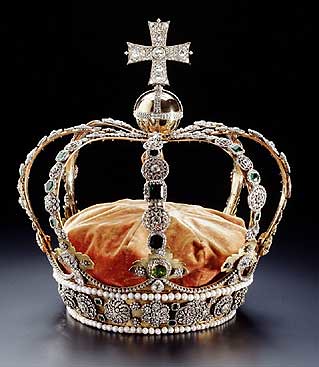

 Posts
Posts


