Showing posts with label Princess Margaret. Show all posts

Friday, 30 March 2012


Already ten years...

This Friday the Queen, the Duke of Edinburgh and other senior members of the Royal family will attend a service of thanksgiving for Queen Elizabeth the Queen Mother and Princess Margaret at St George’s Chapel, Windsor. The service will mark the 10th anniversary of the deaths of Queen Elizabeth on 30th March 2002 and Princess Margaret on 9th February 2002.

Born on 4th August 1900 as ninth of ten children of the Earl of Strathmore, Lady Elizabeth Angela Marguerite Bowes-Lyon was descended from the ancient kings of Scotland. Robert the Bruce was a forebear and Stuart blood ran in her veins.

There is an immense lesson of duty to be learned from the Queen Mother. More importantly, this can turn out to be of significance even to countries that are republics, led by presidents.
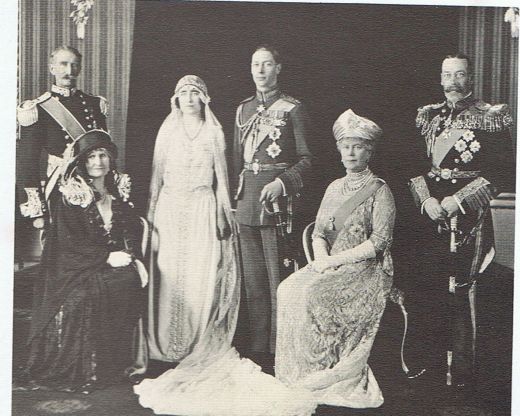

Initially she refused Prince Albert, second son of King George V and Queen Mary, as she had set her heart on the Hon James Stuart, a son of the Earl of Moray, a dashing war hero. But the formidable Queen Mary had earmarked Lady Elizabeth Bowes-Lyon for her second son and she was not to be disappointed. But even then she was never meant to become Queen. She married Prince Albert, Duke of York, in 1923. The abdication of her husband's brother, King Edward VIII, in 1936 changed everything.


Contrary to King Edward’s lack of responsibility, she brought a constant sense of duty to the royal family. She had a genuine love for her people, and she reinvented the role of the royal family.

During World War II she became a national figure symbol of resistance. Her refusal to send the children to a safe place outside Britain are still well known: "The children won't leave without me. I won't leave without the King, and the King will never leave."

After King George’s death, she served for 50 years of public work for her people, in support of her daughter, the Queen. She became an exemplary grandmother and great-grandmother. She was much loved by Prince Charles, Prince William and Prince Harry.


When Queen Elizabeth died, there was a huge outpouring of affection for the "Grand Old Lady of the House of Windsor", which was a solace for the Queen. The United Kingdom had lost not only the Queen Mother, but with her the last Empress of India had left!

The Queen Mother as Queen of Australia


To mark her 100th birthday Australia Post issued a special souvenir cover (see above). The cover featured Australia Post’s 1999 Queen’s Birthday stamp which also celebrated the life of the Queen Mother. The stamp featured images of both the Queen and the Queen Mother and was the first time mother and daughter had appeared together on an Australian stamp.

The cover itself shows Her Majesty on her 96th birthday; at six years of age; and in 1937 as Queen, beside King George VI at the time of his coronation, and with her daughters.

The postmark (Strathmore in Victoria) was selected because the Queen Mother’s father was the 14th Earl of Strathmore. A thistle is used in the design because the Queen Mother also became the First Lady of the Thistle.


The then-Duke and Duchess of York arrived for the first time in Australia on 26th March 1927. By 1927 the Federal Parliament had moved to the new Federal Capital, Canberra, and the main duty of the Duke of York was to perform during this tour the opening of the first session of the Commonwealth Parliament. The Duke and the Duchess attended the new Parliament House in Canberra on 9th May. This grand occasion, which Dame Nellie Melba got underway with a rendition of the national anthem, finished with a fanfare of bugles and a twenty-one gun salute at noon.

The Queen Mother performed another visit in 1958. Flying in from New Zealand, she arrived at the RAAF Station Fairbairn, Canberra on 14th February. Later she visited the Australian War Memorial to lay a wreath on the Stone of Remembrance. She paid visits to every Australian state and left the country again on 7th March by flying out from Perth.

Saturday, 21 August 2010


80th Birthday of Her Royal Highness
The Princess Margaret Rose
Countess of Snowdon
1930 - 2002


When Princess Margaret Rose was born on 21st August 1930 at Glamis Castle in Perthshire, younger sister to Princess Elizabeth, (HM Queen Elizabeth II, Queen of Australia) she was fourth in line of succession to the throne. Princess Margaret died in London on 9th February 2002. She was the younger daughter of The Duke and Duchess of York, later to become King George VI and Queen Elizabeth The Queen Mother following the Abdication Crisis of 1936. Glamis was the Scottish home of her grandparents, the Earl and Countess of Strathmore.

Princess Margaret was the first royal baby in direct line to the throne to have been born in Scotland for 300 years. Her grandfather, King George V, was still very much alive, as was his eldest son, Margaret's Uncle David, destined to be King Edward VIII. Her father, King George VI was proud of his elder girl, because Margaret "brought delight into his life".

Though there were four years between them, the sisters were almost like twins - an exclusive and indissoluble team. But that rapidly began to change. At their father's coronation, Elizabeth had a train and Margaret did not.

Her first overseas engagement on behalf of her father, led Princess Margaret 1948 to the Netherlands, where she attended the proclamation of the new Dutch Queen Juliana. Male students from the local university were so smitten that they serenaded her from a boat on the canal beneath her hotel-room windows.

By 1948, her sister Elizabeth was not only a married woman but a mother, too. For the first time in her life, Margaret was like an only child, racketing around that great Palace at the end of the Mall, with no very obvious task and with no companion of roughly her own age. It seemed, she followed Time magazine's suggestion and became "the party animal she remained for most of her life".

She regularly danced the night away with the so-called Princess Margaret Set. She loved to sing at the piano in nightclubs, surrounded by laughing friends. During the day, she did her work, and generally did it well. Like others of her generation, she had a strongly developed sense of duty, though her official duties were not always glamorous or exciting.

Photographs from the time show an almost impossibly glamorous figure. Hats, bouquets, handbags are all apparently permanent fixtures, as is a wide seductive smile. Around her, elderly gentlemen, mayors and the like, dance attendance. All wear an expression of adulation and the Princess gives every indication of much enjoying centre-stage.

Aneurin Bevan, the Labour Minister for Health, noticed that every time she visited a hospital, recruitment of nurses - a particular problem for his new National Health Service - soared. He pressed her office with more invitations.

Then, just as she was spreading her wings, her life changed abruptly. The shy and stammering King George VI had not been in good health for some time, but his death on 6th February 1952, aged 56, was wholly unexpected.

The Earl of Snowdon’s engagement to Princess Margaret in February 1960 was a surprise, as some considered she was still on the "rebound" from her ill-fated relationship with Group Captain Peter Townsend. The couple married in May 1960 and, in the "swinging sixties", they mixed with actors, artists and pop stars. They were divorced in 1978.

Pietro Annigoni's 1957 portrait of Princess Margaret.


In 1972 Princess Margaret and Lord Snowdon visited Australia. They arrived in Perth on 7th October 1972 and spent more than a week in Western Australia with trips to Kalgoorlie, Kamalda and Albany among other cities.

Princess Margaret returned alone to Australia in 1975 to attend the Women’s Royal Australian Army Corps 25th Anniversary. She had met Sir John Kerr and Lady Kerr and the Prime Minister Gough Whitlam and Mrs. Whitlam on 22nd October 1975. Eight days after she finished her tour the Whitlam government was dismissed by the Governor-General.


The older she became, the more the Princess seemed to attract disapproving comment. The Princess performed most of her official visits on her own. Whereas her sister was often accompanied by the Duke of Edinburgh, Princess Margaret cut an increasingly lonely-looking figure. Her once glamorous solitude had come to seem sad.


Early in 1985, she had a serious lung operation and was photographed looking drawn and wan. She appeared to make a good recovery, but was felled nine years later by a stroke. Again, she bounced back and seemed to be on the mend. The Queen's children, meanwhile, were taking on more and more of her duties. When Prince Edward came of age, he took his place on the list of members of the Royal Family eligible to be Counsellors of State (those with powers to act on behalf of the Queen) - and Margaret was simply removed. Yet she had carried out this role for decades, and enjoyed it.

The rules could have been amended to let her continue, but the idea seems not to have been contemplated. Not for the first time, the Princess was underemployed and under-appreciated.

She who had once been the cynosure of the Royal Family - the cleverest, the most artistic and effervescent - was slipping inexorably towards the wings.

She eventually died in her sleep on 9th February 2002 with her son and daughter at her bedside. The funeral of Princess Margaret has been held at St George's Chapel, Windsor, on Friday 15th February at 3.00pm, 50 years to the day since the funeral of her father, King George VI. HM Queen Elizabeth, The Queen Mother, was present although she was not in the best of health. The Queen Mother had been staying at Sandringham but travelled by helicopter to Royal Lodge in Windsor Great Park on Thursday, 14th February. Seven weeks later The Queen Mother was to die at Royal Lodge, on March 30th 2002.
More on Princess Margaret's life.

The heirlooms that was put up for auction in June 2006 by the Princess' two children, Viscount Linley and Lady Sarah Chatto had been estimated to fetch some £3 million but they raised £13,658,728. Lord Linley and Lady Sarah needed to meet death duties on their mother's estate.

The final tally for the auction exceeded all expectations, but more than £410,000 of that total went to charities like The Stroke Association and SOS Children's Villages. In 2006 Jon Barrick, Chief Executive of The Stroke Association said: "Any donation received from the auction will be added to The Stroke Association's Princess Margaret Fund which provides medical research into the condition that causes over 65,000 deaths each year and has left around 300,000 people living with moderate to severe disabilities." Another charity bonus came from the chain-smoking princess's gem-set cigarette case, inscribed: "To Margaret from her very devoted Papa GR Christmas 1949". It was expected to fetch upwards of £3,000. It went for £102,000.

On her 80th birthday Princess Margaret is missed by more people than the media let us believe. Even the German daily Frankfurter Neue Presse commemorated the late Princess Margaret.

Tuesday, 10 February 2009

The Age remembered Princess Margaret Rose

Today The Age remembered the death of Princess Margaret, the Queen’s younger sister, who died 9th February 2002 aged 71. The Age did this not in a two column article, which is understandable in these difficult times in Victoria. Therefore this blog gives credit to a royal life that is underrated.
When Princess Margaret Rose was born on 21st August 1930 at Glamis Castle in Perthshire, she was fourth in line of succession to the throne.

Princess Margaret was the first royal baby in direct line to the throne to have been born in Scotland for 300 years. Her grandfather, King George V, was still very much alive, as was his eldest son, Margaret's Uncle David, destined to be King Edward VIII. Her father, King George VI was proud of his elder girl, but Margaret "brought delight into his life".

Though there were four years between them, the sisters were almost like twins - an exclusive and indissoluble team. But that rapidly began to change. At their father's coronation, Elizabeth had a train and Margaret did not.

Her first overseas engagement on behalf of her father, led her 1948 to the Netherlands, where she attended the proclamation of the new Dutch Queen Juliana. Male students from the local university were so smitten that they serenaded her from a boat on the canal beneath her hotel-room windows.

By 1948, her sister Elizabeth was not only a married woman but a mother, too. For the first time in her life, Margaret was like an only child, racketing around that great Palace at the end of the Mall, with no very obvious task and with no companion of roughly her own age. It seemed, she followed Time magazine's suggestion and became "the party animal she remained for most of her life".

She regularly danced the night away with the so-called Princess Margaret Set. She loved to sing at the piano in nightclubs, surrounded by laughing friends. During the day, she did her work, and generally did it well. Like others of her generation, she had a strongly developed sense of duty, though her official duties were not always glamorous or exciting.

Photographs from the time show an almost impossibly glamorous figure. Hats, bouquets, handbags are all apparently permanent fixtures, as is a wide seductive smile. Around her, elderly gentlemen, mayors and the like, dance attendance. All wear an expression of adulation and the Princess gives every indication of much enjoying centre-stage.

Aneurin Bevan, the Labour Minister for Health, noticed that every time she visited a hospital, recruitment of nurses - a particular problem for his new National Health Service - soared. He pressed her office with more invitations.

Then, just as she was spreading her wings, her life changed abruptly. The shy and stammering King George VI had not been in good health for some time, but his death on 6th February 1952, aged 56, was wholly unexpected.

The Earl of Snowdon’s engagement to Princess Margaret in February 1960 was a surprise, as some considered she was still on the "rebound" from her ill-fated relationship with Group Captain Peter Townsend. The couple married in May 1960 and, in the "swinging sixties", they mixed with actors, artists and pop stars. They were divorced in 1978.


Before their divorce Princess Margret and Lord Snowdon visited Australia in 1972. They arrived in Perth on 7th October 1972 and spent more than a week in Western Australia with trips to Kalgoorlie, Kamalda and Albany among other cities.

Princess Margret returned alone to Australia in 1975 to attend the Women’s Royal Australian Army Corps 25th Anniversary. Eight days after she finished her tour the Whitlam government was dismissed by the Governor-General. She had met Sir John Kerr and Lady Kerr and the Prime Minister Gough Whitlam and Mrs. Whitlam on 22nd October 1975.


The older she became, the more the Princess seemed to attract disapproving comment. The Princess performed most of her official visits on her own. Whereas her sister was often accompanied by the Duke of Edinburgh, Princess Margaret cut an increasingly lonely-looking figure. Her once glamorous solitude had come to seem sad.

Early in 1985, she had a serious lung operation and was photographed looking drawn and wan. The Queen's children, meanwhile, were taking on more and more of her duties. When Prince Edward came of age, he took his place on the list of members of the Royal Family eligible to be Counsellors of State (those with powers to act on behalf of the Queen) - and Margaret was simply removed. Yet she had carried out this role for decades, and enjoyed it.

The rules could have been amended to let her continue, but the idea seems not to have been contemplated. Not for the first time, the Princess was underemployed and under-appreciated.

She who had once been the cynosure of the Royal Family - the cleverest, the most artistic and effervescent - was slipping inexorably towards the wings.

She eventually died in her sleep on February 9th, 2002, with her son and daughter at her bedside. The funeral was held at St George's Chapel, Windsor , where her father lay buried, and where her 101-year-old mother would join them both in a matter of weeks. More on Princess Margaret's life.