Showing posts with label King Michael. Show all posts

Saturday, 7 July 2012

Romanian president finally impeached

Romanians have difficulties to decide whom they most detest – their president, their prime minister, or simply the entire political caste (they are not alone in that!). Hundreds of demonstrators have been gathering in cities across the country.

Some of them carry placards condemning Prime Minister Victor Ponta, while others slam his arch-rival, president Traian Basescu, who faces impeachment proceedings in the national parliament.

A third group would simply like to be rid of both.

On 6th July the country’s parliament voted to impeach president Traian Basecu. In a joint sitting of both houses of parliament 256 out of 432 MPs and senators voted in favour of removing Basescu from office 217 would have been sufficient to tell him to leave. For the vote to take effect the Romanian people have a final say. Within 30 days a referendum must be held. The most likely date for the referendum is 29th July.

Prime Minister Ponta’s coalition government took office only in May, fired the speakers of both houses of parliament and the ombudsman this week and threatened to sack judges of the Constitutional Court as well.

The German press agency DPA reported from Bucharest:
"During Basuscu’s eight years in office, he has repeatedly imposed his will on the formation of governments, paying little heed to the balance of political forces in parliament.

"He has made full use of his constitutional power to propose a candidate for prime minister, forcing through coalitions between the PDL and smaller parties to head off the PSD and PNL, which enjoyed a small relative majority.

"Ponta came to power at the end of April, after PDL members deserted their party in droves to join the opposition, bringing down the government through a vote of no confidence.

"The “deserters” were seen to have abandoned their party due to a loss of popularity. The PDL had pushed through austerity measures imposed by the IMF and European Union, cutting civil service salaries by 25%, freezing pensions and increasing value-added tax by five points to 24%.

"As a result, the PDL saw its share of the vote sink to a low of 15% in local elections at the beginning of June, while the PSD and PNL took almost 50%.

"Ponta could have waited for parliamentary elections scheduled for the autumn, confident that this trend would hold and that his alliance would secure victory, observers have mused.

"His decision, instead, to attempt to topple Basescu by democratically dubious means is thought to have two reasons.

"Firstly, he may be fearful of the judiciary, which he considers to be controlled by Basescu. Ponta’s political mentor, Adrian Nastase, prime minister in 2000-2004, is in jail for his role in a political funding scandal.

"And secondly, Ponta could be out for vengeance, as he believes Basescu to be behind the plagiarism allegations that have tarnished him. Ponta is said to have copied 85 pages of his 400-page dissertation without having cited the sources as required."
No referendum on the form of state
Unfortunately the proposed referendum will not be on the form of state, but only of the office holder. Basescu is certainly one of the worst presidents in Europe, but Romania’s problems lie deeper. Only in January 2012 the Romanian media reported: Wave of sympathy for King Mihai.
According to an IMAS poll published last week by ‘Adevarul’ daily, the level of confidence in King Mihai stood at 25.7 per cent in December, being higher than that of president Traian Basescu (12.9 per cent) and in Premier Emil Boc (9.7 per cent) taken together.”
Traian Basescu is an old adversary of King Michael and certainly dislikes the King’s popularity. In October 2011, when the Romanian parliament celebrated the 90th birthday of King Michael, Traian Basescu boycotted the event, while most MPs cheered the monarch’s speech (according to International Business Times.)

The king addressed parliament in Bucharest for the first time in more than 60 years and he asked parliamentarians to upgrade democracy in the country and restore the dignity of the people.

Referring to the fall in 1989 of the Communist dictatorship of Nicolae Ceausescu, the king said: "The last 20 years have brought democracy, freedom and a beginning of prosperity. The time has come after 20 years to... break for good with the bad habits of the past" [such as] "demagogy, selfishness and attempts to cling to power. It is within our power to make this country prosperous and worthy of admiration".”

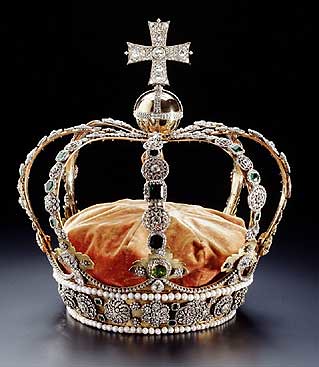
He added: "We cannot have a future without respecting the past. The royal crown is not a symbol of the past but a unique representation of our independence, sovereignty and unity.”

Before the festive event Basescu had launched a stinging attack on King Michael, accusing him of being responsible for the Holocaust in Romania, and calling him "a Russian lackey."

In an interview Basescu said as Michael was head of state during the pro-fascist regime of dictator Marshal Ion Antonescu — prime minister from 1940 to 1944, during World War II — he should also be considered responsible for the death of some 280,000 Jews and 11,000 Gypsies.

In 1944, when Romania was allied with Germany, Michael staged a coup against Antonescu, and Romania switched sides to the Allies.

Basescu called Michael "a Russian lackey" in the interview, adding that his abdication — forced by Soviet-backed Communists on 30th December 1947 — was "an act of treason."

In November 1947, with the communists gaining a hold over Romania and the region King Michael surprised the government by returning to Bucharest after attending the royal wedding of Princess Elizabeth and Prince Philip in London. A month later the Soviet-backed communist government told him if he did not sign his abdication, 1,000 Romanians would be executed. He abdicated on 30th December 1947 and began a life of exile in Britain and Switzerland. His Romanian citizenship was restored in 1997.

Basescu, who insulted King Michael, was himself a member of the notorious secret agency Securitate, but claimed “his links with the former Securitate were minimal
And Queen Helena, The Queen Mother, was subsequently honored by the Yad Vashem Museum in Israel for rescuing Romanian Jews.

The crisis in Romania could signify the need for an overall change of the political structure in Romania. Famous actor Ion Caramitru believes that King Michael of Romania was the only personality capable of restoring morality in the country and speaks about the toxicity of “turncoat communists” and of the former secret police officers who got into business. In an interview with ‘Adevarul,’ published in a translation of in the Bucharest Herald) the manager of the Bucharest National Theatre says he did not abandon his attitude of social militant, though he stays away from politics today. Caramitru still believes in the political principles of Christian Democracy to restore the monarchy and increase the respect for religion.
I am sad! For the last 20 years, King Michael I has been in the country… The monarchy could have become perfectly stable during all these years and we could have banished communism forever, by annulling the abdication of 1947, when the King was rudely forced to leave the country. The return to monarchy would have put an end to this fight over the first position in the state, for a president who has discretionary powers. This semi-absolute power could divert the state to other ends, while monarchy secures the first position in the states only in a symbolic manner… Monarchy was the only principle capable of restoring morality in the country. Without it, what did we do? We have the same communists, now turncoats, and the former secret police officers who got into business and obtained revolutionist’s certificates. The infamous people controlling us in the past are doing the same today. The country is dying and everything was stolen,” Ion Caramitru said.

Ion Caramitru: Ce-am facut fara monarhie? Tara e pe dric si e furata pana la Dumnezeu!

Monday, 21 May 2012

The Queen has hailed the work of her Armed Forces

RAF Tucano aircraft form the number '60' to mark the number of years the Queen has spent on the throne.

At a Diamond Jubilee parade of more than 2,500 men and women from the military Her Majesty Queen Elizabeth II expressed her appreciation.

"Chief of the Defence Staff;

I very much appreciate your kind words. It is a tradition of very long standing that the Sovereign, and members of the Royal Family, are intimately associated with the Armed Forces and have been proud to serve in all three services.

In addition we have special connections with particular commands of the Royal Navy and Royal Marines; Corps and Regiments of the Army, and Air Stations of the Royal Air Force. We greatly value these connections as it means we meet the wider family of wives and husbands of the currently serving men and women of the Armed Forces.

We are very proud of the selfless service, and sacrifices made by servicemen and women and their families in recent years. It is very gratifying to celebrate and take pride in successful achievements, but the real test of character is the ability to maintain morale and a positive spirit in bad times as well as when things are going well.

It is a great pleasure to see representatives of the three Armed Services here today, and it also gives me the opportunity to send greetings and best wishes to their families and friends, and to all those members of the Armed Services who cannot be here today."


 When 2,500 men and women from all three services marched, they were not merely saluting their sovereign but celebrating their own. As The Daily Telegraph noticed: The Armed Fordes celebrations were "with no politicians or celebrities daring to crash the event". However, foreign Monarchs were present. One could spot among others Queen Margrethe II of Denmark and her husband, Prince Henrik, King Carl XVI Gustaf and Queen Silvia of Sweden, King Harald V of Norway, King Michael I of Romania and King Simeon II of the Bulgarians.

The Chief of the Defence Staff, Sir David Richards, praised The Queen's 60 years as sovereign: "Her Majesty's support and encouragement over the years has created a very special bond between the monarch and her forces. That link is felt by all those who have the privilege to wear Her Majesty's uniform."


Sunday, 9 October 2011


Official Medal to commemorate King Michael of Romania's 90th birthday

For the first time, since he was forced to go into exile in 1947, an official jubilee medal has been struck with the head of King Michael of Romania's (Regele Mihai I) . The present Romanian authorities made this possible to commemorate the Monarch's 90th birthday on 25th October.

The Jubilee Medal was presented to His Majesty on 3rd October at the National Bank of Romania by Mugur Isarescu, Governor of National Bank of Romania.

The Jubilee Medal was launched in collaboration with the National Bank of Romania, to stress the link between sovereignty and currency, according to Article 88 of the Constitution of 1923, and was issued in the name of King. The last two coins bearing His Majesty's image were issued in 1947, with values of 10,000, and 5 lei [before and after stabilization of the currency].


Like coins, His Majesty's Jubilee Medal on the front bears the King's profile and the reverse is the Great Arms of Romania. It is made of unvarnished gold "tombac nepatinat", and was created by Mr. Cristian Ciornei [design] and Vasile Gabor [model].

In another move to celebrate Regele Mihai's landmark birthday, the Romanian Parliament decided to invite the King Michael to attend a formal sitting on his birthday. The decision was taken with 203 votes "for", three votes "against" and 46 abstentions. The abstentions came from the Liberal-Democrats and were meant as a protest against Romanian president Traian Băsescu's insulting remarks on King Michael.

The president is embattled after his plans to reorganize Romanian territory were refused by opposition parties and an ethnic Hungarian party whose support the government needs to survive.

King Michael is one of the few surviving World War II leaders and had good relations with the Jewish community when he was King, nevertheless Traian Băsescu accused the Monarch of being responsible for the Holocaust in Romania, and called him "a Russian lackey".

Ion Caramitru: What did we achieve without monarchy?
Meanwhile famous actor Ion Caramitru believes that King Michael was the only personality capable of restoring morality in the country and speaks about the toxicity of “turncoat communists” and of the former secret police officers who got into business. In an interview with ‘Adevarul,’ the manager of the Bucharest National Theatre says he did not abandon his attitude of social militant, though he stays away from politics today. Caramitru still believes in the political principles of Christian Democracy to restore the monarchy and increase the respect for religion.

I am sad! For the last 20 years, King Michael I has been in the country… The monarchy could have become perfectly stable during all these years and we could have banished communism forever, by annulling the abdication of 1947, when the King was rudely forced to leave the country. The return to monarchy would have put an end to this fight over the first position in the state, for a president who has discretionary powers. This semi-absolute power could divert the state to other ends, while monarchy secures the first position in the states only in a symbolic manner… Monarchy was the only principle capable of restoring morality in the country. Without it, what did we do? We have the same communists, now turncoats, and the former secret police officers who got into business and obtained revolutionist’s certificates. The infamous people controlling us in the past are doing the same today. The country is dying and everything was stolen,” Ion Caramitru said.

Tuesday, 31 March 2009

A Birthday celebration worthy of a Crown Princess

Crown Princess Margarita of Romania turned 60 on 26th March as I wrote four days ago. Her family celebrated the heiress' birthday with a Gala Dinner on 26th March 2009, in the Palatul Casei de Economii si Consemnatiuni (CEC Bank Palace) in the Romanian capital Bukarest.

This information comes from Prince Radu's blog, where he wrote on the celebrations and published the photos I used.

King Michael I of Romania and his eldest daughter, Crown Princess Margarita.


Romania's Crown Princess' birthday was celebrated in style, in the Palatul Casei de Economii si Consemnatiuni in the Romanian capital Bukarest.

Inside the Palatul Casei de Economii si Consemnatiuni a banquet was prepared in honour of the Crown Princess, which was attended by Romanian and foreign dignitaies.

Crown Princess Margarita during her speech at the banquet.

Crown Princess Margarita and her husband, Prince Radu of Hohenzollern-Vehringen.

The Romanian Royal Family, 26th March 2009.

King Michael's decendents, Princess Elena , PrincessIrina and Nicolae de Romania who celebrates his 24th birthday on 1st April 2009.

Nelly Miricioiu performing for the royal audience.

Friday, 27 March 2009

Romania's Crown Princess turned 60

Crown Princess Margarita of Romania celebrated her 60th birthday on 26th March. Her father, King Michael I (in Romanian: Regele Mihai , *25th October 1921) was forced to abdicate on 30th December 1947.

In November 1947 the King attended the wedding of his cousins, Princess Elizabeth and Prince Philip of Greece and Denmark in London. There he met Princess Anna of Bourbon-Parma. On his return to Bukarest, the Romanian Communists who controlled the country objected the King founding a family and threatened to shoot 1,500 young people whom they had arrested, should he not abdicate. King Michael left Romania on the 3rd January 1948 feeling, as he once said, as if his heart had died. He had signed, under duress, an abdication that he never recognized.

He and Princess Anna were married on the 10th of June 1948 in Athens, at the invitation of King Paul I and Queen Frederica of the Hellenes. The ceremony took place at the Royal Palace of Athens.

Exile in Switzerland
From 1949 until 1950 the royal couple lived in Lausanne, where Princess Margarita, their first child, was born. Princesses Helena and Irina were also born in Switzerland, in 1951 and 1953 respectively. Princess Sophie was born in Athens in 1957 and Princess Marie in Copenhagen in 1964. In 1950 the Romanian Royal Family established itself in England, in Bramshill House in Hampshire and then in Ayot St-Lawrence, in Hertfordshire. There, the King and Queen ran a chicken farm and built a carpentry workshop. In 1955 the Romanian Royal Family settled in Switzerland in 1955.

Crown Princess Margarita spent her teenage years in Switzerland. For her higher education however, rather than heading straight for Paris and the Ecole des Beaux-Arts, her preferred destination, she was persuaded to spend a year with her grandmother, Queen Helena of Romania, a cousin of Prince Philip, in Florence.

"She taught me everything I know. Everything I am is thanks to her. She introduced me to people - diplomats, artists, people from the UN who were working in Ethiopia, Sudan, South Africa." As a result she spent some months working in refugee camps in Ethiopia.

Her years in Scotland
Dreams of art school were, to Queen Helena's relief, quickly replaced by a determination to go to university. A supporter of the Romanian cause offered to pay for her fees and the British consul was summoned.

"We looked through the UCCA handbook and I thought, 'Well, I won't get into Oxford so easily.' I didn't want to go to London because some of my parents' friends were there and I didn't want to get tied down. Scotland seemed so romantic and lovely."

In the early 70s she enrolled at the Edinburgh University. She became a member of the Student Representatives' Council, where she would meet the man who was to share her life for the next five years. Gordon Brown, “a socialist student firebrand” (The Daily telegraph in a long article on that romance) meets the beautiful young Princess. They fall in love. Political principles force them apart. He turns, not into a frog, but into Her Majesty’s Prime Minister. The five-year love affair between Gordon Brown and his Romanian Princess was such that all who knew them in their student days were convinced they would marry.

"She was the one great love of his life," a close friend of Brown's once said. "He has never got over it." The Princess remains friends with Brown and his family.

Crown Princess Margarita, as a great-great-great-granddaughter of Queen Victoria, was 81st in line to the British throne at that time and a goddaughter of Prince Philip - something she did not broadcast widely.

Working with the United Nations
After Edinburgh, Crown Princess Margarita specialised in medical sociology. In 1983 she joined the United Nations' Food and Agriculture Organisation, transferring, three years later, to the International Fund for Agricultural Development. Six years later her life took a new course. In Romania, the dictator Nicolae Ceausescu had been executed. She decided to accompany her father on his return home.

"Getting on the plane was quite emotional. We didn't know what was going to happen to us," she recalls. "It was so strange to look out of the plane window and see the fields; they were huge." This was the first intimation of Ceausescu's collectivist policies that had destroyed rural communities.

"We stayed for a few days and found that villages had been knocked down and 150,000 children were living in orphanages. Ceausescu had wanted to boost the population. Family planning was forbidden, abortion was forbidden, women were compelled to have four children but they had nowhere to bring them up and had to give them to the state. A lot of children had Aids. It was a shock to the eyes and to the soul."

While she was visiting one orphanage, a child in a filthy cot died in front of her. It spurred her on to establish the Princess Margarita of Romania Foundation. "I just didn't want this ever to happen again," she says.

In practical terms, life was "quite difficult; we had nowhere to stay. We didn't have much money. I said to my father, 'I think I had better quit my career and come home.' He said, 'What for?'" Nevertheless, she abandoned her job with the UN and, as the eldest of five daughters, found a role as the family representative in Romania where she began work on her foundation.

Education was one of her first priorities. Romanian doctors, who had not been allowed contact with the West, thought that Aids was spread through the air. Conditions in health centres were, she says, "disgusting. We began to provide training not just for the medical team but for the children in the village about sex education and how to protect yourself from getting Aids."

One of the bodies with which the foundation worked was the Actors' Union, with resting actors providing art therapy for the children. One, who ended up directing an orphanage project, was Radu Duda. His association with Princess Margarita was to prove more than professional and in 1996 the couple married in Lausanne. Created Prince Radu of Hohenzollern-Veringen, he now has an official role with the Romanian government as a trade ambassador.

To make a donation to the Crown Princess Margarita of Romania Foundation, visit http://www.fpmr.ro/


The Crown Princess in her own words

HRH The Crown Princess Margarita of Romania's article for "Leaders" Magazine
Jan. Feb. March 2002, No 1 Vol 25

My country was one with which I was myself unacquainted, though I had grown up in its shadow. As a child I had grown to know it and yearn for it through the eyes and voice of my father, King Michael who was brutally forced by the communists to leave Romania in 1948. But I had never been warmed by its sunshine, never heard the wind in the trees, or felt its earth beneath my feet. My father would tell us stories about this distant land which he called home, and described with such love, longing - and constant pain. I read books about the painted monasteries of Moldavia and Bukovina, about the Danube Delta, we listened to Romanian music, we pored over old photograph albums. Later I read history books and raged at the injustice which had condemned 23 million people to a ruthless dictatorship, to hardship, darkness and hunger, locked behind the impenetrable and seemingly eternal Iron Curtain. The Romanians suffered and I searched for my roots, my history and my identity.

I do not believe that monarchy is the only solution to a country's political ills. But in Romania it remains a fact that the monarchy was removed by a Soviet diktat. And it is equally undeniable that the post-dictatorship transformation in many European states was assisted by historic personalities who either knew how to stabilise critical moments of crises, or project their sheer personality on the events. Does anyone deny that Spain's transformation in the 1970s would have taken a different, and altogether less favourable course if King Juan Carlos, my Father's good cousin, was not there?


My father encouraged me to set up a humanitarian foundation and immediately after that first trip to Romania I launched the work of the Princess Margarita of Romania Foundation with the aim of helping to rebuild Romania - a lifelong task to be accomplished through projects across the country, drawing on people's imagination, aiming to recreate social relations, dignity and hope.

The Foundation is established in Romania, the United Kingdom, the United States, Switzerland, France and Belgium. In the UK it is known as Princess Margarita of Romania Trust. This is a whole network which does fundraising activities for projects in Romania, as well as showing to a large number of people abroad the many faces and images of Romania.

We undertake projects in the areas of health, education, civil society development and culture. We encourage initiatives which develop people's potential to shape their own lives, and which can stimulate the revival of local communities, churches, health and educational establishments, and so help to restore a sense of civic responsibility.

Beneficiaries of the projects have included the elderly poor, hundreds of children in orphanages, children with HIV/AIDS, doctors, nurses and other healthcare workers and high school students, but just as the Foundation's programs provide help to disadvantaged categories we have also encouraged and supported that which is positive, dynamic and creative in Romania: non-governmental organisations working in the field of child protection, talented young artists, and playwrights. For instance we have a program aiming to provide Scholarships to Young Gifted Children in the Arts. Because of the very difficult economic situation in Romania, there is an enormous amount of poverty, and art has become a luxury. Faced with financial hardship, artistically talented children often become disheartened and find it impossible to go on studying, so they abandon what could be a promising career in the arts and do something else for which they do not care. So we are starting a programme of scholarships for high school students so that they can continue their studies in music, visual arts or dance. We are hoping to raise enough money this year to help 30 students, and we aim to increase that amount every year. Maybe some of you might get involved so that people your own age but less fortunate can be helped.


"Freedom and Hope in Romania"
American Women's Club in Geneva, 17th MAY 2001 By HRH Crown Princess Margarita of Romania


The work of the Foundation is based on one fundamental premise: that Romanian society, just as the societies of other East European states, must be recreated from the bottom up. And this can only be achieved through perseverance despite adversity; determination despite obstacles. Our work acts to coordinate and concentrate our operations away from areas now subject to world attention, by directing our efforts towards medium term grass roots pilot projects - in the areas of health, education, civil society development and culture. We encourage initiatives which develop people's potential to shape their own lives, and which can stimulate the revival of local communities, churches, health and educational establishments, and so help to restore a sense of civic responsibility and pride.

Education and capacity building in particular are built into all of our projects to help make a positive and meaningful change which will have an impact well beyond the life of any financial or technical support given by the Foundation and ensure that the programs achieve sustainability in the long-term.

To date beneficiaries of the projects have included many thousands of elderly poor: for instance last year we assisted over 32,000 senior citizens living well below any arbitrary poverty line, some, earn the equivalent of only $16 a month; other beneficiaries are about fifteen hundred institutionalized children and children with HIV/AIDS, healthcare workers and over 1000 high school students a year, but we also encourage and support that which is positive, dynamic and creative in Romania: non-governmental organizations working in the field of child protection, talented young artists, and playwrights.

There is an important issue that is facing Romania, and one that it has to solve, it is the problem of institutionalized children. It is paradoxical, but, in spite of all the changes that have taken place since 1989, there are still thousands of children living in institutions - over 80,000. In addition, there are about 6,000 children who are infected with the HIV/AIDS virus. In 1997-1998 the Romanian Government created an Agency for the Protection of Child Rights which has introduced a comprehensive reform policy for the de-institutionalization of children. The Foundation is one important partner NGO that is taking part in the formulation of the national strategy and has continuously provided feedback and shared the experience gathered in our programs.. The Foundation has several programs not only to help improve the quality of the lives of the kids in institutions but to support as a priority efforts to de-institutionalize them as well.
The aim is to close the orphanages.


Succession of King Michael
HM King Michael named, his eldest daughter, HRH Princess Margarita as his successor and Head of the Royal House of Romania and Custodian of the Romanian Crown after his death. The King mentioned: ‘If the Romanian Nation and Parliament were to decide to reinstate the Monarchy as the form of government’ the King will ask the Parliament ‘to cease to implement the Salic-law as the form of succession, which does not correspond either to the elementary rights in Europe today, or to the values of Romanian society’. A notable proportion of the Romanian population believes that a monarchy would bring the much-needed political stability to their country. Details on the reformed Romanian succession here.

The new Line of Succession to the Throne and to the Headship of the Royal House of Romania was decided by HM King Michael, in keeping with duty to History and to the heirs of the Family:

1. HRH Crown Princess Margarita of Romania, Custodian of the Crown of Romania
2. HRH Princess Helena of Romania
3. Nicholas de Roumanie Medforth Mills (who shall become HRH Prince Nicholas of Romania on 1st April 2010 – according to the Document of the Head of the Royal House, 5th January 2005)
4. Elisabeta Karina de Roumanie
5. HRH Princess Irina of Romania
6. Michael de Roumanie Kreuger
7. Angelica de Roumanie Kreuger
8. HRH Princess Sophie of Romania
9. Elisabeta Marie Biarneix
10. HRH Princess Marie of Romania

Nicholas de Roumanie Medforth Mills will assume the title, style and rank when upon his 25th anniversary or immediately the demise of the current Head of the Royal House and at that time he will enter in the order of succession to the Throne.

Monday, 31 December 2007


King Michael makes preparations for his succession

King Michael I of Romania (Regele Mihai I) enacted new Fundamental Rules of the Royal Family of Romania to succeed all other Statutes and House Laws from the 30th December 2007, the 60th anniversary of his deposition in Romania.

The Preamble states: “In keeping with His Majesty’s Command and with all modern requirements, these Fundamental Rules, enacted by the hand of King Michael I, Sovereign Head of the Royal House of Romania (Hohenzollern-Sigmaringen), by the Grace of God, Crowned King of Romania and jure sanguinis Grand Master of the Orders and Decorations of the Royal House of Romania, shall … have its validity and power upon signature, by the King’s hand. By this document, all earlier statutes and all privileges, styles, titles, rank and rights of Dynasts or their descendents are revoked.”

Article 1 (2) demonstrates the King’s determination not to recognize the republican regime that was illegally established on 30th December 1947: “The Head of the Royal Family of Romania, by all common practice and convention, is de jure and de facto Sovereign in terms of their authority over the Royal House of Romania, at any time. Immediately upon the death of the Head of the Royal House of Romania, without further proclamation, the Heir Apparent or Heir Presumptive, whichever shall be living and first in line to the succession at that moment in time, shall from that moment assume the rank or style King or Queen, regardless of the Family’s position as a reigning or non-reigning Dynasty and regardless of the fact that they may or may not later choose against the use of such style or designation.”

In Article 1 (6) the new Statutes clarify that no other descendants of King Charles II (Carol) except King Michael had any claims to the throne: “The descendants of the late King Carol II of Romania, by any collateral branch, shall maintain the style and rank accorded to them during the reign of His late Majesty King Carol II. According to the wish and precedence set by His late Majesty, such descendants shall continue to be excluded from the line of succession and shall not be members of the Royal House of Romania.”

According the Fundamental Rules(Article 2 (6) the successor to His Majesty will be his eldest daughter, Her Royal Highness, Crown Princess Margarita (*26th March 1949) “shall be henceforth and will remain after my death Custodian of the Romanian Crown (ad personam)”.
In Article 2 (7) the Fundamental Rules name Nicholas of Romania Medforth-Mills, „who shall assume the title, style and rank of Prince of Romania and Royal Highness (jure sanguinis) on 1st April 2010, upon his 25th anniversary, or immediately upon the demise of the current Head of the Royal House of Romania, which ever is sooner and at such a time shall enter the order of succession to the Headship of the Royal House of Romania, with full entitlement upon succeeding”.

It is also interesting to note Article 3 (1), which states that „all members of the Royal House of Romania will be or must seek to become Romanian citizens“. It has been a common practice until recently by all king of republican regimes to strip members of their Royal Families of their nationality and deny them regaining the nationality. Such a move by any Romanian government would not prevent members of the Royal House of Romania to claim their succession rights.

Comment
It is ironic that the Communists who had been responsible for the coup d’état in 1947 that sent the King and His family into exile, raise doubts about the legality of the King’s power to issue new Fundamental Rules of the Royal Family of Romania, claiming that only a reigning Monarch had the right to do that. But nobody would oppose them in putting the King back into his position, which he without any doubt held legally until 1947. (See: http://monarchist-league.com.au/index.php?topic=228.0 )
“The Abdication of His Majesty King Mihai I has never been made legal in Romania. After King Mihai had been forced into abdicating, in order to save the lives of over 1,000 young people arrested for blackmail, the National Assembly members got together. But the Parliament had no quorum. And even if there had been a quorum, after the abdication had been adopted they were to settle Regency, because of the Constitution. A republic could not be proclaimed via a monarchist Constitution. A new Constitution, a republican one, would have had to be adopted to this end, and people would have had to agree or nor by means of a referendum. No such legislative measure was taken. The servants of Moscow disregarded people's choice for monarchy and defied the Church. King Mihai I was anointed a King, which is clear even to Gigi Becali.”)

The Romanian republicans – from left to right – deny the King’s rights because they hope for the extinction of the male line of the Royal House of Romania. Without the King’s daughters’ rights to the throne, these rights would fall back to the head of the Princely House of Hohenzollern-Sigmaringen, the South German and Catholic branch of the Hohenzollern in Germany. After the republicans failed to promote an illegitimate son of King Carol as “rival pretender” to King Michael, they had hoped for a German pretender who wouldn’t even be able to speak Romanian instead of the popular Crown Princess Margarita who has been unceasingly doing charity work in Romania since she was allowed to return to her home country.

It is characteristic of the visionary mission King Michael has been following all his years that he sets milestones for his succession and the continuity of the Romanian Royal Family. A vision that is lacking in nearly all republics – and all politicians, naturally.

Long Live King Michael of Romania!

PS. Copies of the new Fundamental Rules of the Royal Family of Romania are available in Romanian and English. If you are interested in receiving a pdf-file, please send me an e-mail.