
Wednesday, 8 January 2020
Message from HRH The Prince of Wales to the people of Australia


Saturday, 4 January 2020
The Queen and three future Kings

The Queen is celebrating the start of the new year with a new portrait of herself and her three heirs.
The photograph of Her Majesty alongside the Prince of Wales, Duke of Cambridge and Prince George was taken in Buckingham Palace's throne room shortly before Christmas.
The Queen stands at the front of the new image in a white dress accessorised with a blue brooch and holding one of her iconic handbags.
Prince George, in tartan trousers and a white shirt, and Prince Charles - in a navy pinstripe suit - are stood together on a red-carpeted step.
Prince William stands behind his father, son and grandmother, smiling at the back of the picture in a dark suit and navy blue tie.
This is only the second time that a portrait of all four royals together has been issued.
 |
| A portrait in 2016 of The Queen and her three heirs |
The youngest royal's elevated position in the new portrait is reminiscent of the 2016 photo, when then-two-year-old Prince George stood next to his great-grandmother on a blue and black step, holding the hand of his father, Prince William.
Wednesday, 6 November 2019
The Defeat of the Republic Referendum 20 Years Ago

The 6th November marks the 20th anniversary of the failed republic referendum of 1999. It was the accumulation of around eight years of hard campaigning essentially on a daily basis and was a learning curve for all, even for those lawyers involved.
Nearly all of the campaigners were amateurs. Even the politicians had no expertise in a referendum proposing changes as drastic as this. The last time there were referendums was in 1988 when the Hawke government submitted four proposals to the people. These four were on parliamentary terms, fair elections, local government and rights and freedoms, all of which were rejected by the people and all of which were totally unlike the republic referendum which, in itself, required nearly 70 changes to the Constitution.
Campaigning was essentially based along Liberal for the No case and Labor for the Yes case. Whilst the Yes case also had a number of senior Liberals actively involved, the No case comprised only token Labor identities. This was totally at odds with the eventual vote when, as is estimated, one third of Labor voters voted No to a republic.
The Australian Monarchist League, which did not form a part of the official No case and did not share in any of the government funding, campaigned, using its own resources, predominantly in the outer suburban typically Labor electorates, in the country areas and in the smaller states like Tasmania, which seemed to have been written off, but all of which resulted in an overwhelming No vote as opposed to the city Liberal electorates which voted Yes.
However, it was the vote of traditional Labor that swung the pendulum against a republic. Traditional Labor have always been deeply conservative in the traditional sense. Unlike so many trendy Liberals, they honour the Queen and respect our constitutional system of governance. In the 1990s, we knew this because a significant proportion of our supporters were – and still are - Labor voters.
The nationwide vote in the 1999 referendum was 54.87% No (against the republic) which may not seem much but if a political party received that vote in a general election, it could well result in winning 72% of all electorates. It is rare that a political party receives over 50% of the total primary votes cast in any general election.

Since 1999, republicans have continued to mount campaigns and the Australian Monarchist League has continued to oppose them whilst, at the same time, promoting the benefits and security of our system of constitutional monarchy.
To celebrate the anniversary of the defeat of the republic referendum, the Australian Monarchist League is not holding a conference with lengthy speeches bragging about the victory because the defeat of the referendum was not really due to monarchists but more to the wisdom of the people who, resiling against such massive change, opted to place their trust in the Queen.
Instead, we are holding a dinner on a tall ship sailing around Sydney Harbour on Thursday the 14th of November, enjoying the fact that we remain a constitutional monarchy.
Philip Benwell
National Chair
Australian Monarchist League
Wednesday, 12 June 2019
The Queen and her Australian representative

The Governor-General designate of Australia , General David John Hurley, AC, DSC, FTSE (born 26th August, 1953) is a former senior officer in the Australian Army and was the 38th Governor of New South Wales from 2014 to 2019. Assuming office on 28th June, 2019.
Friday, 31 May 2019
Shorten's republic plans brought no victory
The vote in this general election was not so much anti-Labor but rather anti-Shorten. This is because Bill Shorten announced many changes to the status quo.
Any change, however minor is bound to affect some people and, in this election, there were so many proposed changes that it was obvious that a great number would be voting against Labor.

https://www.dropbox.com/preview/SHORTEN%20DANGER%20-%202.mp4?role=personal ) which were spread far and wide amongst our support base, which numbers many thousands, and we had people on polling booths handing out ‘Put Shorten-Republic Last’ how to vote cards.
Our membership comprises people of varying political allegiances, including traditional Labor. In 1999 it is estimated that one third of Labor voters voted against the republic. These are the people who rejected the Shorten proposals. These are the people, amongst others, responsible for the return of the Morrison government.
Philip Benwell
Australian Monarchist League
Thursday, 11 April 2019
The Queen's Birthday stamps 2019

While 21st April marks the Queen’s actual birthday, King George II established the tradition, in 1748, of the monarch’s birthday being publicly observed on the second Saturday of June. Wanting a public celebration of his birthday, the King, who was born in November, decreed the monarch’s birthday would be celebrated in summer and would coincide with a military parade.
The Queen’s birthday on 21st April is marked by midday gun salutes, but otherwise the occasion usually comprises a more intimate family gathering. This is in contrast to the public celebration each June, the centrepiece of which is the spectacular Trooping of the Colours, a parade involving more than 1,400 guards from the Household Division of the British Army, many of whom are mounted.

In the $3 design, the photograph shows the Queen as she observes a Royal Air Force flypast from the balcony of Buckingham Palace, during the air force’s centenary events in July 2018.
The Queen's Birthday stamps are here available
or via: mailorder@auspost.com.au
Freecall in Australia Tel. 1800 331 794
elsewhere +61 3 9887 0033 or +61 3 9887 0236
Friday, 22 March 2019
The Official Position of the Royal Stuart Society
 |
|
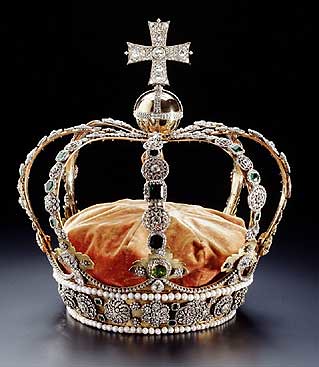
H.R.H. Duke Franz of Bavaria (*14th July
1933) and the Crown of the Kingdom of Bavaria)
|
The Official Position of the Royal Stuart Society as determined by the following Statement of the Council on March 12th, 2019.
“The Royal Stuart Society recognises HRH the Duke of Bavaria as Head of the Royal House of Stuart. Under the terms of the Act of Settlement of 1701 all successive Heads of the Royal House of Stuart have been excluded from the de facto line of succession, which vests in the present House of Windsor.
No Head of the Royal House of Stuart since 1807 has made any claim to the British Throne. The Society makes no claim for the Head of the Royal House of Stuart that he does not make himself. The Council insists on every respect being shown to HM Queen Elizabeth II as Head of State.”
Friday, 15 March 2019
The Queen of New Zealand expresses her condolences

I have been deeply saddened by the appalling events in Christchurch today. Prince Philip and I send our condolences to the families and friends of those who have lost their lives.
I also pay tribute to the emergency services and volunteers who are providing support to those who have been injured.
At this tragic time, my thoughts and prayers are with all New Zealanders.
Elizabeth R.


Monday, 11 March 2019
Happy Commonwealth Day
Today is Labour Day, which has become Victoria’s forgotten public holiday. In Melbourne the Moomba Parade unofficially replaced the Eight Hour Day procession when it commenced in 1955.
But today is also Commonwealth Day and The Queen of Australia sent this message:
Today, many millions of people around the world are drawn together because of the collective values shared by the Commonwealth. In April last year, I welcomed the leaders of our 53 nations to Buckingham Palace and Windsor Castle for the Commonwealth Heads of Government Meeting, and we all witnessed how the Commonwealth vision offers hope, and inspires us to find ways of protecting our planet, and our people.
We are able to look to the future with greater confidence and optimism as a result of the links that we share, and thanks to the networks of cooperation and mutual support to which we contribute, and on which we draw. With enduring commitment through times of great change, successive generations have demonstrated that whilst the goodwill for which the Commonwealth is renowned may be intangible, its impact is very real.
We experience this as people of all backgrounds continue to find new ways of expressing through action the value of belonging in a connected Commonwealth. I hope and trust that many more will commit to doing so this Commonwealth Day.
ELIZABETH R.

Tuesday, 5 March 2019
Archbishop of Canterbury's speech for HRH The Prince of Wales's 50th anniversary
Speech by Archbishop Justin Welby at the Buckingham Palace reception on 5th March 2019 marking the 50th Anniversary of the Investiture of Prince Charles as HRH The Prince of Wales.
Your Majesty, Your Royal Highnesses, Your Excellencies, Prime Minister, First Minister, My Lords, Ladies and Gentlemen,

But it is much more, for it is also a statement of character, and the more exalted the role, the more demand there is on the character.
When you are second in the land, to serve is not automatic, human nature relishes leisure and privilege: serving requires discipline, values, a moral drive that sees service as virtue.
Never in the history of the role can there have been such dedicated service, such honourable fulfilling of the promise at the Investiture, "I, Charles, Prince of Wales, do become your liege man of life and limb and of earthly worship, and faith and truth I bear unto you, to live and die against all manner of folks."
Service was in the oath, and service has marked the 50 years, service often publicly unnoticed, unseen.
A role has been imagined and developed, different to that of the Sovereign, probing, asking, suggesting and prompting, yet always in the service of Crown and country, under God.
The character required includes the rare gift of humility, of accepting advice, of knowing limits. It requires perseverance, because service may become wearisome, and the self seeks to push forward.
This Prince of Wales has guarded the sacred duty of service and kept the fire, not only alight but burning more brightly with the passing years.
 |
| Prince Charles' charity organisation is also active in Australia following the Motto:To deliver social impact, by transforming lives and building sustainablecommunities in Australia. |
From service to young people and those caught in poverty, a prophetic voice on the environment, proved by time and events, concern for all who serve our country from the armed forces to the police, compassion for the suffering and humour with the brave and rejoicing, the list goes on and on. The Investiture was unique. Seldom can a coming-of-age have had such a setting; seldom can the weight of expectation have been so great.
In years since then, we have seen how the honour of being granted that title has been richly repaid – in The Prince of Wales’s love for the country whose name he bears, and in the deep respect he has always shown for the land, for the language, and most of all, of course, for the people.
As we look to the future, on behalf of all here and so many across these Islands, the Commonwealth and around the world, I express gratitude for your tireless work, and heartfelt appreciation for all that you, with the wonderful support of The Duchess of Cornwall, have done, are doing, and will do.
May the grace with which you have fulfilled your present duties to these countries, to the Commonwealth and the international family of nations, help you to bring even greater honour to your future service in the years to come.
Friday, 15 February 2019
The Prince of Wales and The Duchess of Cornwall will visit Caribbean Commonwealth Realms
17th March – 29th March 2019
The tour will begin in St Lucia on 17th March, where The Prince of Wales will be guest of honour at an event to mark the country’s 40th anniversary of Independence, following a welcome to the island by The Governor General and The Prime Minister. The Prince of Wales will later attend a reception for guests from across the island.
On Tuesday 19th Their Royal Highnesses will undertake a number of engagements in Barbados including a parade and wreath laying at The Cenotaph in Bridgetown. His Royal Highness will then have the chance to visit the oldest synagogue in the western hemisphere, which was recently restored with the help of The Barbados National Trust. The Prince will attend a demonstration on the island’s hurricane preparedness mechanisms and meet teams involved in responding to recent natural disasters across the region. His Royal Highness will also learn more about the work that The Prince’s Trust International has been doing locally.
The Duchess, who is President of the Women of the World Festival, will attend an event for Barbadian women of influence. The Women of the World festival (WOW) is a global festival movement to celebrate and encourage women and girls to overcome inequality. Her Royal Highness will also join a Commonwealth Big Lunch, and visit a diabetes clinic, before joining His Royal Highness for a meeting and reception at The Prime Minister’s residence.
Their Royal Highnesses will visit St Vincent and the Grenadines on 20th March, where key themes in the programme will include youth opportunity and female empowerment, as well as the preservation of the islands’ natural environment. Her Royal Highness will visit the St Vincent and Grenadines Community College and St Vincent Girls’ High School, where pupils have been busy creating their entries for The Queen’s Commonwealth Essay Competition.
On Thursday 21st March, The Prince and The Duchess will visit both parts of the dual-island nation of St Kitts and Nevis and will undertake a programme that will demonstrate the country’s commitment to heritage restoration, the environment and local culture. The Prince of Wales will also have the chance to return to The Brimstone Hill Fortress, a UNESCO World Heritage Site that he last visited in 1973. The Prince will learn more about the history of the fortress, the restoration work that has been undertaken there, and attend a showcase of local culture, dance and music. Their Royal Highnesses will also attend receptions on both islands for members of the community, featuring local music and culture.
The Prince and The Duchess will visit Grenada on the 23rd March where Their Royal Highnesses will learn more about local agriculture and the importance and history of cocoa and spice production on the island. The Prince of Wales will attend a meeting on the importance of the blue economy and meet organisations involved in marine protection and conservation.
Their Royal Highnesses will arrive in Cuba on Sunday 24th where, after an official welcome, they will commence their visit to the country with a wreath laying at the Memorial of Cuba’s national hero – the essayist and poet– José Martí. The Prince and The Duchess’ visit will highlight cultural and academic connections, links between the people of the U.K. and Cuba, and explore key themes, such as the arts, youth entrepreneurship, heritage restoration and sustainable agriculture.
On Monday 25th March, Their Royal Highnesses will undertake a varied programme in Havana including a joint visit to a community and arts centre. His Royal Highness will also be able to meet some of Cuba’s young entrepreneurs at an event in central Havana. That evening, The President of Cuba will officially welcome Their Royal Highnesses before hosting an official dinner.
On their second day of engagements in Havana Their Royal Highnesses will have the chance to meet a group of owners of British classic cars and pay a visit to a Cuban music recording studio. Their Royal Highnesses will also visit one of the country’s leading dance studios and The Prince of Wales will travel out of Havana to learn more about renewable energy and organic farming in Cuba. Their Royal Highnesses will later attend a reception hosted by the British Ambassador.
Their Royal Highnesses’ visit to Cuba will end on Wednesday 27th March. The Prince will visit Cuba’s south coast to learn more about the country’s flora and fauna. His Royal Highness will also attend a roundtable discussion on environmental conservation, whilst Her Royal Highness will visit an equestrian centre helping students from primary school level through to the country’s National team. Her Royal Highness will also attend a roundtable to discuss the work being done to help those affected by domestic violence.
The Prince and The Duchess will arrive in The Cayman Islands later that day, officially opening the new airport upon arrival. Their Royal Highnesses will attend a meeting with The Premier and The Governor.
His Royal Highness will be visiting all three of the Cayman Islands, and will meet members of the local communities from each island and attend a series of engagements focusing on sustainability and marine conservation. The Duchess will visit a crisis centre for young people and their families who have been affected by domestic abuse, as well as a new hospice providing end of life palliative care for those in need. Her Royal Highness will also attend a cultural performance at a local primary school.
The Prince of Wales will have the chance to meet hurricane relief personnel based on the islands.
- Their Royal Highnesses will visit six countries and one Overseas Territory, undertaking over fifty engagements across ten islands.
- This will be the first official visit by a member of The Royal Family to Cuba.
The tour will begin in St Lucia on 17th March, where The Prince of Wales will be guest of honour at an event to mark the country’s 40th anniversary of Independence, following a welcome to the island by The Governor General and The Prime Minister. The Prince of Wales will later attend a reception for guests from across the island.
On Tuesday 19th Their Royal Highnesses will undertake a number of engagements in Barbados including a parade and wreath laying at The Cenotaph in Bridgetown. His Royal Highness will then have the chance to visit the oldest synagogue in the western hemisphere, which was recently restored with the help of The Barbados National Trust. The Prince will attend a demonstration on the island’s hurricane preparedness mechanisms and meet teams involved in responding to recent natural disasters across the region. His Royal Highness will also learn more about the work that The Prince’s Trust International has been doing locally.
The Duchess, who is President of the Women of the World Festival, will attend an event for Barbadian women of influence. The Women of the World festival (WOW) is a global festival movement to celebrate and encourage women and girls to overcome inequality. Her Royal Highness will also join a Commonwealth Big Lunch, and visit a diabetes clinic, before joining His Royal Highness for a meeting and reception at The Prime Minister’s residence.
Their Royal Highnesses will visit St Vincent and the Grenadines on 20th March, where key themes in the programme will include youth opportunity and female empowerment, as well as the preservation of the islands’ natural environment. Her Royal Highness will visit the St Vincent and Grenadines Community College and St Vincent Girls’ High School, where pupils have been busy creating their entries for The Queen’s Commonwealth Essay Competition.
On Thursday 21st March, The Prince and The Duchess will visit both parts of the dual-island nation of St Kitts and Nevis and will undertake a programme that will demonstrate the country’s commitment to heritage restoration, the environment and local culture. The Prince of Wales will also have the chance to return to The Brimstone Hill Fortress, a UNESCO World Heritage Site that he last visited in 1973. The Prince will learn more about the history of the fortress, the restoration work that has been undertaken there, and attend a showcase of local culture, dance and music. Their Royal Highnesses will also attend receptions on both islands for members of the community, featuring local music and culture.
The Prince and The Duchess will visit Grenada on the 23rd March where Their Royal Highnesses will learn more about local agriculture and the importance and history of cocoa and spice production on the island. The Prince of Wales will attend a meeting on the importance of the blue economy and meet organisations involved in marine protection and conservation.
Their Royal Highnesses will arrive in Cuba on Sunday 24th where, after an official welcome, they will commence their visit to the country with a wreath laying at the Memorial of Cuba’s national hero – the essayist and poet– José Martí. The Prince and The Duchess’ visit will highlight cultural and academic connections, links between the people of the U.K. and Cuba, and explore key themes, such as the arts, youth entrepreneurship, heritage restoration and sustainable agriculture.
On Monday 25th March, Their Royal Highnesses will undertake a varied programme in Havana including a joint visit to a community and arts centre. His Royal Highness will also be able to meet some of Cuba’s young entrepreneurs at an event in central Havana. That evening, The President of Cuba will officially welcome Their Royal Highnesses before hosting an official dinner.
On their second day of engagements in Havana Their Royal Highnesses will have the chance to meet a group of owners of British classic cars and pay a visit to a Cuban music recording studio. Their Royal Highnesses will also visit one of the country’s leading dance studios and The Prince of Wales will travel out of Havana to learn more about renewable energy and organic farming in Cuba. Their Royal Highnesses will later attend a reception hosted by the British Ambassador.
Their Royal Highnesses’ visit to Cuba will end on Wednesday 27th March. The Prince will visit Cuba’s south coast to learn more about the country’s flora and fauna. His Royal Highness will also attend a roundtable discussion on environmental conservation, whilst Her Royal Highness will visit an equestrian centre helping students from primary school level through to the country’s National team. Her Royal Highness will also attend a roundtable to discuss the work being done to help those affected by domestic violence.
The Prince and The Duchess will arrive in The Cayman Islands later that day, officially opening the new airport upon arrival. Their Royal Highnesses will attend a meeting with The Premier and The Governor.
His Royal Highness will be visiting all three of the Cayman Islands, and will meet members of the local communities from each island and attend a series of engagements focusing on sustainability and marine conservation. The Duchess will visit a crisis centre for young people and their families who have been affected by domestic abuse, as well as a new hospice providing end of life palliative care for those in need. Her Royal Highness will also attend a cultural performance at a local primary school.
The Prince of Wales will have the chance to meet hurricane relief personnel based on the islands.
Sunday, 27 May 2018
Crown Prince Frederik of Denmark celebrates his 50th Birthday
His Royal Highness Crown Prince Frederik of Denmark was born on 26th May 1968. On bis 50th birthday his mother Her Majesty Queen Margrethe II gave the following speech at a gala banquet at Christiansborg Palace, Copenhagen:

It is a great pleasure for me to welcome you all here tonight to celebrate Crown Prince Frederik’s 50th birthday.
A warm welcome to all our guests from near and far who have come here to celebrate Crown Prince Frederik on his 50th birthday.
Frederik, I have looked forward to celebrating you on your 50th birthday where you are surrounded by family and friends from near and far, and where the official Denmark and the Danish Realm are represented, which is natural when Denmark’s Crown Prince is to be celebrated.
You are, as they say, in the middle of your life. You have achieved much and you have experienced much, and during these days you have experienced how all of Denmark supports you and takes pleasure in your work. You bring energy and enthusiasm to all that you do and it makes an impact wherever you go.
To be a crown prince is not at all easy for a very young and searching person. But you found your own way, and every time you started a new chapter of your life, you showed the strength within you.
You learnt to grit your teeth and you finished the race. Last Monday you made all of Denmark join in the run. Your Grandmother would have been so proud of you, and how I wish that Papa could have lived to experience your 50th birthday, for he was just as proud of you as I am. He too saw how you developed your talents year by year.
When you found Mary, a new period of life began. Now you were two, then three, then four – indeed, six! A whole family that everybody can take pleasure in, and a family that many are pleased to follow and see themselves reflected in. You and Mary have succeeded in creating a safe and warm family life while both of you together and individually assume tasks that take you to faraway places.
The two of you make Denmark bigger, and you are a credit to Denmark. You make me so happy!
Dear Frederik! Congratulations!
Please raise your glasses and join me in nine cheers for Crown Prince Frederik!
 | |
| "On our wedding day, you invited me to come and to see what awaited us in love and I have loved every step and every view." - HRH Crown Princess Mary |
 |
| HM King Constantine II and HM Queen Anne Marie of the Hellenes were also at the 50th birthday banquet of their nephew, HRH Crown Prince Frederik of Denmark. |
Tuesday, 17 April 2018
Queen's Birthday stamps 2018

Today, four days ahead of Her Majesty Queen Elizabeth II's birthday Australia Post released the 2018 set of stamps.
The Australian Queen's Birthday postage stamps mark the 92nd birthday of Her Majesty Queen Elizabeth II with two designs that feature a floral theme.

The domestic stamp also features a close-up photograph of the 'Queen Elizabeth’ (also known as ‘Queen of England’) – a tall grandiflora rose introduced in 1954. The Queen Elizabeth rose was named to recognise the Queen’s ascension to the British throne in 1952 and subsequent coronation in 1953.

Monday, 12 March 2018
Celebrate Commonwealth Day - with the Queen

The Commonwealth and Britain have a shared history, cultural links, common legal systems and business practices. Following a 1973 proposal by the Royal Commonwealth Society, the Commonwealth Secretariat selected the second Monday in March as the date on which Commonwealth Day is observed throughout all countries of the Commonwealth.
This 12th March people in Commonwealth countries in Africa, Asia, the Caribbean and Americas, the Pacific and Europe will observe Commonwealth Day. Faith and civic gatherings, debates, school assemblies, flag raising ceremonies, street parties and fashion shows are just some of the events they will use to celebrate the vast diversity, strong unity and uplifting values that define the Commonwealth.
In London, Head of the Commonwealth Queen Elizabeth II will attend a multicultural, multi-faith service at Westminster Abbey with a mixture of testimonies, performances and readings from throughout the Commonwealth. The event will be broadcast live on BBC One from 2.45pm (GMT) and will feature a procession of Commonwealth flags, with a young flag bearer representing each of the 53 nations of the Commonwealth.
Her Majesty Queen Elizabeth II, Head of the Commonwealth, sends this message on Commonwealth Day:

We shall see this in action at the Commonwealth Heads of Government Meeting which takes place in the United Kingdom next month, bringing together young people, business and civil society from across the Commonwealth.
These gatherings are themselves fine examples of how consensus and commitment can help to create a future that is fairer, more secure, more prosperous and sustainable. Having enjoyed the warm hospitality of so many Commonwealth countries over the years, I look forward to the pleasure of welcoming the leaders of our family of 53 nations to my homes in London and Windsor.
Sport also contributes to building peace and development. The excitement and positive potential of friendly rivalry will be on display next month as we enjoy the Commonwealth Games on the Gold Coast, Australia. Contributing to the success of the Games, alongside athletes and officials, will be thousands of volunteers.
Voluntary effort, by people working as individuals, in groups or through larger associations, is so often what shapes the Commonwealth and all our communities. By pledging to serve the common good in new ways, we can ensure that the Commonwealth continues to grow in scope and stature, to have an even greater impact on people's lives, today, and for future generations.
Friday, 15 December 2017
Republic of the Elites - Again
 |
| The Australian government is constituted under the Crown |
The fact is, whilst the Queen is our sovereign head of state, the Governor-General acts in that role as our executive head of state. This is because our government is constituted under the Crown. Our current Governor-General, Sir Peter Cosgrove, is above politics and acts only in the interests of the nation. Could one ever say the same about any of the potential contenders for president? Also, importantly, no one can control the Governor-General.
The most important active office in the land is that of the head of government, the prime minister. Both the viceregal office and that of the prime minister have been occupied by Australians for decades.
Politicians will always protect the political interest. Big business will always protect big business. Who in this so-called republic is ever going to protect the rest of us?
Philip Benwell
National Chair
Australian Monarchist League
 |
| What the people want and what the politicians and the business elites want differs very often - certainly in the case of an Australian republic. |
Wednesday, 13 December 2017
50 years ago: King Constantine fails to restore democracy in Greece
 |
| King Constantine II and Queen Anne-Marie arrived in Rome early in the morning of 14th December 1967 |
However Constantine II’s visit to the Defence Ministry demonstrated to His Majesty that operational power was with the colonels, not the generals. Constantine II had to accept that actual power lay with the coup leader Colonel George Papadopoulos and not the army chief of staff General Grigorios Spantidakis (who was ignorant of the April coup).
The King on returning to Tatoi from the Defence Ministry was faced with the agonizing choice of departing for exile or initially acquiescencing to the coup. Cut off from his political advisers Constantine II opted to stay in Greece. Following his mothers’ suggestion the Supreme Court Prosecutor Constantine Kollias was appointed the new prime minister whom the colonels grudgingly accepted.
The King decided to launch his counter-coup on 13th December 1967. Since Athens was militarily in the hands of the colonels, Constantine decided to fly to the small northern city of Kavala, where he hoped to be among troops loyal only to him. The vague plan that Constantine and his advisors had conceived was to form a unit that would invade and take control over Thessaloniki, where an alternative administration would be installed. The King hoped that international recognition and internal pressure between the two governments would force the junta to resign, leaving the field clear for him to return triumphant to Athens.
In the early morning hours of 13th December, the King boarded the royal plane, together with Queen Anna Maria, their two baby children Princess Alexia and Crown Prince Pavlos, his mother Queen Frederika, his sister, Princess Irene and Prime Minister Constantine Kollias. At first, things seemed to be going according to plan. Constantine was well received in Kavala, which was under the command of a general loyal to him. The Hellenic Air Force and Navy, both strongly royalist and not involved in the junta, immediately declared for him and mobilised. Another of Constantine's generals effectively cut all communication between Athens and northern Greece.
However, Constantine's plans were overly bureaucratic, naïvely supposing that orders from a commanding general would automatically be obeyed. Further, Constantine was obsessive about avoiding "bloodshed", even where the junta would most likely respond with violence. Instead of attempting to drum up the widest popular support, hoping for spontaneous pro-democracy risings in most towns, Constantine preferred to let his generals put together the necessary force for advancing on Thessaloniki in strict compliance with military bureaucracy. The King made no attempt to contact politicians, even local ones.
In the circumstances, middle-ranking pro-junta officers neutralised and arrested Constantine's royalist generals and took command of their units, and subsequently put together a force to advance on Kavala to arrest the King. Realising that the counter-coup had failed, Constantine fled Greece on board the royal plane, taking his family with him. They landed in Rome early in the morning of 14th December. The royal family took refuge in the Greek embassy, but Queen Anna Maria, who was pregnant again, lost her baby.
Sunday, 19 November 2017
Record-breaking lifetime of service
Queen Elizabeth II and Prince Philip, The Duke of Edinburgh, will mark their platinum wedding anniversary on 20th November in a milestone no other monarch has achieved.
 | |
| Buckingham Palace has released a new photo to mark the 70th Wedding Anniversary of The Queen & Prince Philip |
As usual it is difficult to find hints, where monarchists could gather to celebrate the royal couple.
A morning tea will be held at Mount Isa Library on Monday 20 November to celebrate the 70th wedding anniversary. Official guests from Mount Isa City Council, Army Base, Mount Isa Mines, Queensland Police Service, Fire Brigade, Queensland Ambulance, State Emergency Service are invited as well as members of the public.
In Melbourne Australians for Constitutional Monarchy and The Monarchist League of Australia (Victorian Chapter) invite to attend a Dinner to celebrate the 70th wedding anniversary. It will take place on 22nd November at The Melbourne Club.
It is suggested you speak to your local Post Office to ensure they have the stamps and products available for sale to the general public.

You are invited to a
reception to honour the 70th wedding anniversary of
HER MAJESTY, QUEEN ELIZABETH II, QUEEN OF AUSTRALIA AND PRINCE PHILIP, DUKE OF EDINBURGH.
Where: Long Room, Parliament House, Hobart.
When: Wednesday 29th November, 6.00pm-7.00pm.
Hosted by Hon Guy Barnett MP, Liberal Member for Lyons
Whereas the anniversary falls on November 20th, this celebration is arranged to coincide with a sitting of Her Majesty’s Parliament.
RSVP by Friday 24th November to Reg Watson:
Ph. 6243 8597 / 0409 975 587 or email reg@regwatson.com
COUNCIL OF UNITED COMMONWEALTH SOCIETIES
“Rockingham Cottage” 7/550 East Derwent Highway
BOWEN PARK. Tasmania. 7016
Subscribe to:
Posts (Atom)

 Posts
Posts


