“Politicians should leave history to the teachers”
It is a popular and frequent demand, what The Age writer Tony Taylor asked for: “Politicians should leave history to the teachers”: Yes, right, but who should give the teachers the guidelines? Journalists? Committees? Boards? Expert panels? Tony Taylor is involved in the National Curriculum Board's school history deliberations. Sounds like a very respectable enterprise, but who appoints the board members? Politicians!
It seems, you cannot escape politicians when school curriculums are drawn up.
In his article Tony Taylor lead an attack against Liberal frontbencher Tony Abbott who regretted “that there were not enough facts about English history in the current National Curriculum Board framing paper on school history”. Instead of a serious debate about history lessons – and Australian history lessons in particular – Taylor writes “the colonial cringe aspect of Abbott's remark was soon wittily countered by John Hirst's remark that Abbott remembered he was a (British) monarchist but forgot he was a (Roman) Catholic.”
I never considered Tony Abbott to be a British Monarchist. As a former Australian cabinet minister he is undoubtedly Australian and therefore he should be called an Australian Monarchist. And to be honest, I did not understand, why the description of him as a (Roman) Catholic was put in brackets. No one ever assumed Tony Abbott being a Maronite or a Chaldean Catholic, not even a Greek Catholic. Should this be a hint to the Act of Settlement? And should this be a particular problem for Tony Abbott?
Tony Taylor states: “It is generally the neoconservative side of partisan politics that, in a projectionist way, still sees history as a battleground for the hearts and minds of school students but which itself is keen to smear, interfere and impose.”
My guess is that every politician sees history as a battleground. And everyone at the helm in the education departments wants to impose his or her points of view on the poor school pupils. But from my own experience I can appease both sides. Pupils tend to adopt the opposite points of view of their teachers and their curriculum providers. The political backlash comes with every new generation of school leavers. The once universally praised values of 1968 and the years following are today held responsible for all what is considered wrong in Western societies. Australia might not have the ideological fight over what 1968 student revolts brought, but take a short look at Europe, where this year a kind of war of words broke out on the 40th anniversary of the student riots and the rise of terrorist groups in France, Germany, Italy and other countries.
Taylor denounces “the belief that there is an immutable, factually objective historical truth out there that needs to be captured, brought into the classroom and drummed into student heads. This naive and simplistic analysis is totally evidence-free.” I can only agree with him. There is no “objective historical truth”, never has been, never will be. The way we see history changes constantly.
That should be taught to school children.
A good example how history is a constantly floating meandering river is the famous question that was put forward to the Chinese Prime Minister Zhou Enlai, what he thought about the French Revolution.
Here are a few answers I found on the internet. You will notice that not only does the question vary, but also the time of the answer changes. And in the course of time other people were supposed to have given the answer.
This is Wikipedia's quote: Zhou Enlai is supposed to have said, when asked about the impact of the French Revolution: "It's too early to tell".
New World Encyclopedia: When China's Premier, Chou En Lai was asked in 1972 whether he thought the French Revolution had been a good or a bad thing. He mused for a few moments and then replied "It's too early to tell."
A Turkish website: Chou En-Lai, the late prime minister of communist China, was once asked what he thought about the French Revolution. He declined to comment, and explained, “It's too early to tell.”
That was in the early 1960s.
Good is this one from the Australian Government's Austrade site: As Chairman Mao said when asked what is the impact of the French revolution, he famously replied: “It is too early too tell.”
Dalton State College, USA: In 1989, at its 200th anniversary, a Chinese philosopher [Mao and Zhou were already dead by then, an anonymous author had to be found] was asked the importance of the French Revolution. He responded, "Too early to tell."
And here a website that gives the history teachers in general the credit:
how much does anyone know about the french revolution? i remember having an english professor who used to tell us that it’s too early to tell the effect of the french revolution.
What answer would politicians prefer? And what answer would history teachers give?
Tuesday, 21 October 2008


Thursday, 16 October 2008
Crisis? What Crisis? French president inflates his annual budget by 11.4%
The world may face a recession and money might be short in all government budgets – except one: The Elysee Palace can swim in money. The French evening news France 2 revealed that Nicolas Sarkozy’s budget will grow by 11.4% next year.
Gallia Watch writes: "After giving himself a 206% salary increase in October 2007, and at the same time, tripling the budget of Elysée, the Sarkozy inflation continues. The news goes back to October 3, but hardly made waves. Les Echos revealed a new increase in the budget of the "hyper-presidency". When the budget had gone from 32.3 million euros to 100.8 million, the Palace, to justify itself, pointed to the "ensemble of operating costs and of personnel that was formerly covered by a dozen ministries, not directly by Elysée." For our part, we preferred the explanation that His Smug Highness required no fewer than 800 functionaries in his exclusive service! The indecency of this budget is blatantly evident when you realize that Sarkozy's predecessor, Bon-Appétit-Chirac, had already increased it by... 463% over that of Mitterand!
"Well, next year, the budget of Elysée Palace will reach 112.3 million euros, or a new increase of 11.4%."
Queen Elizabeth II should ask Nicolas Sarkozy how he could increase his budget without causing a public outcry. After all, Buckingham Palace needs to be repaired, but the British government rejects the Queen’s plea to provide £3m for the most urgent repair works. While presidents can just grab whatever they want, Monarchs look like beggars when it comes to the necessary funds to run the state affairs.
Who said, a republic would come cheap?
The world may face a recession and money might be short in all government budgets – except one: The Elysee Palace can swim in money. The French evening news France 2 revealed that Nicolas Sarkozy’s budget will grow by 11.4% next year.
Gallia Watch writes: "After giving himself a 206% salary increase in October 2007, and at the same time, tripling the budget of Elysée, the Sarkozy inflation continues. The news goes back to October 3, but hardly made waves. Les Echos revealed a new increase in the budget of the "hyper-presidency". When the budget had gone from 32.3 million euros to 100.8 million, the Palace, to justify itself, pointed to the "ensemble of operating costs and of personnel that was formerly covered by a dozen ministries, not directly by Elysée." For our part, we preferred the explanation that His Smug Highness required no fewer than 800 functionaries in his exclusive service! The indecency of this budget is blatantly evident when you realize that Sarkozy's predecessor, Bon-Appétit-Chirac, had already increased it by... 463% over that of Mitterand!
"Well, next year, the budget of Elysée Palace will reach 112.3 million euros, or a new increase of 11.4%."
Queen Elizabeth II should ask Nicolas Sarkozy how he could increase his budget without causing a public outcry. After all, Buckingham Palace needs to be repaired, but the British government rejects the Queen’s plea to provide £3m for the most urgent repair works. While presidents can just grab whatever they want, Monarchs look like beggars when it comes to the necessary funds to run the state affairs.
Who said, a republic would come cheap?
Monday, 13 October 2008
 This Icelandic Royal Standard was established by Royal Resolution No. 23 of 5 July 1921, after Iceland became a separate kingdom in 1918.
Failed republic of Iceland
Iceland is bankrupt. Time to reconsider the hasty step to proclaim a republic. Iceland became independent from the Kingdom of Denmark in 1918, but remained a Monarchy and shared the same Monarch with Denmark: King Christian X, just as The United Kingdom and Australia share a Monarch – Queen Elizabeth II – or as Austria and Hungary has shared a Monarch since 1867. The Austrian Emperor Franz Joseph was also King Franz Joseph of Hungary.
During the US occupation Iceland was declared a republic on 17th June 1944. Today the Icelandic Krona's free fall on the international currency markets is surpassed only by the catastrophic failure of Zimbabwean currency. One of the country's three banks, Glitnir, has been nationalised; another wants money from its customers. Foreign currency is running out as international banks refuse pleas to lend money.
The Icelandic people will see a drop in their standard of living and the country will return to fishing rather than financial services. Iceland's near financial meltdown has been seen as the biggest yet faced by any country over its financial sovereignty in the 14-month-old credit crisis.
On 5th October the prime minister Geir Haarde made an emotional address to the nation. “There is a very real danger, fellow citizens, that the Icelandic economy, in the worst case, could be sucked with the banks into the whirlpool and the result could be national bankruptcy. No responsible government takes risks with the future of its people, even when the banking system itself is at stake. The Icelandic nation and its future takes precedence over all other interests.
"If there was ever a time when the Icelandic nation needed to stand together and show fortitude in the face of adversity, then this is the moment. I urge you all to guard that which is most important in the life of everyone of us, protect those values which will survive the storm now beginning. I urge families to discuss together and not to allow anxiety to get the upper hand even tough the outlook is grim for many. We need to explain to our children that the world is not on the edge of a precipice and we all need to find an inner courage to look to the future."
He should have revoked the 1944 proclamation of the republic and asked Queen Margrethe II of Denmark to become Queen of Iceland. British actor John Cleese had formulated a similar Notice of Revocation of Independence in his famous Letter to America (“To the citizens of the United States of America, in the light of your failure to elect a competent President of the USA and thus to govern yourselves, we hereby give notice of the revocation of your independence, effective today. …")
Wednesday, 10 September 2008
Ndebeles want to restore Monarchy in Zimbabwe
There is hope for Zimbabwe: A Monarchy. "Amid widespread economic vandalism and open regional marginalisation, the ostracized Ndebele minority are making fresh calls to restore the Ndebele monarchy in Zimbabwe.
"The renewed calls for the restoration of the monarch, overthrown by British colonialists more than 135 years ago, comes amid grinding poverty in the region and a lackadaisical official response to the humanitarian crisis gripping the two Matabeleland provinces – bastion of support for the Movement for Democratic Change (MDC) party.
"Frustrated by what they see as their marginalisation by Robert Mugabe’s predominantly Shona government, Ndebele chiefs and political activists have started mobilising to revive their kingdom."
The whole article
There is hope for Zimbabwe: A Monarchy. "Amid widespread economic vandalism and open regional marginalisation, the ostracized Ndebele minority are making fresh calls to restore the Ndebele monarchy in Zimbabwe.
"The renewed calls for the restoration of the monarch, overthrown by British colonialists more than 135 years ago, comes amid grinding poverty in the region and a lackadaisical official response to the humanitarian crisis gripping the two Matabeleland provinces – bastion of support for the Movement for Democratic Change (MDC) party.
"Frustrated by what they see as their marginalisation by Robert Mugabe’s predominantly Shona government, Ndebele chiefs and political activists have started mobilising to revive their kingdom."
The whole article
Friday, 5 September 2008
Bear or Moose? - The Age is unbearable
The republican arguments against the Monarchy are getting thinner day by day.
Instead of giving us a clue how the life of the average citizen would improve, should the Monarchy be replaced with a republic of some sort, Graham Reilly likes to pose as animal rescuer. Using the latest attack of Peta activists against the bear skin wearing guards outside Buckingham Palace, The Age’s “senior writer” concluded: “If there were no royals, there would be no need for such regal helmetry.”
But why stop there? Go one step further, Graham: Abolish the vice-presidential position in the USA to rescue the Alaskan moose from being killed! Or do you make the now famous Alaskan moose hunter vice president to save the specie?
Tom Parker Bowles, the Duchess of Cornwall's son, told The Daily Telegraph (23rd July 2008) about Peta (People for the Ethical Treatment of Animals): "They are absolutely mad, these people. Once, I was writing an article about a snail farm and the farmer pleaded with me not to publish its name, or he said the farm would be picketed by protesters." Peta's terror methods would let the intruders on the Brumby family's farm look like friendly guests. However, it seems when it serves the republican purposes, they are welcome bedfellows.
The republican arguments against the Monarchy are getting thinner day by day.
Instead of giving us a clue how the life of the average citizen would improve, should the Monarchy be replaced with a republic of some sort, Graham Reilly likes to pose as animal rescuer. Using the latest attack of Peta activists against the bear skin wearing guards outside Buckingham Palace, The Age’s “senior writer” concluded: “If there were no royals, there would be no need for such regal helmetry.”
But why stop there? Go one step further, Graham: Abolish the vice-presidential position in the USA to rescue the Alaskan moose from being killed! Or do you make the now famous Alaskan moose hunter vice president to save the specie?
Tom Parker Bowles, the Duchess of Cornwall's son, told The Daily Telegraph (23rd July 2008) about Peta (People for the Ethical Treatment of Animals): "They are absolutely mad, these people. Once, I was writing an article about a snail farm and the farmer pleaded with me not to publish its name, or he said the farm would be picketed by protesters." Peta's terror methods would let the intruders on the Brumby family's farm look like friendly guests. However, it seems when it serves the republican purposes, they are welcome bedfellows.
Monday, 1 September 2008
The Joys and Scares of Republicanism
Contrary to the bright future in flourishing democracy and in prosperity that republicans claim "an" Australian republic would be, this is what a direct elected presidential system could hold in store. In a letter to The Age of 1st September 2008 a reader expressed these fears:
I am perturbed, no, I am absolutely terrified when I think of the ramifications of McCain’s selection of a running mate. If anything should happen to John McCain, and let’s face it, he is 72, we would then have an untravelled, inexperienced, pro-gun, anti-abortion, pro-death-penalty (these on their own seem to be a contradiction) pro-creationist, pro-drilling in the Alaskan Wilderness, woman with an accent that could cut glass as president of the most powerful country in the world. Does the world really want or need this? I certainly hope not!
R. H., Beaumaris, Victoria
A rather scary portrait of a possible US vice president or even US president. An elected monarch for four years with men and women nobody knows waiting in the shadow to take over the administration not only of the 300 million US cititens, but to a large extent, of us all. Instead of a cabinet or a party leadership with lots of names the US voters vest all their hopes – or fears – on four people. Who will form the next US administration? Nobody knows. That’s an even scarier thought than the potential vice president Sarah Palin becoming president.
Although our Monarch exercises very little power at her own discretion, the Queen is the central cog in the machinery of state, the common link between executive, legislature, judiciary, civil service, military, and other institutions. The Crown embodies the central authority under which these other bodies operate; it gives the final stamp of approval, the Royal Assent, to legislation. The Crown is the source of all state authority (although it is still subject to the law of the land - its authority is not absolute).
The existence of a hereditary monarch keeps the politicians in their place. However eminent a Prime Minister may become, (s)he is always subject to a higher personal authority. Ambition, politicking and intrigue can never take someone to the highest office in the land, and he can never aggrandise himself by claiming to be the head and ultimate representative of the nation. A Prime Minister can be verbally mauled in the legislature, and summarily dismissed by it, with a level of disrespect which few nations would be happy to show to their Head of State, but might like to inflict on their lesser politicians. Although, in practice, it is always the politicians who give the orders and run the country, if they go far beyond their authority, others can, in theory, defy them by claiming allegiance to the higher authority of the Crown, which is duty-bound to uphold the democratic order without personal interest or favour.
Contrary to the bright future in flourishing democracy and in prosperity that republicans claim "an" Australian republic would be, this is what a direct elected presidential system could hold in store. In a letter to The Age of 1st September 2008 a reader expressed these fears:
I am perturbed, no, I am absolutely terrified when I think of the ramifications of McCain’s selection of a running mate. If anything should happen to John McCain, and let’s face it, he is 72, we would then have an untravelled, inexperienced, pro-gun, anti-abortion, pro-death-penalty (these on their own seem to be a contradiction) pro-creationist, pro-drilling in the Alaskan Wilderness, woman with an accent that could cut glass as president of the most powerful country in the world. Does the world really want or need this? I certainly hope not!
R. H., Beaumaris, Victoria
A rather scary portrait of a possible US vice president or even US president. An elected monarch for four years with men and women nobody knows waiting in the shadow to take over the administration not only of the 300 million US cititens, but to a large extent, of us all. Instead of a cabinet or a party leadership with lots of names the US voters vest all their hopes – or fears – on four people. Who will form the next US administration? Nobody knows. That’s an even scarier thought than the potential vice president Sarah Palin becoming president.
Although our Monarch exercises very little power at her own discretion, the Queen is the central cog in the machinery of state, the common link between executive, legislature, judiciary, civil service, military, and other institutions. The Crown embodies the central authority under which these other bodies operate; it gives the final stamp of approval, the Royal Assent, to legislation. The Crown is the source of all state authority (although it is still subject to the law of the land - its authority is not absolute).
The existence of a hereditary monarch keeps the politicians in their place. However eminent a Prime Minister may become, (s)he is always subject to a higher personal authority. Ambition, politicking and intrigue can never take someone to the highest office in the land, and he can never aggrandise himself by claiming to be the head and ultimate representative of the nation. A Prime Minister can be verbally mauled in the legislature, and summarily dismissed by it, with a level of disrespect which few nations would be happy to show to their Head of State, but might like to inflict on their lesser politicians. Although, in practice, it is always the politicians who give the orders and run the country, if they go far beyond their authority, others can, in theory, defy them by claiming allegiance to the higher authority of the Crown, which is duty-bound to uphold the democratic order without personal interest or favour.
Saturday, 30 August 2008
Solidarity with the striking journalists
If you had thought the strike of The Age’s journalists would attract some sympathy from the Victorian branch of the Australian Labor Party (ALP) you are wrong. On the ALP’s website you find an article concerning “Protecting rights of workers & promoting balance between work and family”, however, it has nothing to do with striking workers in Victoria. When you click, you discover that’s very old hat. The article "Fresh Ideas For Work And Family" dates of 17 October 2007.
Under the date of 28th August 2008 the ALP pats the Brumby government on the shoulder by reproducing a government press release: “Highest ever Victorian business investment - New ABS figures released today show Victoria outperformed the Australian average by attracting the highest ever level of private new capital investment in the past quarter.” The loss of 550 jobs at Fairfax media is not worth being mentioned. Obviously the ALP doesn’t want to upset the owners of The Age.
Monarchists have nothing to lose and nothing to gain from The Age, therefore I can easily declare my full solidarity with the striking journalists of The Age. I wish them luck in their fight against the further decline of what was once a quality newspaper for Victoria.
If you had thought the strike of The Age’s journalists would attract some sympathy from the Victorian branch of the Australian Labor Party (ALP) you are wrong. On the ALP’s website you find an article concerning “Protecting rights of workers & promoting balance between work and family”, however, it has nothing to do with striking workers in Victoria. When you click, you discover that’s very old hat. The article "Fresh Ideas For Work And Family" dates of 17 October 2007.
Under the date of 28th August 2008 the ALP pats the Brumby government on the shoulder by reproducing a government press release: “Highest ever Victorian business investment - New ABS figures released today show Victoria outperformed the Australian average by attracting the highest ever level of private new capital investment in the past quarter.” The loss of 550 jobs at Fairfax media is not worth being mentioned. Obviously the ALP doesn’t want to upset the owners of The Age.
Monarchists have nothing to lose and nothing to gain from The Age, therefore I can easily declare my full solidarity with the striking journalists of The Age. I wish them luck in their fight against the further decline of what was once a quality newspaper for Victoria.
Friday, 29 August 2008
Freedom of the press
When Paul Sethe (12. 12. 1901 - 21. 6. 1967) was publisher of the German daily newspaper Frankfurter Allgemeine Zeitung he pointed out: “The freedom of the press is the freedom of 200 rich people to express their opinion.”
These days we in Australia see this grim remark come true. After The Age’s editor-in-chief was sacked on Wednesday, this Friday the Sydney Morning Herald columnist Mike Carlton had to go. According to the ABC Carlton refused to write his regular column for the paper's Saturday edition because of the current strike by journalists and editorial staff. “He was told that he would no longer be writing for the newspaper as a result.”
The Australian media who so freely criticise everything and everyone – especially our Royal Family and the institution of the Australian Monarchy – cannot stand being criticised themselves.
Paul Sethe was wrong only in one aspect: In Australia it is not 200 people who can express freely what they want. The number is closer to 20.
When Paul Sethe (12. 12. 1901 - 21. 6. 1967) was publisher of the German daily newspaper Frankfurter Allgemeine Zeitung he pointed out: “The freedom of the press is the freedom of 200 rich people to express their opinion.”
These days we in Australia see this grim remark come true. After The Age’s editor-in-chief was sacked on Wednesday, this Friday the Sydney Morning Herald columnist Mike Carlton had to go. According to the ABC Carlton refused to write his regular column for the paper's Saturday edition because of the current strike by journalists and editorial staff. “He was told that he would no longer be writing for the newspaper as a result.”
The Australian media who so freely criticise everything and everyone – especially our Royal Family and the institution of the Australian Monarchy – cannot stand being criticised themselves.
Paul Sethe was wrong only in one aspect: In Australia it is not 200 people who can express freely what they want. The number is closer to 20.
Wednesday, 27 August 2008
The Age kicks out staff
Fairfax media, owner of The Age, announced the sacking of 550 people – 390 in Australia, 160 in New Zealand. About 90 journalists will have to clear their desks.
The announcement came just eleven days after The Age proudly printed: “Today we are able to report on our quarterly circulation and readership figures, which are among the best The Age has ever recorded.” On the Monday to Friday level, The Age announced an increase of 3,000 or 0.4% compared with the June 2007 figures, The Saturday Age was up 0.5%, only The Sunday Age registered a drop of 3,000 readers.
In terms of money, The Age of 22nd August announced a net profit of $386,900,000 (+ 47%), revenue $2,900,000,000 (+34%).
These figures are just rubbish when it comes to real profit: “Fairfax Media’s pledge to scrap 5% of its staff within three months was rewarded with a 5% jump in the publisher’s battered share price.” (The article was published on 27th August only in the printed version of The Age, I did not find it online.) Good for the author who confessed he owns Fairfax Media shares. The sacking of 550 staff will bring Fairfax media an extra revenue of $50,000,000 and the shareholders a higher value in shares.
Today’s Age had problems explaining the jubilant figures the paper published last week: “What has happened in the intervening five days?”, asks Mathew Ricketson. He has difficulties finding an answer: “It is not at all clear. Fairfax media, as I wrote last week after the results announcement, has been trying for years to navigate its way through the gradual dismantling of the business model that has sustained newspapers for well over 100 years.” And then he continues a swan song on the printed media, that totally contradicts the bright outlook The Age itself distributed on 15th August 2008.
The self-praise was then written by Andrew Jaspan, The Age’s editor-in chief.
It seems, he became the first redundancy: The Age sacked its editor-in chief on Wednesday morning.
“In a note to staff, Mr Churchill said the company had ‘decided that for this next critical stage of The Age we would have fresh editorial and executive leadership’.
"’The editorial leadership team have my highest confidence. I know they will excel in leading the editorial staff of The Age to ensure The Age's continuing success,’ the note to staff said.”
The Murdoch paper MX commented: "Age sacks editor - one down, just 389 to go".
I have often had reason to complain about the lack of quality journalism in The Age. The new development does not instil confidence that there is a chance for an improvement. With less editorial staff it must be feared that journalists will have less time to do a proper research and in-depth reporting.
We can only be sure that the fierce republican attitude of The Age will remain. And the paper's outlook into a bright republican future has as much credibility as the stories on The Age's success.
Fairfax media, owner of The Age, announced the sacking of 550 people – 390 in Australia, 160 in New Zealand. About 90 journalists will have to clear their desks.
The announcement came just eleven days after The Age proudly printed: “Today we are able to report on our quarterly circulation and readership figures, which are among the best The Age has ever recorded.” On the Monday to Friday level, The Age announced an increase of 3,000 or 0.4% compared with the June 2007 figures, The Saturday Age was up 0.5%, only The Sunday Age registered a drop of 3,000 readers.
In terms of money, The Age of 22nd August announced a net profit of $386,900,000 (+ 47%), revenue $2,900,000,000 (+34%).
These figures are just rubbish when it comes to real profit: “Fairfax Media’s pledge to scrap 5% of its staff within three months was rewarded with a 5% jump in the publisher’s battered share price.” (The article was published on 27th August only in the printed version of The Age, I did not find it online.) Good for the author who confessed he owns Fairfax Media shares. The sacking of 550 staff will bring Fairfax media an extra revenue of $50,000,000 and the shareholders a higher value in shares.
Today’s Age had problems explaining the jubilant figures the paper published last week: “What has happened in the intervening five days?”, asks Mathew Ricketson. He has difficulties finding an answer: “It is not at all clear. Fairfax media, as I wrote last week after the results announcement, has been trying for years to navigate its way through the gradual dismantling of the business model that has sustained newspapers for well over 100 years.” And then he continues a swan song on the printed media, that totally contradicts the bright outlook The Age itself distributed on 15th August 2008.
The self-praise was then written by Andrew Jaspan, The Age’s editor-in chief.
It seems, he became the first redundancy: The Age sacked its editor-in chief on Wednesday morning.
“In a note to staff, Mr Churchill said the company had ‘decided that for this next critical stage of The Age we would have fresh editorial and executive leadership’.
"’The editorial leadership team have my highest confidence. I know they will excel in leading the editorial staff of The Age to ensure The Age's continuing success,’ the note to staff said.”
The Murdoch paper MX commented: "Age sacks editor - one down, just 389 to go".
I have often had reason to complain about the lack of quality journalism in The Age. The new development does not instil confidence that there is a chance for an improvement. With less editorial staff it must be feared that journalists will have less time to do a proper research and in-depth reporting.
We can only be sure that the fierce republican attitude of The Age will remain. And the paper's outlook into a bright republican future has as much credibility as the stories on The Age's success.
Monday, 25 August 2008
"Our President is now our Emperor"
US journalist Glenn Greenwald: A virtually omnipotent President is just an assumed fact of American political life, and the reason that there is such a fixation on the personality and "character" traits of the presidential candidates is because Our President is now, in essence, our Emperor, empowered unilaterally to do everything from attacking other countries to acting outside of and above the law. As Penn's analysis illustrates, our political establishment isn't bothered by that at all, but instead, just tacitly accepts it as the natural and desired state of things.
Since Pelosi and Reid took over Congress, the Congress has funded the Iraq war without even a symbolic condition. It has rejected every proposal to limit war spending. It has enacted one right-wing proposal after the next, from warrantless surveillance and telecom immunity to declaring parts of the Iranian Government a "terrorist organization." It passed a housing bill and "stimulus" package approved by the administration. It has done nothing to reverse the radical executive power theories and has done much to institutionalize them. If there is one predominant trait of the Congress over the past several years, it has been a willingness to grant every item on the the President's wish list regardless of whether Democrats or Republicans are in control.
I can hear Australian republicans say: "Well, that's not, what we want in Australia." But what kind of republic do they want? The politicians' republic was rejected in 1999. Will they offer an Emperor's republic next time?
US journalist Glenn Greenwald: A virtually omnipotent President is just an assumed fact of American political life, and the reason that there is such a fixation on the personality and "character" traits of the presidential candidates is because Our President is now, in essence, our Emperor, empowered unilaterally to do everything from attacking other countries to acting outside of and above the law. As Penn's analysis illustrates, our political establishment isn't bothered by that at all, but instead, just tacitly accepts it as the natural and desired state of things.
Since Pelosi and Reid took over Congress, the Congress has funded the Iraq war without even a symbolic condition. It has rejected every proposal to limit war spending. It has enacted one right-wing proposal after the next, from warrantless surveillance and telecom immunity to declaring parts of the Iranian Government a "terrorist organization." It passed a housing bill and "stimulus" package approved by the administration. It has done nothing to reverse the radical executive power theories and has done much to institutionalize them. If there is one predominant trait of the Congress over the past several years, it has been a willingness to grant every item on the the President's wish list regardless of whether Democrats or Republicans are in control.
I can hear Australian republicans say: "Well, that's not, what we want in Australia." But what kind of republic do they want? The politicians' republic was rejected in 1999. Will they offer an Emperor's republic next time?
Sunday, 24 August 2008
Making a stand for the Monarchy
A democratic competition of thoughts and ideas is a wonderful thing, Monarchists and republicans can easily agree on that. However, when it comes to the practical competition, they differ.
After 22 British MPs (out of 649) challenged the Oath of Allegiance and asked the Commons and the Lords to be allowed to swear allegiance to their constituents and the nation rather than to the Monarch, British republicans were in a jubilant mood:
“I get urgent response e-mails from the anti-monarchist group Republic on a regular basis. The latest concerns the move to challenge the oath of allegiance which is being widely reported in the British media today:
"Today's Daily Mail carries a front page story on Republic supporter Norman Baker MP's Early Day Motion to give MPs the option of swearing allegiance to their constituents rather than the Queen.
"This is potentially a very big story so please take a few moments to comment on the article … Let's get the republican point of view out there!”
There was a Monarchist response to the republican frency, and I don't mean heaps of letters to the editors defending the Oath of Allegiance and the Monarchy: The UK-based Constitutional Monarchy Association put advertisements in political magazines and informed readers about the Association’s point of view.

In the eyes of the republicans that was a mistake. They called the ad campaign “a rallying cry to royalists to save Britain’s most ludicrous institution” and "a reaction against the insidious influence within the media of organisations such as ‘Republic’, and the growing number of treasonous hacks who would send our dear Betty Windsor into exile or worse". They give the impression, PR ought to be a republican privilege.
"Republic spokesperson Graham Smith told reporters:
"Republic's campaign against the oath of allegiance has clearly rattled these royalist-ultras. It is extraordinary to see the monarchy advertised in this way."
"The royalists clearly fear for their beloved institution, but I would be surprised if Buckingham Palace would approve of this sort of publicity."
Among the supporters of The Constitutional Monarchy Association the republicans spotted London Lord Mayor Boris Johnson. He was disliked because he “is descended from Württembergische Royalty”.
True, one of Boris Johnson's forefathers was King Frederick I of Württemberg (1754-1816), but Boris' ancestor connecting him with Württemberg's Royal Family was born out of wedlock and there’s no chance for Boris to claim the Crown of Württemberg for himself or his descendants. The King’s son, Duke Paul (1785-1847), had fathered a child with an actress called Friederike Margrethe Porth (1776-1860). Does this disqualify Boris Johnson (*1964) from being a Monarchist? On the other hand, the republicans never refused the assistance of the 2nd Vicount Stansgate, also know as Anthony Wedgwood Benn (*1925). I never heard this would disqualify him as a republican.
22 MP’s out of 649 – a 3.38% minority in the House of Commons consisting of the usual suspects. Only one Tory had signed the motion. Peter Bottomley, the former Conservative Transport Minister, said he would support a proposal for the oath to be made voluntary. The media hype was reversely proportional to the chances of the mood to find a majority in the Houses of Parliament.
However, I do not find it appalling to discuss the Oath of Allegiance. On the other hand republicans have to accept that Royalists will not give way without a fight. The advertisement of The Constitutional Monarchy Association is a good start to put arguments of both sides to the public.
A democratic competition of thoughts and ideas is a wonderful thing, Monarchists and republicans can easily agree on that. However, when it comes to the practical competition, they differ.
After 22 British MPs (out of 649) challenged the Oath of Allegiance and asked the Commons and the Lords to be allowed to swear allegiance to their constituents and the nation rather than to the Monarch, British republicans were in a jubilant mood:
“I get urgent response e-mails from the anti-monarchist group Republic on a regular basis. The latest concerns the move to challenge the oath of allegiance which is being widely reported in the British media today:
"Today's Daily Mail carries a front page story on Republic supporter Norman Baker MP's Early Day Motion to give MPs the option of swearing allegiance to their constituents rather than the Queen.
"This is potentially a very big story so please take a few moments to comment on the article … Let's get the republican point of view out there!”
There was a Monarchist response to the republican frency, and I don't mean heaps of letters to the editors defending the Oath of Allegiance and the Monarchy: The UK-based Constitutional Monarchy Association put advertisements in political magazines and informed readers about the Association’s point of view.

In the eyes of the republicans that was a mistake. They called the ad campaign “a rallying cry to royalists to save Britain’s most ludicrous institution” and "a reaction against the insidious influence within the media of organisations such as ‘Republic’, and the growing number of treasonous hacks who would send our dear Betty Windsor into exile or worse". They give the impression, PR ought to be a republican privilege.
"Republic spokesperson Graham Smith told reporters:
"Republic's campaign against the oath of allegiance has clearly rattled these royalist-ultras. It is extraordinary to see the monarchy advertised in this way."
"The royalists clearly fear for their beloved institution, but I would be surprised if Buckingham Palace would approve of this sort of publicity."
Among the supporters of The Constitutional Monarchy Association the republicans spotted London Lord Mayor Boris Johnson. He was disliked because he “is descended from Württembergische Royalty”.
True, one of Boris Johnson's forefathers was King Frederick I of Württemberg (1754-1816), but Boris' ancestor connecting him with Württemberg's Royal Family was born out of wedlock and there’s no chance for Boris to claim the Crown of Württemberg for himself or his descendants. The King’s son, Duke Paul (1785-1847), had fathered a child with an actress called Friederike Margrethe Porth (1776-1860). Does this disqualify Boris Johnson (*1964) from being a Monarchist? On the other hand, the republicans never refused the assistance of the 2nd Vicount Stansgate, also know as Anthony Wedgwood Benn (*1925). I never heard this would disqualify him as a republican.
22 MP’s out of 649 – a 3.38% minority in the House of Commons consisting of the usual suspects. Only one Tory had signed the motion. Peter Bottomley, the former Conservative Transport Minister, said he would support a proposal for the oath to be made voluntary. The media hype was reversely proportional to the chances of the mood to find a majority in the Houses of Parliament.
However, I do not find it appalling to discuss the Oath of Allegiance. On the other hand republicans have to accept that Royalists will not give way without a fight. The advertisement of The Constitutional Monarchy Association is a good start to put arguments of both sides to the public.
Friday, 22 August 2008
Not my cup of tea
Barry Everingham’s newest attack on the Queen of Australia did not pass unnoticed. In The Age of 22nd August was another letter to the editor: “HOW Sad. Perhaps we should invite the Queen to Australia to have afternoon tea with our athletes?” This short statement was crowned with a cartoon ridiculing the Queen: “This is not my cup of tea.” In combination with an anti-monarchist cartoon the letter to the editor sounded rather pro-republican.
However, Adrian Jackson, who had written the letter, happens to be a Monarchist. Previously he had sent pro-Monarchist letters to The Age. How could he send in a letter that obvioulsy supported Barry Everingham? As a matter of fact, he didn’t. On my enquiry he replied: “The Age only published part of my 50/50 letter today as my critism of Barry Everingham was deleted by them and the letter twisted to sound a bit anti Queen. I rang The Age about this. I bet his letters don't get censored or amended.”
You cannot really be surprised by The Age’s bias, but this kind of censorship borders on manipulation. And for this kind of editing The Age claims to be a quality paper? Incidents like this demonstrate the lack of a quality newspaper in Victoria.
Barry Everingham’s newest attack on the Queen of Australia did not pass unnoticed. In The Age of 22nd August was another letter to the editor: “HOW Sad. Perhaps we should invite the Queen to Australia to have afternoon tea with our athletes?” This short statement was crowned with a cartoon ridiculing the Queen: “This is not my cup of tea.” In combination with an anti-monarchist cartoon the letter to the editor sounded rather pro-republican.
However, Adrian Jackson, who had written the letter, happens to be a Monarchist. Previously he had sent pro-Monarchist letters to The Age. How could he send in a letter that obvioulsy supported Barry Everingham? As a matter of fact, he didn’t. On my enquiry he replied: “The Age only published part of my 50/50 letter today as my critism of Barry Everingham was deleted by them and the letter twisted to sound a bit anti Queen. I rang The Age about this. I bet his letters don't get censored or amended.”
You cannot really be surprised by The Age’s bias, but this kind of censorship borders on manipulation. And for this kind of editing The Age claims to be a quality paper? Incidents like this demonstrate the lack of a quality newspaper in Victoria.
Thursday, 21 August 2008
Tea with the Queen of Australia
For once Barry Everingham tried to be funny: “The Australian head of state is reported to have already asked members of the successful British Olympic team to afternoon tea at Buckingham Palace. Where is her invitation to her successful Australian team? Am I missing something here?" (The Age, 21st August 2008)
Yes, he is, but that doesn’t come as a surprise. I assume the Queen of Australia’s representative, the Governor-General will be very happy to receive every Olympic sportsperson and all the men and women in the background of the team as well. And I am sure, Her Majesty herself would like to receive them, unless, SHE is not invited. It is Her Australian Prime Minister who must sent notice that Her presence would be welcome. In a Constitutional Monarchy such as Australia the Monarch acts on Her Prime Minister’s advice.
Barry Everingham’s complaint goes into the wrong direction: He should blame Prime Minister Rudd that Her Majesty does not spend more time in Australia.
Or do I hear in his letter to the editor of The Age Barry Everingham’s plea for a resident Monarch?
For once Barry Everingham tried to be funny: “The Australian head of state is reported to have already asked members of the successful British Olympic team to afternoon tea at Buckingham Palace. Where is her invitation to her successful Australian team? Am I missing something here?" (The Age, 21st August 2008)
Yes, he is, but that doesn’t come as a surprise. I assume the Queen of Australia’s representative, the Governor-General will be very happy to receive every Olympic sportsperson and all the men and women in the background of the team as well. And I am sure, Her Majesty herself would like to receive them, unless, SHE is not invited. It is Her Australian Prime Minister who must sent notice that Her presence would be welcome. In a Constitutional Monarchy such as Australia the Monarch acts on Her Prime Minister’s advice.
Barry Everingham’s complaint goes into the wrong direction: He should blame Prime Minister Rudd that Her Majesty does not spend more time in Australia.
Or do I hear in his letter to the editor of The Age Barry Everingham’s plea for a resident Monarch?
Withdraw from Afghanistan - Re-establish the Monarchy!
It is very sad news from Afghanistan: “Ten French soldiers killed in Afghanistan ambush” reported the media on 20th August 2008, “the deadliest ground attack on foreign troops here since the US-led war was launched in 2001. The shock ambush also left 21 French troops wounded. President Hamid Karzai's spokesman however rejected suggestions that insurgents were closing in on Kabul.”
Why are young men and women sacrificing their lives in a war that is unwinnable? The politicians should be blamed who are sitting in air-conditioned conference rooms while they decide on Afghanistan’s fate. And on the fate of young people. More than 180 have died in Afghanistan in 2008. Most of the French soldiers killed were barely 20 years old. What utter nonsense of Sarokzy to tell the mourning comrades "your work in Afghanistan is essential for the 'freedom of the world' and must continue" (according to The Age).
Asking for more troops – as the US president likes to do – only shows that none of the Western politicians understands Afghanistan. Their soldiers are no longer considered liberators as they might have been in 2001, but they are seen as occupying forces. And they are treated accordingly. There is a reason why Afghanistan was never conquered.
When French president Nicolas Sarkozy with all his usual pathos promised to send more soldiers to Afghanistan, he did not consider the cost of human lives. After all, after the attack on the French soldiers he spent just 6 hours in the country. None of his sons has joined the French army to help fulfilling their father's military promises. They have comfortable lives in Paris, learning the trade of political intrigues, of which their father has been a master. None of them is a Prince Harry who spent ten weeks in Afghanistan.
From the start the basic problem in Afghanistan has been that the Western powers installed former UNOCAL"consultant" Hamid Karzai as president and ignored the wish of the majority of the Loya Jirga members to put King Mohammed Zahir Shah back on the throne. The best the internatinal community could do to keep the Taliban forces at bay is to declare Crown Prince Ahmad Shah Khan next King of Afghanistan.
King Mohammed Zahir Shah did not fight to be restored to the throne and had to be satisfied to play the role of godfather — "Father of the Nation" — to the new regime, which is, in a way, a pity. For such a particularly diverse culture as Afghanistan's, a Constitutional Monarchy could have provided a focus of national unity instead of stirring the factional passions that are rising and rising.
Spiegel online reported Prince Mustafa Zahir (44) claimed 1,347 deputies out of 1,500 of the Loya Jirga had voiced their support in parliament for his grandfather as head of state. “Who exactly pushed his grandfather aside, he won't say -- what he means is that the Americans wanted Karzai and no one else from the very beginning. ‘But as a normal citizen,' he says now, he has been 'disappointed by the Karzai regime.’” Prince Mustafa Zahir might be a King in waiting, at present he heads the Afghan agency for environmental protection, "the same rank as a minister".
Bombing the whole country has failed as well as stationing 50,000 soldiers from Western countries to bring peace to Afghanistan. "By extending its participation in 'Operation Enduring Freedom', Germany is not making the world a safer place, said Deutsche Welle's Nina Werkhäuser. Isn't it time Berlin jumped ship?"
After everything else failed in Afghanistan - why not try the King?
It is very sad news from Afghanistan: “Ten French soldiers killed in Afghanistan ambush” reported the media on 20th August 2008, “the deadliest ground attack on foreign troops here since the US-led war
 was launched in 2001. The shock ambush also left 21 French troops wounded. President Hamid Karzai's spokesman however rejected suggestions that insurgents were closing in on Kabul.”
Why are young men and women sacrificing their lives in a war that is unwinnable? The politicians should be blamed who are sitting in air-conditioned conference rooms while they decide on Afghanistan’s fate. And on the fate of young people. More than 180 have died in Afghanistan in 2008. Most of the French soldiers killed were barely 20 years old. What utter nonsense of Sarokzy to tell the mourning comrades "your work in Afghanistan is essential for the 'freedom of the world' and must continue" (according to The Age).
Asking for more troops – as the US president likes to do – only shows that none of the Western politicians understands Afghanistan. Their soldiers are no longer considered liberators as they might have been in 2001, but they are seen as occupying forces. And they are treated accordingly. There is a reason why Afghanistan was never conquered.
When French president Nicolas Sarkozy with all his usual pathos promised to send more soldiers to Afghanistan, he did not consider the cost of human lives. After all, after the attack on the French soldiers he spent just 6 hours in the country. None of his sons has joined the French army to help fulfilling their father's military promises. They have comfortable lives in Paris, learning the trade of political intrigues, of which their father has been a master. None of them is a Prince Harry who spent ten weeks in Afghanistan.
From the start the basic problem in Afghanistan has been that the Western powers installed former UNOCAL"consultant" Hamid Karzai as president and ignored the wish of the majority of the Loya Jirga members to put King Mohammed Zahir Shah back on the throne. The best the internatinal community could do to keep the Taliban forces at bay is to declare Crown Prince Ahmad Shah Khan next King of Afghanistan.
King Mohammed Zahir Shah did not fight to be restored to the throne and had to be satisfied to play the role of godfather — "Father of the Nation" — to the new regime, which is, in a way, a pity. For such a particularly diverse culture as Afghanistan's, a Constitutional Monarchy could have provided a focus of national unity instead of stirring the factional passions that are rising and rising.
Spiegel online reported Prince Mustafa Zahir (44) claimed 1,347 deputies out of 1,500 of the Loya Jirga had voiced their support in parliament for his grandfather as head of state. “Who exactly pushed his grandfather aside, he won't say -- what he means is that the Americans wanted Karzai and no one else from the very beginning. ‘But as a normal citizen,' he says now, he has been 'disappointed by the Karzai regime.’” Prince Mustafa Zahir might be a King in waiting, at present he heads the Afghan agency for environmental protection, "the same rank as a minister".
Bombing the whole country has failed as well as stationing 50,000 soldiers from Western countries to bring peace to Afghanistan. "By extending its participation in 'Operation Enduring Freedom', Germany is not making the world a safer place, said Deutsche Welle's Nina Werkhäuser. Isn't it time Berlin jumped ship?"
After everything else failed in Afghanistan - why not try the King?
Sunday, 17 August 2008

Crown Prince Kardam and his wife Miriam
Bulgarian Crown Prince severely injured in car crash
The eldest son of the Bulgarian King Simeon II (71), Crown Prince Kardam (46) was severely injured in a car crash on 15th August. The car accident happended in a Madrid suburb. The Crown Prince suffered cranial fractures and lost both hands. He was flown by helicopter to the Madrid clinic 12 de Octubre. His accompanying wife, Crown Princess Miriam, suffered several bone fractures, but her life is not in danger.
 King Simeon and Queen Margarita of the Bulgarians
The couple has two sons, Prince Boris and Prince Beltrán, and lives in Spain, were King Simeon had been in exile until he returned to Bulgaria as the country's Prime Minister.
 Outside the Madrid clinic: Queen Margarita of the Bulgarians with her sons, Prince Konstantin, Prince Kubrat and Prince Kyril.
Friday, 15 August 2008
Royal Grace - Republican Disgrace
“Sometimes all it takes is a little Grace” is a key sentence in the British black comedy “Keeping Mum”. Usually grace is connected with Royalty, republics are disgraceful. Do you want proof? Then notice the difference between Nepal and Zimbabwe.
Nepal’s King Gyanendra left the Royal Palace after the Constitutional Assembly had declared the Monarchy abolished. Media for Freedom called it a “graceful exit" and documented the King’s speech on a press conference on 11th June 2008. The Monarch said:
"I would like to inform everybody concerned that when seven years back because of an unnatural, unexpected and tragic incident while shouldering the responsibility of the Head of the State according to the national heritage and ages of old monarchical traditions, I had no other interests except considerations for the sovereignty, independence, national pride, territorial integrity, peace and the institutional development of democracy, and overall progress of all the citizens. In the Hindu kingdom of Nepal, the birth place of Buddha the efforts started, with the best of intention trying to ensure the peace and prosperity in the country were not successful overtime, which I have already accepted earlier. The chain of events and ensuing results are obvious to everybody like an open book.
Respecting Constitutional Assembly elections and the decision taken by the constituent assembly meeting on Jestha 15th, I am cooperating in every way towards the successful implementation of that decision. I have also not thought of leaving the country. I would like to live in my own Motherland and contribute in whatever way possible to greater good of the country and peace in this land. I believe that there will be support for this from all sectors."
On the other hand Robert Mugabe who has been in power in Zimbabwe since 1980. He has refused to recognize the results of the 29th March elections.
Instead he was “re-elected” as the Brisbane Times reported:
"Robert Mugabe was sworn on 30th June to a new term as Zimbabwe's president and called for dialogue between the country's political parties after a one-man election widely denounced as illegitimate.
"After taking the oath of office from Chief Justice Godfrey Chidyausiku at his State House residence, the 84-year-old leader issued an appeal for "unity".
Mugabe was assured of a landslide victory after Tsvangirai pulled out of Friday's presidential run-off, saying rising violence had left nearly 90 MDC supporters dead and thousands injured.
"Tsvangirai won the first round on March 29 with 47.9 per cent of the vote against 43.2 per cent for Mugabe, just short of an outright majority.
Defying international and regional calls for him to postpone the election, Mugabe pushed ahead with the vote anyway, warning against outside interference in his country's affairs and shrugging off Tsvangirai's claims of violence."
And why is Mugabe clinging to the presidential chair? “Only God can unseat me”. Obviously he is thinking he was put in power “by the grace of God”.
LiveNews said: “His mother told Robert Mugabe when he was a child that he had been chosen by God to be a great leader.
No wonder he thinks only divine power - not elections, not foreign critics, not a crumbling economy or a much younger opposition leader - can unseat him.
In the mind of Zimbabwe's leader of nearly three decades, reality is summed up by a massive banner hanging in the entrance to the presidential offices: Mugabe is Right.”
Republican presidents have neither style nor a conscience. They are simply graceless. Long live the King!
“Sometimes all it takes is a little Grace” is a key sentence in the British black comedy “Keeping Mum”. Usually grace is connected with Royalty, republics are disgraceful. Do you want proof? Then notice the difference between Nepal and Zimbabwe.
Nepal’s King Gyanendra left the Royal Palace after the Constitutional Assembly had declared the Monarchy abolished. Media for Freedom called it a “graceful exit" and documented the King’s speech on a press conference on 11th June 2008. The Monarch said:
"I would like to inform everybody concerned that when seven years back because of an unnatural, unexpected and tragic incident while shouldering the responsibility of the Head of the State according to the national heritage and ages of old monarchical traditions, I had no other interests except considerations for the sovereignty, independence, national pride, territorial integrity, peace and the institutional development of democracy, and overall progress of all the citizens. In the Hindu kingdom of Nepal, the birth place of Buddha the efforts started, with the best of intention trying to ensure the peace and prosperity in the country were not successful overtime, which I have already accepted earlier. The chain of events and ensuing results are obvious to everybody like an open book.
Respecting Constitutional Assembly elections and the decision taken by the constituent assembly meeting on Jestha 15th, I am cooperating in every way towards the successful implementation of that decision. I have also not thought of leaving the country. I would like to live in my own Motherland and contribute in whatever way possible to greater good of the country and peace in this land. I believe that there will be support for this from all sectors."
On the other hand Robert Mugabe who has been in power in Zimbabwe since 1980. He has refused to recognize the results of the 29th March elections.
Instead he was “re-elected” as the Brisbane Times reported:
"Robert Mugabe was sworn on 30th June to a new term as Zimbabwe's president and called for dialogue between the country's political parties after a one-man election widely denounced as illegitimate.
"After taking the oath of office from Chief Justice Godfrey Chidyausiku at his State House residence, the 84-year-old leader issued an appeal for "unity".
Mugabe was assured of a landslide victory after Tsvangirai pulled out of Friday's presidential run-off, saying rising violence had left nearly 90 MDC supporters dead and thousands injured.
"Tsvangirai won the first round on March 29 with 47.9 per cent of the vote against 43.2 per cent for Mugabe, just short of an outright majority.
Defying international and regional calls for him to postpone the election, Mugabe pushed ahead with the vote anyway, warning against outside interference in his country's affairs and shrugging off Tsvangirai's claims of violence."
And why is Mugabe clinging to the presidential chair? “Only God can unseat me”. Obviously he is thinking he was put in power “by the grace of God”.
LiveNews said: “His mother told Robert Mugabe when he was a child that he had been chosen by God to be a great leader.
No wonder he thinks only divine power - not elections, not foreign critics, not a crumbling economy or a much younger opposition leader - can unseat him.
In the mind of Zimbabwe's leader of nearly three decades, reality is summed up by a massive banner hanging in the entrance to the presidential offices: Mugabe is Right.”
Republican presidents have neither style nor a conscience. They are simply graceless. Long live the King!
Wednesday, 13 August 2008
Prince Charles in defence of the small farmers
Prince Charles, the future King of Australia, has hit out again. To no one’s surprise he, the organic farmer, dislikes genetically manipulated (GM) food. Being no politician he can speak out freely and call it what it is: "a gigantic experiment I think with nature and the whole of humanity which has gone seriously wrong". Relying on "gigantic corporations" for food, he said, would result in "absolute disaster".

"That would be the absolute destruction of everything... and the classic way of ensuring there is no food in the future," he said.
"What we should be talking about is food security not food production - that is what matters and that is what people will not understand. And if they think its somehow going to work because they are going to have one form of clever genetic engineering after another then again count me out, because that will be guaranteed to cause the biggest disaster environmentally of all time."
Small farmers, in particular, would be the victims of "gigantic corporations" taking over the mass production of food.
The interview was given to The Daily Telegraph and was partly reported by The Age.
More Australian Context
Australia’s future King also refers to his realm: "Look at Western Australia," he said. "Huge salinisation problems. I have been there, seen it — some of the excessive approaches to modern forms of agriculture.
"If you are not working with natural assistance you cause untold problems, which become very expensive and very difficult to undo. It places impossible burdens on nature and leads to accumulating problems which become more difficult to sort out," he said according to The Age.
Prince Charles’ remarks are highly welcome in Australia. Victoria’s Labor government removed the four-year ban on growing genetically manipulated canola in November 2007 despite resistence in the Labor caucus. Premier John Brumby ignored the opposition of “about half of Labor’s 74 MPs” (The Age 27 Nov. 2007): “This is Brumby’s arrogance and cash-through style at play here, said a Labor MP who declined to be named. “He’s good at numbers but he can’t read people.” My local Labor MP to whom I wrote to ask her if she was among the opponents of GM crops did not reply to my letter. I can only assume, that she is supporting Mr. Brumby. Well, Ms. Barker, food lovers cannot support you in the future.
Australia is worse off than other countries, especially the EU, since there is no labelling of GM ingredients in food products. With Labor in power nationally as well as in all states you would have thought, protecting “Australian working families” would be a priority, but you’re wrong. It is still business that is protected by Labor. Why is it possible that food producers in the EU can include information on GM content in their nutritional information - and in Australia that is too difficult? Or too risky?
Good to have the heir to the throne who speaks out against GM food.
Prince Charles, the future King of Australia, has hit out again. To no one’s surprise he, the organic farmer, dislikes genetically manipulated (GM) food. Being no politician he can speak out freely and call it what it is: "a gigantic experiment I think with nature and the whole of humanity which has gone seriously wrong". Relying on "gigantic corporations" for food, he said, would result in "absolute disaster".

"That would be the absolute destruction of everything... and the classic way of ensuring there is no food in the future," he said.
"What we should be talking about is food security not food production - that is what matters and that is what people will not understand. And if they think its somehow going to work because they are going to have one form of clever genetic engineering after another then again count me out, because that will be guaranteed to cause the biggest disaster environmentally of all time."
Small farmers, in particular, would be the victims of "gigantic corporations" taking over the mass production of food.
The interview was given to The Daily Telegraph and was partly reported by The Age.
More Australian Context
Australia’s future King also refers to his realm: "Look at Western Australia," he said. "Huge salinisation problems. I have been there, seen it — some of the excessive approaches to modern forms of agriculture.
"If you are not working with natural assistance you cause untold problems, which become very expensive and very difficult to undo. It places impossible burdens on nature and leads to accumulating problems which become more difficult to sort out," he said according to The Age.
Prince Charles’ remarks are highly welcome in Australia. Victoria’s Labor government removed the four-year ban on growing genetically manipulated canola in November 2007 despite resistence in the Labor caucus. Premier John Brumby ignored the opposition of “about half of Labor’s 74 MPs” (The Age 27 Nov. 2007): “This is Brumby’s arrogance and cash-through style at play here, said a Labor MP who declined to be named. “He’s good at numbers but he can’t read people.” My local Labor MP to whom I wrote to ask her if she was among the opponents of GM crops did not reply to my letter. I can only assume, that she is supporting Mr. Brumby. Well, Ms. Barker, food lovers cannot support you in the future.
Australia is worse off than other countries, especially the EU, since there is no labelling of GM ingredients in food products. With Labor in power nationally as well as in all states you would have thought, protecting “Australian working families” would be a priority, but you’re wrong. It is still business that is protected by Labor. Why is it possible that food producers in the EU can include information on GM content in their nutritional information - and in Australia that is too difficult? Or too risky?
Good to have the heir to the throne who speaks out against GM food.
Tuesday, 12 August 2008

Chinese Communist TV gave Greek King and Queen the preference
The politicians in Greece who try to wipe out and re-write the country’s history of the past 100 years must have received a shock, when they watched the opening ceremony of the Olympic circus last week. The Chinese television showed the entry of the world teams, with the Greek athletes traditionally the first to enter the stadium. The Greeks received a roaring applause from the audience – and from King Constantine and Queen Anne-Marie of the Hellenes, who were present in the stadium, cheering towards the Greek athletes. King Constantine II who won a gold medal for Greece in 1960, was visibly very proud to see his countrymen entering the arena.
The Greek royal couple were treated in the same way the Chinese showed pictures of head of states, royalty or prime ministers for other participating countries. Not a single moment was spared for any Greek politician – should they have been in the stadium. Who would recognize them anyway? Can you name the person who today calls himself president of Greece?
Strangely enough the tightly controlled Chinese television gave King Constantine and Queen Anne-Marie the honours some European countries deny them.
Did you miss the stadium scene? Send me an e-mail and I can help you out.
Saturday, 2 August 2008
Coronation of His Majesty King Siaosi (George) Tupou V of Tonga
 The Anglican Archbishop of Polynesia, Jabez Bryce, crowning the King of Tonga
The coronation of the King of Tonga, His Majesty Siaosi (George) Tupou V that took place on 1st August 2008 in the capital Nuku’alofa, cost the astonishingly low sum of five million Tongan US dollars ($A2.6 million). Nevertheless critics will say that the Polynesian Kingdom could not afford this expenditure.
Help me, when was the last coronation of a Tongan King? Yes, in 1967 the father of the present King was crowned. After 41 years the country could not afford a ceremony that would last in the memories of all those who participated or watched it on TV? In these 41 years ten US presidential inaugurations took place. France had seven inaugurations, and even if the latter one is not as ritualized as the USA’s presidential coronation, how much did it cost?
How much money is spent on any president’s taking office? Try to answer this simple question, then multiply the sum with the occasions that had taken place since 1967. And only if you can name a single republic, where the money spent on these ceremonies in 41 years is lower in proportion to the Tongan population, only then you are allowed to criticise the Tongans for having a colourful and memorable ceremony to honour their King.
 The Anglican Archbishop of Polynesia, Jabez Bryce, crowning the King of Tonga
The coronation of the King of Tonga, His Majesty Siaosi (George) Tupou V that took place on 1st August 2008 in the capital Nuku’alofa, cost the astonishingly low sum of five million Tongan US dollars ($A2.6 million). Nevertheless critics will say that the Polynesian Kingdom could not afford this expenditure.
Help me, when was the last coronation of a Tongan King? Yes, in 1967 the father of the present King was crowned. After 41 years the country could not afford a ceremony that would last in the memories of all those who participated or watched it on TV? In these 41 years ten US presidential inaugurations took place. France had seven inaugurations, and even if the latter one is not as ritualized as the USA’s presidential coronation, how much did it cost?
How much money is spent on any president’s taking office? Try to answer this simple question, then multiply the sum with the occasions that had taken place since 1967. And only if you can name a single republic, where the money spent on these ceremonies in 41 years is lower in proportion to the Tongan population, only then you are allowed to criticise the Tongans for having a colourful and memorable ceremony to honour their King.
Tuesday, 29 July 2008
1973: Greek Referendum on the Country's Monarchy
Hardly any country has had so many referenda on their form of state than Greece. Some resulted in favouring the Monarchy, some gave the politicians’ republic the preference. On this day 35 years ago, the then ruling military junta ordered the country to accept the colonels' republic. What's hardly a surprise in a dictatorship, they got what they had asked for: A republic.
According to the official results, in the referendum of 29th July 1973 3,870,124 (78.4%) agreed with the military rulers to abolish the Monarchy, 1,064,300 (21.6%) courageously expressed their disapproval with the republic and remained loyal to King Constantine II, who has been living in exile since 1967. Greece had a population of 10 million, the junta registered less than 6 million voters. According to the official figures 4,934,424 took part in the referendum. Considering these figures the achieved majority is put in a different spot light.
 King Constantine II and Queen Anne-Marie on 14th December 1967 on their way into exile after the King's attempted coup to restore democracy in Greece had failed.
The Mutiny of the Velos
1973 was a crucial year in Greek history. In May 1973 a wide-ranging anti-junta movement among the ranks of the mostly Royalist Navy was discovered and suppressed, just before its outbreak. On 25 May 1973, the destroyer Velos, under the command of Nikolaos Pappas, while participating in a NATO exercise and in order to protest against the dictatorship in Greece, anchored at Fiumicino, Italy, refusing to return to Greece. The captain and the officers had learned by radio that royalist naval officers had been arrested and tortured in Greece. Commander Pappas was a member of a group of democratic officers, loyal to their oath to the King and planning to act against the junta. Pappas knew the arrested officers and realised there was no further hope for a coup at that point.
 Headline in a German newspaper on 29th May 1973: "Mutiny for the King was a strike against the King."
Nikolaos Pappas and 31 officers and crew disembarked and asked for political asylum, creating a world-wide interest for the situation in Greece. The failed Navy revolt demonstrated that even after six years of junta "normality", the opposition had not died off, and that it existed even amongst large parts of the armed forces, which were the regime's main internal supporter.
The US magazine Time wrote in its edition of 11th June 1973: "In the wake of the coup, there were reports that the regime had rounded up hundreds of civilians and military men who were suspected of being royalist partisans. Last week, Papadopoulos sacked his chief of the navy after sitting down to dinner with him the night before. The air force was also grounded for fear that dissident pilots would fly their planes to Italy, in a show of support for the coup.
"'He [the King] cooperated with all kinds of reactionaries, turned against the armed forces and behaved like a party leader of adventurists, fellow travelers, saboteurs and even murderers.' With those sharp words, Premier George Papadopoulos, in a ten-minute, nationwide broadcast, last week abolished the monarchy and appointed himself head of the new Greek Republic. He accused Constantine of supporting an abortive coup planned by royalist naval officers, which gave Papadopoulos an ideal excuse to extend the junta's heavyhanded rule and depose the King. Under the constitution that Papadopoulos promulgated in 1968, which provides that the King is titular head of state, last week's announcement that Greece had become a republic was patently illegal. But it did not come as much of a surprise. Originally, the colonels had used the throne as a way of giving their rule some illusion of legitimacy. King Constantine's refusal to return to Greece from exile in Rome until democracy was restored had long since made a mockery of that claim."
 In June 1973 King Constantine declared in a press conference, that he would not accept Papadopoulos' act and would fight instead for the restoration of democracy in his home country.
A Decreed republic
The Navy’s royalist sympathies gave Georgios Papadopoulos the pretext he was looking for to assume total power in Greece. The Daily Telegraph wrote (1st June 1973): “Last week's abortive mutiny has apparently convinced Mr. Papadopoulos that the time was ripe to put paid to future plots in which the King is used as a rallying cry.”
On 1st June, Papadopoulos issued a decree declaring Greece a presidential republic, with himself as president. The act was widley criticised as illegal. To give his new putsch the air of legality, Papadopoulos ordered a referendum to be held on 29 July 1973. The defunct political parties and their leaders urged for a "No" as a sign of opposition to the regime, but the vote was tightly controlled by the junta, and the results were predictably favourable to the regime. (See results above).
Once again Time magazine: "Last month [it was actually April 1973], exiled former Premier Constantine Caramanlis, 66, issued a bitter broadside from Paris against the regime, calling for its resignation and the return of the King to oversee the restoration of democracy. … Many Greeks have mixed feelings about King Constantine, but the monarchy has traditionally been viewed as a symbolic support of democracy."
The referendum did not quieten the opposition, among which the royalists formed a large part: “The press [in Greece] has published anti-regime appeals, but has not been allowed to do so when these have come from influential sources. … The same applies to the appeals of the deposed King Constantine and retired military officers. One retired officer was recently jailed for sending a letter to a provincial paper in which he suggested that the monarchy should be restored.” (Weekly "To the Point", 8th September 1973).
Papadopoulos couldn’t enjoy his presidency for very a long time. In November 1973, the Athens Polytechnic uprising broke out. The student uprising is generally believed to have been spontaneous, started with purely student demands at first, and not orchestrated by any political groups in Greece. On 24th November 1973 he was toppled by Brigadier General Dimitrios Ioannides and arrested. Lieutnant General Phaedon Gizikis was declared president.
The Legacy of the 1973 Referendum
Observers from the very diversified Greek political spectrum may argue on many issues, but they agree on one point: The results of the 29th July 1973 referendum “were achieved by fraud and intimidation”(Panayotis Kanellopoulos, last royal Prime Minister in 1967), however, the legacy of dictator Georgios Papadopulos’ is still effecting Greek politics.
 King Constantine II ascended to the Greek throne after the death of his father, King Pavlos I, on 6th March 1964.
"A king is a king unless he says he is no longer a king. Titles don't disappear but power and privelege can be taken away from them. Found in Wikipedia, posted by Charles, 4 October 2006
Hardly any country has had so many referenda on their form of state than Greece. Some resulted in favouring the Monarchy, some gave the politicians’ republic the preference. On this day 35 years ago, the then ruling military junta ordered the country to accept the colonels' republic. What's hardly a surprise in a dictatorship, they got what they had asked for: A republic.
According to the official results, in the referendum of 29th July 1973 3,870,124 (78.4%) agreed with the military rulers to abolish the Monarchy, 1,064,300 (21.6%) courageously expressed their disapproval with the republic and remained loyal to King Constantine II, who has been living in exile since 1967. Greece had a population of 10 million, the junta registered less than 6 million voters. According to the official figures 4,934,424 took part in the referendum. Considering these figures the achieved majority is put in a different spot light.
 King Constantine II and Queen Anne-Marie on 14th December 1967 on their way into exile after the King's attempted coup to restore democracy in Greece had failed.
The Mutiny of the Velos
1973 was a crucial year in Greek history. In May 1973 a wide-ranging anti-junta movement among the ranks of the mostly Royalist Navy was discovered and suppressed, just before its outbreak. On 25 May 1973, the destroyer Velos, under the command of Nikolaos Pappas, while participating in a NATO exercise and in order to protest against the dictatorship in Greece, anchored at Fiumicino, Italy, refusing to return to Greece. The captain and the officers had learned by radio that royalist naval officers had been arrested and tortured in Greece. Commander Pappas was a member of a group of democratic officers, loyal to their oath to the King and planning to act against the junta. Pappas knew the arrested officers and realised there was no further hope for a coup at that point.
 Headline in a German newspaper on 29th May 1973: "Mutiny for the King was a strike against the King."
Nikolaos Pappas and 31 officers and crew disembarked and asked for political asylum, creating a world-wide interest for the situation in Greece. The failed Navy revolt demonstrated that even after six years of junta "normality", the opposition had not died off, and that it existed even amongst large parts of the armed forces, which were the regime's main internal supporter.
The US magazine Time wrote in its edition of 11th June 1973: "In the wake of the coup, there were reports that the regime had rounded up hundreds of civilians and military men who were suspected of being royalist partisans. Last week, Papadopoulos sacked his chief of the navy after sitting down to dinner with him the night before. The air force was also grounded for fear that dissident pilots would fly their planes to Italy, in a show of support for the coup.
"'He [the King] cooperated with all kinds of reactionaries, turned against the armed forces and behaved like a party leader of adventurists, fellow travelers, saboteurs and even murderers.' With those sharp words, Premier George Papadopoulos, in a ten-minute, nationwide broadcast, last week abolished the monarchy and appointed himself head of the new Greek Republic. He accused Constantine of supporting an abortive coup planned by royalist naval officers, which gave Papadopoulos an ideal excuse to extend the junta's heavyhanded rule and depose the King. Under the constitution that Papadopoulos promulgated in 1968, which provides that the King is titular head of state, last week's announcement that Greece had become a republic was patently illegal. But it did not come as much of a surprise. Originally, the colonels had used the throne as a way of giving their rule some illusion of legitimacy. King Constantine's refusal to return to Greece from exile in Rome until democracy was restored had long since made a mockery of that claim."
 In June 1973 King Constantine declared in a press conference, that he would not accept Papadopoulos' act and would fight instead for the restoration of democracy in his home country.
A Decreed republic
The Navy’s royalist sympathies gave Georgios Papadopoulos the pretext he was looking for to assume total power in Greece. The Daily Telegraph wrote (1st June 1973): “Last week's abortive mutiny has apparently convinced Mr. Papadopoulos that the time was ripe to put paid to future plots in which the King is used as a rallying cry.”
On 1st June, Papadopoulos issued a decree declaring Greece a presidential republic, with himself as president. The act was widley criticised as illegal. To give his new putsch the air of legality, Papadopoulos ordered a referendum to be held on 29 July 1973. The defunct political parties and their leaders urged for a "No" as a sign of opposition to the regime, but the vote was tightly controlled by the junta, and the results were predictably favourable to the regime. (See results above).
Once again Time magazine: "Last month [it was actually April 1973], exiled former Premier Constantine Caramanlis, 66, issued a bitter broadside from Paris against the regime, calling for its resignation and the return of the King to oversee the restoration of democracy. … Many Greeks have mixed feelings about King Constantine, but the monarchy has traditionally been viewed as a symbolic support of democracy."
The referendum did not quieten the opposition, among which the royalists formed a large part: “The press [in Greece] has published anti-regime appeals, but has not been allowed to do so when these have come from influential sources. … The same applies to the appeals of the deposed King Constantine and retired military officers. One retired officer was recently jailed for sending a letter to a provincial paper in which he suggested that the monarchy should be restored.” (Weekly "To the Point", 8th September 1973).
Papadopoulos couldn’t enjoy his presidency for very a long time. In November 1973, the Athens Polytechnic uprising broke out. The student uprising is generally believed to have been spontaneous, started with purely student demands at first, and not orchestrated by any political groups in Greece. On 24th November 1973 he was toppled by Brigadier General Dimitrios Ioannides and arrested. Lieutnant General Phaedon Gizikis was declared president.
The Legacy of the 1973 Referendum
Observers from the very diversified Greek political spectrum may argue on many issues, but they agree on one point: The results of the 29th July 1973 referendum “were achieved by fraud and intimidation”(Panayotis Kanellopoulos, last royal Prime Minister in 1967), however, the legacy of dictator Georgios Papadopulos’ is still effecting Greek politics.
 King Constantine II ascended to the Greek throne after the death of his father, King Pavlos I, on 6th March 1964.
"A king is a king unless he says he is no longer a king. Titles don't disappear but power and privelege can be taken away from them. Found in Wikipedia, posted by Charles, 4 October 2006
Monday, 21 July 2008
Leve België!
Vive la Belgique!
His Majesty, King Albert II, King of the Belgians, addressed the Nation
 This Monday, Kingdom of Belgium is celebrating its national day. On 21st July 1831 King Leopold I, the first King of the Belgians, was sworn in after the country had gained its independence from the Kingdom of the Netherlands in 1830.
With the unity of the Kingdom in danger, the traditional speech to the nation, which the King delivers on the eve of the national day, was eagerly awaited. It is available in Flemish and in French, however, I reproduce only the French version.
The audio recording of the speech can be listened to here.
This is what the King had to say:
Le discours da Sa Majesté le Roi
Dimanche 20 juillet 2008, 20:58
« Mesdames et Messieurs,
Il y a maintenant près de quinze ans que le Roi Baudouin nous a quittés, mais il reste très présent dans la mémoire de nos concitoyens.
 Notre pays traverse, vous le savez bien, de sérieuses difficultés politiques, mais j’aimerais rappeler que les difficultés et les crises sont aussi des occasions de rebondir et de se ressaisir. La division dans les esprits n’est pas une fatalité. C’est l’union et la tolérance dans le respect de l’identité de chaque entité fédérée qui représentent la seule voie possible dans notre société démocratique. Nous devons inventer de nouvelles formes de vivre ensemble dans notre pays.
Néanmoins, je ne voudrais pas m’étendre davantage sur nos difficultés institutionnelles présentes, mais évoquer certains thèmes qui tenaient tellement à cœur au Roi Baudouin, et voir avec vous comment ils ont évolué ces 15 dernières années, et ce qu’il faut encore réaliser.
Mon frère était profondément attaché aux valeurs de base de notre société, en particulier à la justice, la solidarité avec les plus faibles, et le respect de chaque personne.
Il était notamment préoccupé par la pauvreté. Celle-ci a pris de nouvelles formes et touche davantage de jeunes et de familles monoparentales. Elle reste aussi répandue parmi les personnes âgées. Une étude du Service Fédéral économie montre qu’en Belgique une personne sur 7, soit 14, 7 % de la population, peut être considérée comme pauvre.
Concrètement cela signifie qu’environ un million cinq cent mille personnes vivent chez nous dans la pauvreté. Cela concerne des personnes seules avec un revenu de moins de 860 euros par mois, et des familles de 2 adultes et 2 enfants avec un revenu mensuel de moins de 1.805 euros. Ce pourcentage est plus élevé que dans nos pays voisins, et nos efforts pour le réduire significativement doivent se poursuivre avec ténacité. En effet, ne faisons-nous pas partie des pays les plus prospères de la planète ? Les causes de pauvreté sont multiples, mais l’enseignement, la formation professionnelle, l’emploi et le logement social sont des instruments privilégiés pour la combattre.
Par ailleurs, certains délits graves restent hélas d’actualité. Ainsi, la traite des êtres humains qui frappe durement les personnes les plus fragiles ne régresse pas, malgré nos dispositions légales.
Comme le montre une récente étude du Centre pour l’égalité des chances, les formes que prend cette traite changent, se diversifient, et les victimes sont, pour une part, originaires de pays différents. Si le phénomène est peut-être moins visible, le combattre devrait à nouveau devenir une priorité.
D’autres grandes souffrances, dont on parle trop peu, touchent des jeunes vulnérables. Il y a d’abord la violence contre eux-mêmes. Dans notre pays le nombre de suicides chez les jeunes demeure élevé. Une politique de prévention et d’écoute de jeunes en difficulté devrait être stimulée.
 De récentes données de centres de prévention dans notre pays montrent qu’un « teenager » sur 10 s’est déjà mutilé ou a essayé de se suicider. En outre, la violence de jeunes à l’endroit d’autres personnes s’est également accrue et traduit un mal vivre dans une partie de notre société. Là aussi une politique de prévention, centrée sur le respect de l’autre, doit être renforcée. Mais il va de soi que les Autorités feront leur travail lorsque, malgré tout, la violence se manifeste effectivement, et un accompagnement adéquat de ces jeunes sera assuré.
Par ailleurs, le Roi Baudouin était un avocat vigoureux de l’unité et de la cohésion du pays, dans le respect de sa diversité. Il était convaincu que le caractère multiculturel de notre pays est une richesse et un atout.
Dans son dernier discours de juillet 1993, il préconisait, et je cite : « un esprit de conciliation, de bonne volonté, de tolérance et de civisme fédéral. » Il poursuivait en demandant, et je cite encore : « que nous puissions unir nos efforts pour faire face ensemble à d’autres défis auxquels nous sommes confrontés. Parmi eux, je pense surtout à l’emploi, à la sécurité, à l’enseignement et à la construction européenne. » Fin de citation.
Ces propos restent évidemment d’une grande actualité, et j’invite chacun à les méditer en cette année européenne du dialogue interculturel.
Enfin, mon frère était aussi très préoccupé de voir le fossé entre les pays riches et les pays pauvres s’accroître. Est-il besoin de rappeler qu’à ce jour encore, moins de 20 % de la population de notre terre bénéficie de plus de 80 % du revenu mondial. Le partage équitable est un devoir de solidarité que nous devons poursuivre et renforcer.
L’évolution climatique, dont l’hémisphère nord est en grande partie responsable, renforce encore ces inégalités, et la crise alimentaire mondiale accentue les difficultés de nombreux pays.

La situation en Afrique, et en particulier en Afrique centrale, doit continuer à nous mobiliser. Nous ne pouvons être indifférents aux drames humains qui s’y propagent, et spécialement aux tragédies innombrables dont les femmes et les jeunes filles sont les victimes.
Pour terminer, j’aimerais rendre hommage à la Reine Fabiola qui vient de fêter son quatre-vingtième anniversaire. Au nom de tous je la remercie pour ce qu’elle a été aux côtés du Roi Baudouin pendant plus de 30 ans, et pour tout ce qu’elle continue à faire.
En rappelant ces quelques sujets auxquels le Roi Baudouin était particulièrement sensible, il faut bien constater que les situations auxquelles il consacrait tant d’énergie se sont en partie modifiées, mais que les défis de base demeurent. Si je le souligne, c’est que chacun de nous peut contribuer à rendre notre société plus solidaire et plus juste.

C’est le souhait que la Reine et moi et toute notre famille formons à l’occasion de notre Fête Nationale. »
Vive la Belgique!
His Majesty, King Albert II, King of the Belgians, addressed the Nation
 This Monday, Kingdom of Belgium is celebrating its national day. On 21st July 1831 King Leopold I, the first King of the Belgians, was sworn in after the country had gained its independence from the Kingdom of the Netherlands in 1830.
With the unity of the Kingdom in danger, the traditional speech to the nation, which the King delivers on the eve of the national day, was eagerly awaited. It is available in Flemish and in French, however, I reproduce only the French version.
The audio recording of the speech can be listened to here.
This is what the King had to say:
Le discours da Sa Majesté le Roi
Dimanche 20 juillet 2008, 20:58
« Mesdames et Messieurs,
Il y a maintenant près de quinze ans que le Roi Baudouin nous a quittés, mais il reste très présent dans la mémoire de nos concitoyens.
 Notre pays traverse, vous le savez bien, de sérieuses difficultés politiques, mais j’aimerais rappeler que les difficultés et les crises sont aussi des occasions de rebondir et de se ressaisir. La division dans les esprits n’est pas une fatalité. C’est l’union et la tolérance dans le respect de l’identité de chaque entité fédérée qui représentent la seule voie possible dans notre société démocratique. Nous devons inventer de nouvelles formes de vivre ensemble dans notre pays.
Néanmoins, je ne voudrais pas m’étendre davantage sur nos difficultés institutionnelles présentes, mais évoquer certains thèmes qui tenaient tellement à cœur au Roi Baudouin, et voir avec vous comment ils ont évolué ces 15 dernières années, et ce qu’il faut encore réaliser.
Mon frère était profondément attaché aux valeurs de base de notre société, en particulier à la justice, la solidarité avec les plus faibles, et le respect de chaque personne.
Il était notamment préoccupé par la pauvreté. Celle-ci a pris de nouvelles formes et touche davantage de jeunes et de familles monoparentales. Elle reste aussi répandue parmi les personnes âgées. Une étude du Service Fédéral économie montre qu’en Belgique une personne sur 7, soit 14, 7 % de la population, peut être considérée comme pauvre.
Concrètement cela signifie qu’environ un million cinq cent mille personnes vivent chez nous dans la pauvreté. Cela concerne des personnes seules avec un revenu de moins de 860 euros par mois, et des familles de 2 adultes et 2 enfants avec un revenu mensuel de moins de 1.805 euros. Ce pourcentage est plus élevé que dans nos pays voisins, et nos efforts pour le réduire significativement doivent se poursuivre avec ténacité. En effet, ne faisons-nous pas partie des pays les plus prospères de la planète ? Les causes de pauvreté sont multiples, mais l’enseignement, la formation professionnelle, l’emploi et le logement social sont des instruments privilégiés pour la combattre.
Par ailleurs, certains délits graves restent hélas d’actualité. Ainsi, la traite des êtres humains qui frappe durement les personnes les plus fragiles ne régresse pas, malgré nos dispositions légales.
Comme le montre une récente étude du Centre pour l’égalité des chances, les formes que prend cette traite changent, se diversifient, et les victimes sont, pour une part, originaires de pays différents. Si le phénomène est peut-être moins visible, le combattre devrait à nouveau devenir une priorité.
D’autres grandes souffrances, dont on parle trop peu, touchent des jeunes vulnérables. Il y a d’abord la violence contre eux-mêmes. Dans notre pays le nombre de suicides chez les jeunes demeure élevé. Une politique de prévention et d’écoute de jeunes en difficulté devrait être stimulée.
 De récentes données de centres de prévention dans notre pays montrent qu’un « teenager » sur 10 s’est déjà mutilé ou a essayé de se suicider. En outre, la violence de jeunes à l’endroit d’autres personnes s’est également accrue et traduit un mal vivre dans une partie de notre société. Là aussi une politique de prévention, centrée sur le respect de l’autre, doit être renforcée. Mais il va de soi que les Autorités feront leur travail lorsque, malgré tout, la violence se manifeste effectivement, et un accompagnement adéquat de ces jeunes sera assuré.
Par ailleurs, le Roi Baudouin était un avocat vigoureux de l’unité et de la cohésion du pays, dans le respect de sa diversité. Il était convaincu que le caractère multiculturel de notre pays est une richesse et un atout.
Dans son dernier discours de juillet 1993, il préconisait, et je cite : « un esprit de conciliation, de bonne volonté, de tolérance et de civisme fédéral. » Il poursuivait en demandant, et je cite encore : « que nous puissions unir nos efforts pour faire face ensemble à d’autres défis auxquels nous sommes confrontés. Parmi eux, je pense surtout à l’emploi, à la sécurité, à l’enseignement et à la construction européenne. » Fin de citation.
Ces propos restent évidemment d’une grande actualité, et j’invite chacun à les méditer en cette année européenne du dialogue interculturel.
Enfin, mon frère était aussi très préoccupé de voir le fossé entre les pays riches et les pays pauvres s’accroître. Est-il besoin de rappeler qu’à ce jour encore, moins de 20 % de la population de notre terre bénéficie de plus de 80 % du revenu mondial. Le partage équitable est un devoir de solidarité que nous devons poursuivre et renforcer.
L’évolution climatique, dont l’hémisphère nord est en grande partie responsable, renforce encore ces inégalités, et la crise alimentaire mondiale accentue les difficultés de nombreux pays.

La situation en Afrique, et en particulier en Afrique centrale, doit continuer à nous mobiliser. Nous ne pouvons être indifférents aux drames humains qui s’y propagent, et spécialement aux tragédies innombrables dont les femmes et les jeunes filles sont les victimes.
Pour terminer, j’aimerais rendre hommage à la Reine Fabiola qui vient de fêter son quatre-vingtième anniversaire. Au nom de tous je la remercie pour ce qu’elle a été aux côtés du Roi Baudouin pendant plus de 30 ans, et pour tout ce qu’elle continue à faire.
En rappelant ces quelques sujets auxquels le Roi Baudouin était particulièrement sensible, il faut bien constater que les situations auxquelles il consacrait tant d’énergie se sont en partie modifiées, mais que les défis de base demeurent. Si je le souligne, c’est que chacun de nous peut contribuer à rendre notre société plus solidaire et plus juste.

C’est le souhait que la Reine et moi et toute notre famille formons à l’occasion de notre Fête Nationale. »
Monday, 14 July 2008
50 Years ago: A Massacre in Bagdad's Royal Palace puts an End to the Hashemite Monarchy and starts 50 Years of Bloodshed and Oppression

The world was shocked and horrified, with the news of the coup d’état against King Faisal II of Iraq. The 23 year old King was brutally murdered in a military putsch on 14th July 1958. The officers behind this bloody seizure of power called themselves "Free Officers" and were inspired by the Egyptian president Gamal Abdel Nasser and his nationalistic rhetoric, but they were also encouraged by the Americans who disliked the British influence in the Middle East. Then as now oil was the driving factor behind the overthrow of the government of Iraq.
King Faisal II and Crown Prince Abdullah were executed in the gardens of the Royal Palace. Their bodies (and those of many others in the royal family) were displayed in public. Among the dead were: Princess Hiyam, Abdullah's wife; Princess Nafeesa, Abdullah’s mother, Princess Abadiya, the king’s aunt. However, some sources on the internet claim, that Princess Hiyam survived her injuries, caused during the massacre, and was able to escape the country.
The young King had been engaged to be married to H.H. Princess Sabiha Fazila Khanum Sultana, only daughter of Prince Damad Muhammad 'Ali Ibrahim Bey Effendi of Egypt, by his wife, H.I.H. Princess Zahra Khanzadi Sultana, second daughter of Captain H.I.H. Prince Omar Faruk Effendi of Turkey. She was not in Bagdad, when the massacre took place and later married Dr Hayri Ürgüplü, eldest son of H.E. 'Ali Suat Hayri Ürgüplü, GCVO, sometime Senator and Prime Minister of Turkey, by his wife, Nigar. Princess Sabiha Fazila has two sons.
Between 1921 and 1958, Iraq had three kings descended from Sharif Hussein of Mecca, who initiated the Arab revolt against the region’s Ottoman rulers: Faisal I (1921-1933), Ghazi I (1933-1939) and Faisal II (1939-1958). King Faisal- born 2nd May 1935 - was not even four years old, when his father died in a car accident on 4th April 1939 and he succeeded him as King. Until he was 18 years old and officially crowned King of Iraq the following regents ruled as in his name:
· Crown Prince Abdul Ilahi bin Ali (1939-1941)
· Prime Minister Rashid Ali al-Kaylani (1941)
· Crown Prince Abdul Ilahi bin Ali (1941-1953)
Following King Faisal II’s assassination by blood thirsty officers in 1958, there were no elections for 27 years. Votes organised by Saddam Hussein were hardly democratic. And as Bernard Lewis wrote “Iraqis never chose to abandon their 1925 constitution--it was taken from them. The document is not ideal, and it is doubtless not the constitution under which a modern democratic Iraq will ultimately be governed.”
“The 1925 Iraqi constitution - which establishes that the nation's sovereignty 'resides in the people' — provides for an elected lower house of parliament, which has a major role in approving constitutional amendments. It also contains a section on 'The Rights of the People' that declares Islam as the official religion, but also provides for freedom of worship for all Islamic sects and indeed for all religions and for 'complete freedom of conscience'. It further guarantees 'freedom of expression of opinion, liberty of publication, of meeting together, and of forming and joining associations'. In different words, the essence of much of our own Bill of Rights is reflected therein.”
In his article Lewis goes even further by suggesting that Iraq should get back its Monarchy: “It is worth noting that monarchy and democracy coexist happily in a number of countries. Indeed, of the nations that have been democracies for a very long time and show every sign that they will remain so, a substantial majority are constitutional monarchies (the U.S. and Switzerland being the principal exceptions).”
Lewis went even further in recommending: “The king should be a Hashemite prince with political experience and no political obligations or commitments. In view of the nation's Shiite majority, the prime minister should be a modern Shiite with a record of opposition to tyranny and oppression. Such leaders would be well-suited to begin the process that would in time lead to genuinely free and fair elections, sound amendments to the 1925 Iraqi Constitution, and the election of a truly representative governing body. We would also strongly suggest that the choices of king and prime minister be made on the basis of character, ability and political experience - not on the basis of bias, self-interest, grudges or rivalries held or felt by some in the region and indeed by some in the U.S. government.
“The respect enjoyed by the Hashemites has been earned. They have had a generally deserved reputation for tolerance and coexistence with other faiths and other branches of Islam. Many Iraqis look back on the era of Hashemite rule from the 1920s to the 1950s as a golden age. And during the period of over 1,000 years when the Hashemites ruled the Hejaz, wherein the Muslim holy cities of Mecca and Medina are located, they dealt tolerantly with all Muslims during the Haj, or annual pilgrimage. Disagreements and tension under Hashemite rule have never come close either to the bloody conflicts of many centuries' duration in Europe between Catholics and Protestants or to the massacres and hatred perpetrated by the Wahhabis and their allies in the House of Saud."
George Bush and his fellow warriors didn’t follow Bernard Lewis’ advice, although even some Republicans in Congress supported the idea of an Iraqi Monarchy. For example U.S. Rep. John Shimkus said in July 2007 that while he is “a democracy guy,” he’s not sure Iraq is ready for American-style government. Shimkus, R-Collinsville: “In some of these countries where they are having some Islamic presence, is it better to have a constitutional monarchy, with a very strong, powerful king”, Shimkus said during a discussion with the editorial board of The State Journal-Register. “When I taught government and history,” Shimkus added, “by definition, what is the best form of government, the most simple, is a compassionate monarchy - a monarchy that loves and respects its citizens and … is able to make easy decisions without the weight of a bureaucracy we’d have to fund.”
David Pryce-Jones a National Review senior editor wrote: "Restoration of a Hashemite to the throne of Iraq has its logic at a time when rulers and boundaries are in question."
Who should be Iraq's King?
The question, who should be Iraq’s King is not so easily decided as the fact that Iraq needs a King. There are at least two serious claimants:
Sharif Ali bin Hussein, whose mother was Faisal II's aunt. Just two years old at the time of the 1958 massacre of the Iraqi Royal Family, he has been a banker in London, and has the Constitutional Monarchy Movement backing him.
Prince Ali remained an opponent of the rule of Saddam Hussein. In 1991, he quit his job managing investment funds and became a member of the Iraqi National Congress which had the purpose of fomenting the overthrow of Iraqi dictator Saddam Hussein. He has succeeded in establishing himself as claimant in the international press, however his party did not obtained a substantial percentage of the popular vote in the 2005 election.
Some critics assert that Sharif Ali is not even in line to the throne according to the constitution of the old Iraqi monarchy. According to this constitution, the heir to the monarchy would be Prince Ra'ad (born 1936), who lives in Jordan.
Prince Ra'ad is the only son of Prince Zeid Ben Al Hussein (the fourth son of Sherif Hussein Ben Ali of Mecca) and Princess Fakhrelnissa Zeid, a renowned artist.
The Prince, who spent most of his early childhood in Baghdad growing up alongside King Faisal II of Iraq, was invited by his cousin the late King Hussein to make Jordan his home after the 1958 Iraqi revolution.

He obtained his bachelor's degree from Victoria College, Alexandria, in 1960, and his master's from Cambridge University in 1963. A staunch advocate of the disabled, the Prince heads the Jordan Sports Federation for the Disabled, the Jordanian Special Olympics Organisation and the Friendship Society for the Blind. He pushed for the 1993 Law for the Welfare of Disabled Persons which delineates clear obligations by the public and private sectors towards the disabled.
Prince Ra'ad is also president of the Petra National Trust (PNT), a non-governmental, non-profit organisation with a mandate to preserve the antiquities, environment and cultural heritage of Petra.
What do Iraqis think about the Hashemite Monarchy that was toppled in 1958?
Aida Kouyoumjian, now a retired educator, lives in Seattle, Washington State:Iraq may need what it once had -- a constitutional monarchy
Once upon a not-too-distant past, civility prevailed in the land between the Tigris and Euphrates rivers where I grew up. We had a King whose throne necessitated civil behavior among the tribal blood feuds, the religious diversities and the ethnic mores. The aura of a monarchy bestowed the privilege to control behavior and bring dignity to the self.

Iraq was a Kingdom before Saddam Hussein's precursor regime that, playing with Moscow in the 1950s, executed regicide, much like the Bolsheviks did to the Tsar's family in Russia in 1917. The coup d'etat, led by an Iraqi general (Brig. Gen. Abdel Kerim Qassim), on July 14, 1958, raided the Qasr al-Zuhur (Palace of Roses). On the pretext that a helicopter would pick up the Royal Family to safety, they were directed to the courtyard. Instead, the King, the Regent, the Princess, the grandmother and other members of the Royalty were made to face the palace walls and machine-gunned.
The brutality was furthered in the display of the dead bodies of the 23-year-old King Faisal II and the 45-year-old regent, Abdel Ilah. They were dragged down Rashid Street in Baghdad, with "feet up and naked, except for white briefs," as described by my father who witnessed the demonstration on his way to work that day. Obviously, he did not go to his office, for fear of his life.
There is nothing fundamentally undemocratic about a limited monarchy serving as a transition. Royalty provides the framework for law and order and national unity. It preserves the symbolic past and can be in itself an important representative without threatening democracy. Kings and Queens in England, Denmark, Spain and Jordan have espoused an evolving constitution while the governing body revolves around the monarch -- a figurehead responsive to its citizenry.
Iraq would benefit from a constitutional monarchy, without having to re-invent the wheel. Since its inception in 1921, Iraq has had three kings, descendants of the Hashemite clan, a direct line from the Prophet Muhammad. Each king ruled effectively under a constitution ratified by the Iraqi parliament in 1925, much of its essence reflecting the U.S. Bill of Rights. All Iraqis were equal before the law and in their enjoyment of civil and political rights, irrespective of religion or ethnicity.
The fact that I am in [the USA] is a good example: ethnically, I am Armenian, not an Arab; by faith, I am a Christian, not a Muslim; and I am female, not male. Despite all those odds and a Fulbright scholarship in my hand, the Iraqi government, in 1952, under the rule of monarchy, supported my ambition for higher education in America.
The Hashemite Royalty has earned a reputation for tolerance and coexistence with other faiths and other branches of Islam throughout the Middle East. Certainly, the Kings of Jordan fit this description, as did the kings of Iraq. I've experienced that in the first two decades of my life in Baghdad:
1. I can show you school pictures with friends who are Jewish, Muslim (both Shia and Sunni), Ba'hai, Assyrian and Armenian. I went to church on Sundays, my Jewish friends attended temple on Saturdays and schools were closed on Fridays, in deference to the Muslim state of Iraq.
2. My father, a Christian Armenian, worked for the government as one of the lead engineers in the irrigation department.
3. My mother volunteered at the Red Crescent Organization (the local Red Cross) with Christian teachers, Armenian doctors and with the King's fiancé and her mother, both Sunni Turks.
4. We shopped anywhere, swam in the Tigris or Euphrates anytime, and danced with whomever we pleased -- Americans, Arabs or Swedes.
In other words, we controlled our own destiny. What we couldn't control was the awful dust.
The principle of hereditary monarchy does not attract many defenders in a world of equal opportunity and anti-elitism. But there is a lot to say about grooming the next in line for high office that promises a stable future. What Iraq needs immediately is stability.
Restoring the monarchy, ruling with a non-flailing whip, may be a political necessity to control the hostilities that have festered in the psyche of the Shi'ia and Sunni for 1,200 years.
There are several descendants of the Hashemite heritage in the diaspora. Would they consent to ascend the throne? Perhaps temporarily. With guidance from the members of Iraq Royalist Party, who were duly elected into the current government, there would be a semblance to civil behavior among the feuding factions in the country.

The world was shocked and horrified, with the news of the coup d’état against King Faisal II of Iraq. The 23 year old King was brutally murdered in a military putsch on 14th July 1958. The officers behind this bloody seizure of power called themselves "Free Officers" and were inspired by the Egyptian president Gamal Abdel Nasser and his nationalistic rhetoric, but they were also encouraged by the Americans who disliked the British influence in the Middle East. Then as now oil was the driving factor behind the overthrow of the government of Iraq.
King Faisal II and Crown Prince Abdullah were executed in the gardens of the Royal Palace. Their bodies (and those of many others in the royal family) were displayed in public. Among the dead were: Princess Hiyam, Abdullah's wife; Princess Nafeesa, Abdullah’s mother, Princess Abadiya, the king’s aunt. However, some sources on the internet claim, that Princess Hiyam survived her injuries, caused during the massacre, and was able to escape the country.
The young King had been engaged to be married to H.H. Princess Sabiha Fazila Khanum Sultana, only daughter of Prince Damad Muhammad 'Ali Ibrahim Bey Effendi of Egypt, by his wife, H.I.H. Princess Zahra Khanzadi Sultana, second daughter of Captain H.I.H. Prince Omar Faruk Effendi of Turkey. She was not in Bagdad, when the massacre took place and later married Dr Hayri Ürgüplü, eldest son of H.E. 'Ali Suat Hayri Ürgüplü, GCVO, sometime Senator and Prime Minister of Turkey, by his wife, Nigar. Princess Sabiha Fazila has two sons.
Between 1921 and 1958, Iraq had three kings descended from Sharif Hussein of Mecca, who initiated the Arab revolt against the region’s Ottoman rulers: Faisal I (1921-1933), Ghazi I (1933-1939) and Faisal II (1939-1958).
 King Faisal- born 2nd May 1935 - was not even four years old, when his father died in a car accident on 4th April 1939 and he succeeded him as King. Until he was 18 years old and officially crowned King of Iraq the following regents ruled as in his name:
· Crown Prince Abdul Ilahi bin Ali (1939-1941)
· Prime Minister Rashid Ali al-Kaylani (1941)
· Crown Prince Abdul Ilahi bin Ali (1941-1953)
Following King Faisal II’s assassination by blood thirsty officers in 1958, there were no elections for 27 years. Votes organised by Saddam Hussein were hardly democratic. And as Bernard Lewis wrote “Iraqis never chose to abandon their 1925 constitution--it was taken from them. The document is not ideal, and it is doubtless not the constitution under which a modern democratic Iraq will ultimately be governed.”
“The 1925 Iraqi constitution - which establishes that the nation's sovereignty 'resides in the people' — provides for an elected lower house of parliament, which has a major role in approving constitutional amendments. It also contains a section on 'The Rights of the People' that declares Islam as the official religion, but also provides for freedom of worship for all Islamic sects and indeed for all religions and for 'complete freedom of conscience'. It further guarantees 'freedom of expression of opinion, liberty of publication, of meeting together, and of forming and joining associations'. In different words, the essence of much of our own Bill of Rights is reflected therein.”
In his article Lewis goes even further by suggesting that Iraq should get back its Monarchy: “It is worth noting that monarchy and democracy coexist happily in a number of countries. Indeed, of the nations that have been democracies for a very long time and show every sign that they will remain so, a substantial majority are constitutional monarchies (the U.S. and Switzerland being the principal exceptions).”
Lewis went even further in recommending: “The king should be a Hashemite prince with political experience and no political obligations or commitments. In view of the nation's Shiite majority, the prime minister should be a modern Shiite with a record of opposition to tyranny and oppression. Such leaders would be well-suited to begin the process that would in time lead to genuinely free and fair elections, sound amendments to the 1925 Iraqi Constitution, and the election of a truly representative governing body. We would also strongly suggest that the choices of king and prime minister be made on the basis of character, ability and political experience - not on the basis of bias, self-interest, grudges or rivalries held or felt by some in the region and indeed by some in the U.S. government.
“The respect enjoyed by the Hashemites has been earned. They have had a generally deserved reputation for tolerance and coexistence with other faiths and other branches of Islam. Many Iraqis look back on the era of Hashemite rule from the 1920s to the 1950s as a golden age. And during the period of over 1,000 years when the Hashemites ruled the Hejaz, wherein the Muslim holy cities of Mecca and Medina are located, they dealt tolerantly with all Muslims during the Haj, or annual pilgrimage. Disagreements and tension under Hashemite rule have never come close either to the bloody conflicts of many centuries' duration in Europe between Catholics and Protestants or to the massacres and hatred perpetrated by the Wahhabis and their allies in the House of Saud."

George Bush and his fellow warriors didn’t follow Bernard Lewis’ advice, although even some Republicans in Congress supported the idea of an Iraqi Monarchy. For example U.S. Rep. John Shimkus said in July 2007 that while he is “a democracy guy,” he’s not sure Iraq is ready for American-style government. Shimkus, R-Collinsville: “In some of these countries where they are having some Islamic presence, is it better to have a constitutional monarchy, with a very strong, powerful king”, Shimkus said during a discussion with the editorial board of The State Journal-Register. “When I taught government and history,” Shimkus added, “by definition, what is the best form of government, the most simple, is a compassionate monarchy - a monarchy that loves and respects its citizens and … is able to make easy decisions without the weight of a bureaucracy we’d have to fund.”
David Pryce-Jones a National Review senior editor wrote: "Restoration of a Hashemite to the throne of Iraq has its logic at a time when rulers and boundaries are in question."
Who should be Iraq's King?
The question, who should be Iraq’s King is not so easily decided as the fact that Iraq needs a King. There are at least two serious claimants:
Sharif Ali bin Hussein, whose mother was Faisal II's aunt. Just two years old at the time of the 1958 massacre of the Iraqi Royal Family, he has been a banker in London, and has the Constitutional Monarchy Movement backing him.

Prince Ali remained an opponent of the rule of Saddam Hussein. In 1991, he quit his job managing investment funds and became a member of the Iraqi National Congress which had the purpose of fomenting the overthrow of Iraqi dictator Saddam Hussein. He has succeeded in establishing himself as claimant in the international press, however his party did not obtained a substantial percentage of the popular vote in the 2005 election.
Some critics assert that Sharif Ali is not even in line to the throne according to the constitution of the old Iraqi monarchy. According to this constitution, the heir to the monarchy would be Prince Ra'ad (born 1936), who lives in Jordan.
Prince Ra'ad is the only son of Prince Zeid Ben Al Hussein (the fourth son of Sherif Hussein Ben Ali of Mecca) and Princess Fakhrelnissa Zeid, a renowned artist.
The Prince, who spent most of his early childhood in Baghdad growing up alongside King Faisal II of Iraq, was invited by his cousin the late King Hussein to make Jordan his home after the 1958 Iraqi revolution.

He obtained his bachelor's degree from Victoria College, Alexandria, in 1960, and his master's from Cambridge University in 1963. A staunch advocate of the disabled, the Prince heads the Jordan Sports Federation for the Disabled, the Jordanian Special Olympics Organisation and the Friendship Society for the Blind. He pushed for the 1993 Law for the Welfare of Disabled Persons which delineates clear obligations by the public and private sectors towards the disabled.
Prince Ra'ad is also president of the Petra National Trust (PNT), a non-governmental, non-profit organisation with a mandate to preserve the antiquities, environment and cultural heritage of Petra.
What do Iraqis think about the Hashemite Monarchy that was toppled in 1958?
Aida Kouyoumjian, now a retired educator, lives in Seattle, Washington State:Iraq may need what it once had -- a constitutional monarchy
Once upon a not-too-distant past, civility prevailed in the land between the Tigris and Euphrates rivers where I grew up. We had a King whose throne necessitated civil behavior among the tribal blood feuds, the religious diversities and the ethnic mores. The aura of a monarchy bestowed the privilege to control behavior and bring dignity to the self.

Iraq was a Kingdom before Saddam Hussein's precursor regime that, playing with Moscow in the 1950s, executed regicide, much like the Bolsheviks did to the Tsar's family in Russia in 1917. The coup d'etat, led by an Iraqi general (Brig. Gen. Abdel Kerim Qassim), on July 14, 1958, raided the Qasr al-Zuhur (Palace of Roses). On the pretext that a helicopter would pick up the Royal Family to safety, they were directed to the courtyard. Instead, the King, the Regent, the Princess, the grandmother and other members of the Royalty were made to face the palace walls and machine-gunned.
The brutality was furthered in the display of the dead bodies of the 23-year-old King Faisal II and the 45-year-old regent, Abdel Ilah. They were dragged down Rashid Street in Baghdad, with "feet up and naked, except for white briefs," as described by my father who witnessed the demonstration on his way to work that day. Obviously, he did not go to his office, for fear of his life.
There is nothing fundamentally undemocratic about a limited monarchy serving as a transition. Royalty provides the framework for law and order and national unity. It preserves the symbolic past and can be in itself an important representative without threatening democracy. Kings and Queens in England, Denmark, Spain and Jordan have espoused an evolving constitution while the governing body revolves around the monarch -- a figurehead responsive to its citizenry.
Iraq would benefit from a constitutional monarchy, without having to re-invent the wheel. Since its inception in 1921, Iraq has had three kings, descendants of the Hashemite clan, a direct line from the Prophet Muhammad. Each king ruled effectively under a constitution ratified by the Iraqi parliament in 1925, much of its essence reflecting the U.S. Bill of Rights. All Iraqis were equal before the law and in their enjoyment of civil and political rights, irrespective of religion or ethnicity.
The fact that I am in [the USA] is a good example: ethnically, I am Armenian, not an Arab; by faith, I am a Christian, not a Muslim; and I am female, not male. Despite all those odds and a Fulbright scholarship in my hand, the Iraqi government, in 1952, under the rule of monarchy, supported my ambition for higher education in America.
The Hashemite Royalty has earned a reputation for tolerance and coexistence with other faiths and other branches of Islam throughout the Middle East. Certainly, the Kings of Jordan fit this description, as did the kings of Iraq. I've experienced that in the first two decades of my life in Baghdad:
1. I can show you school pictures with friends who are Jewish, Muslim (both Shia and Sunni), Ba'hai, Assyrian and Armenian. I went to church on Sundays, my Jewish friends attended temple on Saturdays and schools were closed on Fridays, in deference to the Muslim state of Iraq.
2. My father, a Christian Armenian, worked for the government as one of the lead engineers in the irrigation department.
3. My mother volunteered at the Red Crescent Organization (the local Red Cross) with Christian teachers, Armenian doctors and with the King's fiancé and her mother, both Sunni Turks.
4. We shopped anywhere, swam in the Tigris or Euphrates anytime, and danced with whomever we pleased -- Americans, Arabs or Swedes.
In other words, we controlled our own destiny. What we couldn't control was the awful dust.
The principle of hereditary monarchy does not attract many defenders in a world of equal opportunity and anti-elitism. But there is a lot to say about grooming the next in line for high office that promises a stable future. What Iraq needs immediately is stability.
Restoring the monarchy, ruling with a non-flailing whip, may be a political necessity to control the hostilities that have festered in the psyche of the Shi'ia and Sunni for 1,200 years.
There are several descendants of the Hashemite heritage in the diaspora. Would they consent to ascend the throne? Perhaps temporarily. With guidance from the members of Iraq Royalist Party, who were duly elected into the current government, there would be a semblance to civil behavior among the feuding factions in the country.
Tuesday, 8 July 2008

Evict the Queen from Buck House: Make space for Rupert!
You would not have guessed it: Barry Everingham is a Melbourne-based republican and a commentator on royalty. Melbourne’s tabloid newspaper HeraldSun is one of his favourite media to publish his articles and the HeraldSun gave the author that discription.
Considering the number of articles he writes on the Monarchy in Australia as well as the British Monarchy and the republican tendencies in both countries, he must earn a substantial amount of money. Let’s hope he gets enough to live royally. The commentator's latest presumably well paid attack on Royalty was published on 8th July in the HeraldSun
Barry Everingham is disgusted that “our own head of state has complained she hasn't enough money for the upkeep of Buckingham Palace. The Queen wants the Government to allocate a huge sum to keep the crumbling building shipshape”.
Dear me, what has she asked for? A 70 percent payrise like French president Nicolas Sarkozy? He got immediately what he wanted from a rubber stamp Assemblée Nationale, but Barry Everingham was not referring to the civil list the British Parliament draws up every year to pay for the cost for the Monarchy. Actually, you will not find the annual budget for the Monarchy in Barry Everingham’s article. You have to look into more serious media to find this: “The monarchy now costs £40 million to maintain, up £2 million in the last year, according to an annual report from Buckingham Palace. The Queen spent £1.2 million on catering and hospitality and £600,000 on housekeeping and furnishings.” Or you can go the British Monarchy website and download the annual financial report.
You will then discover facts Barry Everingham avoids to mention: “The Royal Public Finances annual report, which includes details of public expenditure on property and travel, states that Head of State expenditure for 2007-08 at £40.0 million (including VAT of £2.6 million) has increased by 2.0% in real terms. Over the past seven years it has decreased in real terms by 3.1%.”
Unlike French president Sarkozy or US-president George Bush the Queen does not get a salary. The Royal Budget is mainly spent on people who work for the Monarchy. As long as a country has a head of state, costs arise to keep the machinery going – in a Monarchy as well as in a republic. Claims, a republic would be cheaper, have very often proven wrong, like here.
However, Barry Everingham goes even further in proclaiming: “The Queen wants the Government to allocate a huge sum to keep the crumbling building shipshape.” Again, he follows the motto: Don’t let facts disturb your prejudice. The fact is that Buckingham Palace and other residences are in urgent need of repairs. Already in June last year The Daily Mail warned:
“At Frogmore, which is in the grounds of Home Park at Windsor, parts of the Victoria and Albert Mausoleum's ceiling have fallen in and the situation is so serious that English Heritage has warned it may need to be closed completely.
"The problems are most acute, however, at Buckingham Palace. The elegant quadrangle is described as a 'potential risk to health and safety'. Built in 1847 out of Caen stone, it has been badly affected by the elements.
"Although aides insist the area is not dangerous for members of the public, they admit the incident involving Princess Anne's car in February was a close call. 'It was fairly dramatic. To have the nation's palaces crumbling in front of our eyes simply isn't acceptable,' one senior aide said.
"The maintenance of official royal residences is funded by a grant from the Department for Culture Media and Sport. If the Queen is refused the extra money, aides say they will have to divert it from other essential projects rather than play roulette with public safety.
"Sir Alan added:'There is a critical backlog in maintenance projects already, however, and if our historic buildings are to remain safe it is essential that the grant is increased by £1million per year.'"
You may well ask: Why does the Queen not receive the necessary funds? The answer is simple: Because of the bloody Olympics: Queen refused government grant because of 2012 Olympic Games
Cheap republican Britain?
Returning to Barry Everingham's article we have to ascertain that he does not give any figures, he just talks about “a huge sum”. Would this sum be smaller in a republican Britain? Certainly, victorious republicans would not let the Royal Family stay in Buckingham Palace, but would nationalize this building and many more Royal Residences. Who would then pay for the repair work? The incoming president himself? Does George Bush pay for any damage his presidency causes - locally or worldwide? Still the people, I guess, like in any other republic. Barry Everingham’s envy game is as lucid as his sources are doubtful.
With a little help from his Marxist friend
In his HeraldSun article Barry Everingham relies heavily on an article published in the London newspaper The Times: “One newspaper headline rather rudely, yet hilariously, reported 'One is on one's uppers', and the venerable The Times went so far as to suggest that perhaps it's time Parliament voted to abolish the monarchy, using the recent events in Nepal as a blueprint.”
We can provide you with the name of the author Barry Everingham dares to mention: Mick Hume, former editor of Living Marxism, wrote the attack on the Queen "Can't pay for your palace? Then get out" on 1st July, 2008, which inspired Barry Everingham to his flaming crusade against "the greedy royals" six days later.
I don't know if Mick Hume is a staff writer of The Times or just a freelancer like Barry Everingham. It is significant, that both newspapers, The Times and the HeraldSun belong to Rupert Murdoch’s world wide media empire. They all follow the same pattern: Discredit the Monarchy, but make money for Rupert. That’s obviously as fine for good old marxists in Britain as for their fellow republican imitators in Australia. Or should I have missed an attack by Barry Everingham on the Murdoch dynasty?
Sunday, 6 July 2008
 A Royal Auction of William Tallon’s collection
William Tallon’s collection, a legacy of more than fifty years service, was auctioned Saturday, 5th July 2008. The servant who had joined the royal household in 1951 was devoted to Her Majesty Queen Elizabeth, the Queen Mother. He had collected bits and pieces, souvenirs of a lifelong service for all members of the Royal Family. And they thanked him in different ways. He collected memorabilia: Photos, invitation cards, notes, gifts and trinkets. Everything went under the hammer. About 400 buyers and spectators crowded into the Reeman Dansie auction room in Colchester, Essex, with others bidding from around the world by telephone and internet. The auction lasted more than ten hours and took nearly double the pre-sale estimates.
Among the treasure trove of 700 items was a note from the Queen Mother, known for enjoying a tipple, instructing Mr Tallon to pack "two small bottles of Dubonnet and gin ... in case it is needed".

Expected to fetch up to $617, it eventually went to a phone bidder for $33,000.
Top-priced item was a portrait of the Queen Mother by Sir James Gunn, dated November 1945, which went for $61,700 - five times its top pre-sale estimate.
The frenzied auction attracted even the attention of the ABC, which is surprising considering that when the Queen Mother died, the ABC did not have time to show much of the state ceremony surrounding the funeral of the former Australian sovereign, because the time was needed to broadcast an old Cary Grant film, this despite a large number of complaints. The ABC as usual failed to see that it has a duty to cover State events involving the Australian Royal Family.
Her Majesty Queen Elizabeth the Queen Mother celebrated Her 100th birthday on 4 August 2000. Born the Honourable Elizabeth Angela Marguerite Bowes-Lyon, the Queen Mother was one of the most popular and admired members of the British royal family. She was the widow of King George VI and mother of Her Majesty Queen Elizabeth II and Princess Margaret.
To mark her 100th birthday Australia Post issued a special souvenir cover shown above. The cover featured Australia Post’s 1999 Queen’s Birthday stamp which also celebrated the life of the Queen Mother. The stamp features images of both the Queen and the Queen Mother and was the first time mother and daughter had appeared together on an Australian stamp.
After the Queen Mother's death in 2002 The Age reported then Prime Minister John Howard cited her visits to Australia in 1927, 1949, 1958 and 1966. "The Queen Mother's connection with Australia was very regular," he said. "She was a well-loved member of the royal family, a deeply revered lady around the world and a gracious and impressive person." Then Opposition leader Simon Crean said the Queen Mother had earned the public's respect. He said her reign and Australia's federation had seen profound changes in the monarchy.
Subscribe to:
Posts (Atom)
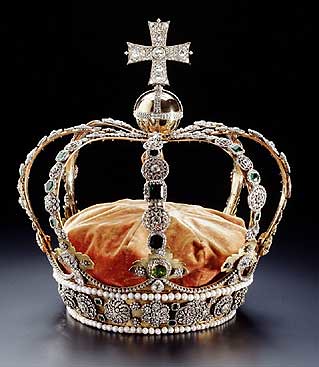

 Posts
Posts


