Hear, hear!
The Age succeeded in surprising me today:
"But a republic is not inevitable. It won't happen unless it is kept on the national political agenda, and the major parties — both of which are now led by avowed republicans — should support Senator Brown's bill."
The Age will do everything to keep republicanism alive and soon return to its usual mantra of some inevitability to replace our Australian Monarchy with "a" republic.
Interestingly The Age commented in its editorial yesterday's Finance and Public Administration Committee's hearing of the inquiry into a plebiscite for "an" Australian republic Bill, but it reported nothing of the hearing.
It could have done so like the ABC that picked up odd bits and pieces of various statements, but a good newspaper would have given a full report of the pros and cons that were brought forward.
We Age readers really missed out highlights like this: Sarah Brasch, who represented Women for an Australian republic triumphantly announced that finally 43 percent of Australian women supported "a" republic. 43 percent!! Hardly the overwhelming majority, that is usually claimed by The Age and likeminded republican politicians.
Why did The Age fail - again - to do its job?
Thursday, 30 April 2009


Monday, 27 April 2009
The Age continues the Governor's saga
While nobody knows, where the Governor of Victoria is - the Premier's office did not reply to a question about David de Kretser's official visit "in the Middle East" - Paul Austin continued his useless campaign about the Governor's right "to speak out on contentious issues such as global warming".
Today's Age could report of a bi-partisan support: "Mr Brumby and Mr Baillieu were responding to reports in The Age on recent speeches by Professor de Kretser in which he has issued a call to arms on global warming." According to The Age "Mr Baillieu said Australian society had moved on from the view that vice-regal representatives should stay silent.
Of course, this article followed the rule, that The Age does not publish any article without a sting against the Australian Monarchy. The paper referred to the "representatives of the Queen in Australia". Naturally the correct term is the Queen of Australia.
A lot of propaganda in two letters.
While nobody knows, where the Governor of Victoria is - the Premier's office did not reply to a question about David de Kretser's official visit "in the Middle East" - Paul Austin continued his useless campaign about the Governor's right "to speak out on contentious issues such as global warming".
Today's Age could report of a bi-partisan support: "Mr Brumby and Mr Baillieu were responding to reports in The Age on recent speeches by Professor de Kretser in which he has issued a call to arms on global warming." According to The Age "Mr Baillieu said Australian society had moved on from the view that vice-regal representatives should stay silent.
Of course, this article followed the rule, that The Age does not publish any article without a sting against the Australian Monarchy. The paper referred to the "representatives of the Queen in Australia". Naturally the correct term is the Queen of Australia.
A lot of propaganda in two letters.
Saturday, 25 April 2009
Carnation Revolution in Portugal 35 years ago
The Carnation Revolution (Portuguese: Revolução dos Cravos), was a military coup against a 40 year old dictatorship, which started on April 25, 1974, in Lisbon, Portugal. It gave all political groups the opportunity to form parties and to participate in the political life of the country. Before the coup the Portuguese Monarchists had been part of the opposition against António de Oliveira Salazar and Marcelo Caetano. My Portuguese friend, Nuno Castelo-Branco , writes on the Carnation Revolution from a Monarchist point of view. Nuno has two blogs, that are worth checking: estadosentido and centenario-republica.
The 25th April 1974 has a special signifiance for the Portuguese history, because it meant a clear rupture with the colonial past. At that time Portugal held overseas territories in the Atlantic - Cape Verde, São Tomé, in Africa - Guinea-Bissau, Angola and Mozambique -,and in Asia - Macau and Timor -, but Portugal was facing a guerrilla war on several African fronts, this was during the same period as the Vietnam war. Without any support of from formal NATO allies, the Portuguese army managed to contain the thread imposed by movements armed by the USSR and China and financed by countries that had interests in the economic prospects in Angola and Mozambique.
The internal situation of the regime had started to crumble in the post-WWII period, when the influence of communism was evident around the world. Half of Europe was occupied by the Red Army and the decolonization period arrived with the "winds of history".
Portugal had a banishment law for the Braganza family. This law was imposed after the illegal and brutal coup d'État in 1910, but the collapse of the 1st republic in 1926 - due to fraud, incompetence, economic disaster and political repression -, gave the “restaurationists” some hopes to achieve the return of the Monarchy. Unfortunately, the premature death of King Manuel II in 1932 created a new situation and rendered the path for a smooth acceptation of the restoration more difficult. [In 1933 António de Oliveira Salazar came to power. RR]
The visit of Queen Amelia in 1945 surprised the Salazar regime, who could not expect such a popular reception, with thousands of people cheering her everywhere. Amelia embodied in fact the last rememberance of a regime of political tolerance, being the face of the multi-party constitutiobal legalism. Wishing to calm down the internal pressure of the Monarchist members of the Causa Monárquica - the people’s wish was already tested by Amelia's visit -, Salazar finally agreed to abolish the banishment law, precisely in the period that General Franco declared Spain a kingdom "in waiting". All the opposition was waiting what the new situation held for them: The Braganzas returned to Portugal. It was well known that the regime’s own party, the União Nacional, had an extremely strong monarchist section. Salazar knew that the Duke of Braganza was an admirer of the British Monarchy. On this prospect, that the Portuguese Estado Nuevo could be replaced by a Parliamentarian Monarchy Salazar decided to stay on the republican way, seeing in the restoration a threat to his personal power.
The accomplishment of the military service of the (then Crown Prince) Dom Duarte at the front in Angola, left negative impressions on Marcelo Caetano (who had succeded Salazar in 1968), because His Royal Highness tried to organize an opposition list in Angola, to run for the national elections. At this moment the ecologist-liberal group of Monarchists under the direction of Ribeiro Telles, announced the complete rupture with the Caetano regime, who was unable to solve politically the military conflict in the overseas territories. The war was far from lost, but without any logistic assistance by the formal allies, it could be prolonged in the future, creating internal friction and international oposition against Portugal.
The 25th April had as direct consequence the rapid abandonning of the overseas provinces, with a unprecedent chaos everywhere. Due to the clear influence of the communist party, the army retired, and circa one million "colons" (settlers) where forced to flee to Portugal, South Africa, Brazil and even Australia.
The normalization of the internal situation in Portugal, included the country’s entry into the EU, re-establishing of strong ties with the traditional allies, the United Kingdom and the USA. Actually, the economical degradation, the perils due to the massification of the EU, give a very clear rise of the Monarchist movement which is stronger than ever.
Deputies in parliament - in most of the democratic parties, Socialist, Social Democrat, Conservative, Party of the Earth/ecologists -, in the press - some polls give circa 40% to the monarchy in an hypothetic referendum -, and now, in the internet. As a simple curiosity, let me mention a poll of SIC (channel 3 of TV) on the day of the marriage of Dom Duarte with Isabel Herédia (1995), resulted in a 67% yes vote for the monarchy would a referendum have been held on that day! It's now quite normal that public figures like actors, journalists, university professors, etc. indicate their pro-monarchy opinion, and many see it as a guarantee for the survival of our country in the expanding European Union. The economic crisis and the internal political discredit are other factors that can enforce Monarchist hopes. The discrete and dignified social and cultural services of the actual Duke of Braganza, have a certain echo in the population which regards him as one of the few personalities in the country who is above any suspiction.
We must not forget his vital role in the liberation of East Timor, insisting for more than two decades on the right of an consultation of the people of this territory, with his intense diplomac efforts in Europe and in the USA. An important task of the Duke is without any doubt, strenghtning the ties with the increasingly important Community of the Portuguese Speaking Countries, where his diplomatic work is widely recognized.
N. C.-B.
 Since 1975 the Monarchist People's Party (Partido Popular Monárquico = PPM) has taken part in all elections and has presently two seats in the Portuguese parliament.
The Carnation Revolution (Portuguese: Revolução dos Cravos), was a military coup against a 40 year old dictatorship, which started on April 25, 1974, in Lisbon, Portugal. It gave all political groups the opportunity to form parties and to participate in the political life of the country. Before the coup the Portuguese Monarchists had been part of the opposition against António de Oliveira Salazar and Marcelo Caetano. My Portuguese friend, Nuno Castelo-Branco , writes on the Carnation Revolution from a Monarchist point of view. Nuno has two blogs, that are worth checking: estadosentido and centenario-republica.
The 25th April 1974 has a special signifiance for the Portuguese history, because it meant a clear rupture with the colonial past. At that time Portugal held overseas territories in the Atlantic - Cape Verde, São Tomé, in Africa - Guinea-Bissau, Angola and Mozambique -,and in Asia - Macau and Timor -, but Portugal was facing a guerrilla war on several African fronts, this was during the same period as the Vietnam war. Without any support of from formal NATO allies, the Portuguese army managed to contain the thread imposed by movements armed by the USSR and China and financed by countries that had interests in the economic prospects in Angola and Mozambique.
The internal situation of the regime had started to crumble in the post-WWII period, when the influence of communism was evident around the world. Half of Europe was occupied by the Red Army and the decolonization period arrived with the "winds of history".
Portugal had a banishment law for the Braganza family. This law was imposed after the illegal and brutal coup d'État in 1910, but the collapse of the 1st republic in 1926 - due to fraud, incompetence, economic disaster and political repression -, gave the “restaurationists” some hopes to achieve the return of the
 Monarchy. Unfortunately, the premature death of King Manuel II in 1932 created a new situation and rendered the path for a smooth acceptation of the restoration more difficult. [In 1933 António de Oliveira Salazar came to power. RR]
The visit of Queen Amelia in 1945 surprised the Salazar regime, who could not expect such a popular reception, with thousands of people cheering her everywhere. Amelia embodied in fact the last rememberance of a regime of political tolerance, being the face of the multi-party constitutiobal legalism.
 Wishing to calm down the internal pressure of the Monarchist members of the Causa Monárquica - the people’s wish was already tested by Amelia's visit -, Salazar finally agreed to abolish the banishment law, precisely in the period that General Franco declared Spain a kingdom "in waiting". All the opposition was waiting what the new situation held for them: The Braganzas returned to Portugal. It was well known that the regime’s own party, the União Nacional, had an extremely strong monarchist section. Salazar knew that the Duke of Braganza was an admirer of the British Monarchy. On this prospect, that the Portuguese Estado Nuevo could be replaced by a Parliamentarian Monarchy Salazar decided to stay on the republican way, seeing in the restoration a threat to his personal power.
The accomplishment of the military service of the (then Crown Prince) Dom Duarte at the front in Angola, left negative impressions on Marcelo Caetano (who had succeded Salazar in 1968), because His Royal Highness tried to organize an opposition list in Angola, to run for the national elections. At this moment the ecologist-liberal group of Monarchists under the direction of Ribeiro Telles, announced the complete rupture with the Caetano regime, who was unable to solve politically the military conflict in the overseas territories. The war was far from lost, but without any logistic assistance by the formal allies, it could be prolonged in the future, creating internal friction and international oposition against Portugal.
The 25th April had as direct consequence the rapid abandonning of the overseas provinces, with a unprecedent chaos everywhere. Due to the clear influence of the communist party, the army retired, and circa one million "colons" (settlers) where forced to flee to Portugal, South Africa, Brazil and even Australia.
The normalization of the internal situation in Portugal, included the country’s entry into the EU, re-establishing of strong ties with the traditional allies, the United Kingdom and the USA. Actually, the economical degradation, the perils due to the massification of the EU, give a very clear rise of the Monarchist movement which is stronger than ever.
Deputies in parliament - in most of the democratic parties, Socialist, Social Democrat, Conservative, Party of the Earth/ecologists -, in the press - some polls give circa 40% to the monarchy in an hypothetic referendum -, and now, in the internet. As a simple curiosity, let me mention a poll of SIC (channel 3 of TV) on the day of the marriage of Dom Duarte with Isabel Herédia (1995), resulted in a 67% yes vote for the monarchy would a referendum have been held on that day! It's now quite normal that public figures like actors, journalists, university professors, etc. indicate their pro-monarchy opinion, and many see it as a guarantee for the survival of our country in the expanding European Union. The economic crisis and the
 internal political discredit are other factors that can enforce Monarchist hopes. The discrete and dignified social and cultural services of the actual Duke of Braganza, have a certain echo in the population which regards him as one of the few personalities in the country who is above any suspiction.
 We must not forget his vital role in the liberation of East Timor, insisting for more than two decades on the right of an consultation of the people of this territory, with his intense diplomac efforts in Europe and in the USA. An important task of the Duke is without any doubt, strenghtning the ties with the increasingly important Community of the Portuguese Speaking Countries, where his diplomatic work is widely recognized.
N. C.-B.
 Since 1975 the Monarchist People's Party (Partido Popular Monárquico = PPM) has taken part in all elections and has presently two seats in the Portuguese parliament.
Republican propaganda on ANZAC Day
Editorials in The Age are usually dull pieces of writing. The editorial on ANZAC Day 2009 was no exception from this rule. You had to struggle through 4,460 characters to reach the last sentence: “When Australia finally severs its vestigial links with the imperial past, declaring itself to be a republic with its own head of state, we really shall have an independence day, and Anzac Day will not be diminished by it.”
Will everybody be forced to celebrate “republic’s day”. More dreary editorials on the fabulous republic we have to enjoy? What about those people – like me – who are unrepentant Monarchists? Will they be excluded from the Australian community? Or does The Age editorialist believe, they would disappear with the proclamation of “a” republic? He or she has no clue about Monarchists and their stamina.
Even after 139 years of republican power in France, the regime has still to contest with up to 20 percent of French men and women who remain Royalists and who flourish in many organisations and even a political party, L’Alliance Royale. The Brazilian Monarchy was toppled by a military coup in 1889, yet, when a referendum of the form of state was held in 1993, 6,840,551 Brazilians cast their vote in favour of the Monarchy. The Imperial Family is highly respected in Brazil. In Germany only three years ago a Kaisertreue Jugend ("Youth loyal to the Emperor") was founded. 91 years after the Kaiser was forced to go into exile and 68 years after his death a small, but growing number of young Germans turn towards the Monarchy as an alternative to the republican regime.
Republicans mustn’t think they could get rid of us.
But these are all premature thoughts, because the Aussie republicans haven’t won the referendum and they are unlikely to win it, hence Kevin Rudd’s refusal to proceed with the necessary steps to call for a referendum.
Editorials in The Age are usually dull pieces of writing. The editorial on ANZAC Day 2009 was no exception from this rule. You had to struggle through 4,460 characters to reach the last sentence: “When Australia finally severs its vestigial links with the imperial past, declaring itself to be a republic with its own head of state, we really shall have an independence day, and Anzac Day will not be diminished by it.”
Will everybody be forced to celebrate “republic’s day”. More dreary editorials on the fabulous republic we have to enjoy? What about those people – like me – who are unrepentant Monarchists? Will they be excluded from the Australian community? Or does The Age editorialist believe, they would disappear with the proclamation of “a” republic? He or she has no clue about Monarchists and their stamina.
Even after 139 years of republican power in France, the regime has still to contest with up to 20 percent of French men and women who remain Royalists and who flourish in many organisations and even a political party, L’Alliance Royale. The Brazilian Monarchy was toppled by a military coup in 1889, yet, when a referendum of the form of state was held in 1993, 6,840,551 Brazilians cast their vote in favour of the Monarchy. The Imperial Family is highly respected in Brazil. In Germany only three years ago a Kaisertreue Jugend ("Youth loyal to the Emperor") was founded. 91 years after the Kaiser was forced to go into exile and 68 years after his death a small, but growing number of young Germans turn towards the Monarchy as an alternative to the republican regime.
Republicans mustn’t think they could get rid of us.
But these are all premature thoughts, because the Aussie republicans haven’t won the referendum and they are unlikely to win it, hence Kevin Rudd’s refusal to proceed with the necessary steps to call for a referendum.
Friday, 24 April 2009
The inevitable republican mantra
After Kevin Rudd had realised that his desire to bless Australia with his republic would not be the triumphant leisure walk he had imagined, the republicans - especially in the media - have fired their salvos with full force against the Australian Monarchy.
In today’s editorial in The Age, continues the line of “the nation's inevitable journey towards a republic”. And concludes: “The summit may be last year's story, but the republic is Australia's future story.” In yesterday’s Age Marilyn Lake, professor of history at La Trobe University, had already stated: “In the next few years, […] we prepare to inaugurate a republic,” inferring that “a” republic was a given.
As a professor of history Marilyn Lake should know better. History demonstrates in all its clarity that nothing is inevitable. Human beings cannot be pressed into certain categories and even the best computers cannot calculate their behaviour, still less their feelings or their attitude on political questions.
Until 1989 we were told that socialism was inevitable. The future belonged to the socialist ideas and Karl Marx had all the answers to solve poverty, exploitation, discrimination. Erich Honnecker, head of state of the German Democratic Republic, famously claimed:
”Den Sozialismus in seinem Lauf
halten weder Ochs noch Esel auf.”
(“The course of socialism will neither be hindered by oxen nor by donkeys.”)
After the collapse of the East European Communist systems even the Chinese Communist Party discovered the “charm of capitalism”. The future belonged to unlimited free markets systems, so we were told. Capitalism had won and the few remaining doubters were ridiculed. Can’t you remember?
These days we see what happened to the inevitable conquest of free market ideology.
Certainly as a historian Marilyn Lake could easily refer to the rise and fall of many other ideologies which for a shorter or longer time had captured the attention, and even love, of the political class. Republicanism is only one of many ideologies. And it is doomed like any other ideology, because it has failed in many parts of the world. To see the proof of this thesis read the newspapers and watch the nightly news programmes.
After Kevin Rudd had realised that his desire to bless Australia with his republic would not be the triumphant leisure walk he had imagined, the republicans - especially in the media - have fired their salvos with full force against the Australian Monarchy.
In today’s editorial in The Age, continues the line of “the nation's inevitable journey towards a republic”. And concludes: “The summit may be last year's story, but the republic is Australia's future story.” In yesterday’s Age Marilyn Lake, professor of history at La Trobe University, had already stated: “In the next few years, […] we prepare to inaugurate a republic,” inferring that “a” republic was a given.
As a professor of history Marilyn Lake should know better. History demonstrates in all its clarity that nothing is inevitable. Human beings cannot be pressed into certain categories and even the best computers cannot calculate their behaviour, still less their feelings or their attitude on political questions.
Until 1989 we were told that socialism was inevitable. The future belonged to the socialist ideas and Karl Marx had all the answers to solve poverty, exploitation, discrimination. Erich Honnecker, head of state of the German Democratic Republic, famously claimed:
”Den Sozialismus in seinem Lauf
halten weder Ochs noch Esel auf.”
(“The course of socialism will neither be hindered by oxen nor by donkeys.”)
After the collapse of the East European Communist systems even the Chinese Communist Party discovered the “charm of capitalism”. The future belonged to unlimited free markets systems, so we were told. Capitalism had won and the few remaining doubters were ridiculed. Can’t you remember?
These days we see what happened to the inevitable conquest of free market ideology.
Certainly as a historian Marilyn Lake could easily refer to the rise and fall of many other ideologies which for a shorter or longer time had captured the attention, and even love, of the political class. Republicanism is only one of many ideologies. And it is doomed like any other ideology, because it has failed in many parts of the world. To see the proof of this thesis read the newspapers and watch the nightly news programmes.
Thursday, 23 April 2009
No republic in Australia
So, the republic is off the agenda in Australia. Much to the chagrin of The Age, as could be expected. Michelle Grattan did not write a comment, which would have been the most likely column to express her regret about the government’s decision not to proceed with a legally meaningless and unconstitutional plebiscite on "a" republic. No, she used the style of a journalistic report, which in a journalist's credo should give an unbiased account of facts.
In today’s article Republic off Rudd radar one year on Grattan has managed to contact seven pro-republican politicians and outspoken republicans to get their reaction. How many Monarchists did she ask for their opinion? None. Zero. Not one. As if they did not exist, wiped off the Australian continent. May be they do not exist in the Ms. Grattan’s circles, which would not be a surprise. But a quick internet search would demonstrate how easy it is to find Australian Monarchists.
Don't journalistic ethics demand that she listen to the other side as well? She and her employer obviously do not like Monarchists and the Australian Monarchy, but every first year journalist would receive a dressing down if (s)he fails to present the two sides of the coin.
Not so The Age. 7 : 0, that’s even better than the “most enthusiastic endorsement at last year's 2020 Summit” for “a” republic, when handpicked summitteers acclaimed their own grandeur and wisdom. Hardly a democratic process if you exclude Monarchists from the discussion panels.
But don’t let democracy or facts get in your way when you promote the republic.
So, the republic is off the agenda in Australia. Much to the chagrin of The Age, as could be expected. Michelle Grattan did not write a comment, which would have been the most likely column to express her regret about the government’s decision not to proceed with a legally meaningless and unconstitutional plebiscite on "a" republic. No, she used the style of a journalistic report, which in a journalist's credo should give an unbiased account of facts.
In today’s article Republic off Rudd radar one year on Grattan has managed to contact seven pro-republican politicians and outspoken republicans to get their reaction. How many Monarchists did she ask for their opinion? None. Zero. Not one. As if they did not exist, wiped off the Australian continent. May be they do not exist in the Ms. Grattan’s circles, which would not be a surprise. But a quick internet search would demonstrate how easy it is to find Australian Monarchists.
Don't journalistic ethics demand that she listen to the other side as well? She and her employer obviously do not like Monarchists and the Australian Monarchy, but every first year journalist would receive a dressing down if (s)he fails to present the two sides of the coin.
Not so The Age. 7 : 0, that’s even better than the “most enthusiastic endorsement at last year's 2020 Summit” for “a” republic, when handpicked summitteers acclaimed their own grandeur and wisdom. Hardly a democratic process if you exclude Monarchists from the discussion panels.
But don’t let democracy or facts get in your way when you promote the republic.
Tuesday, 21 April 2009
Would you believe ...
... that The Age published 19 lines on Her Majesty's birthday today? 19 lines without open nastiness, but in the usual substandard quality when it comes to referring to our Monarchy. It must have cost the editor some effort to give facts - or information (s)he considered to be facts - and not open bias. Well, and of course not quite without its usual sting against the Australian Monarchy, just by not mentioning it in the headline.
ELIZABETH II (1926-)
QUEEN OF THE UNITED KINGDOM [and Australia, as The Age deliberately failed to mention]
BORN on April 21, 1926, in Mayfair, London, Elizabeth Alexandra Mary was the first child of the Duke and Duchess of York, later King George VI and Queen Elizabeth. The young princess became first in line for the throne in 1936 when her father ascended to become king, following the abdication of King Edward VIII. Elizabeth and Lieutenant Philip Mountbatten announced their engagement early in 1947, and were married in December that year. [It was actually 20th November 1947, but we don't want to be fussy]. Their first child, Charles, was born in 1948, and Elizabeth and Philip had three more children - Anne, Andrew and Edward.
After the death of George VI, Elizabeth was crowned on February 6, 1952. [The Age did not check the archives, Princess Elizabeth became Queen on her father's death on February 6, but she was crowned 16 months later, on 2nd June 1953.] Elizabeth was crowned Queen of 32 countries, but 16 have subsequently become republics. [The reality was, when she was crowned the Archbishop of Canterbury asked the Queen: "Will you solemnly promise and swear to govern the Peoples of the United Kingdom of Great Britain and Northern Ireland, Canada, Australia , New Zealand, the Union of South Africa, Pakistan and Ceylon, and of your Possessions and other Territories to any of them belonging or pertaining, according to their respective laws and customs?" That makes SEVEN countries of which three became republics. The Age is as ill informed as usual.]
She was named Time Person of the Year in 1952. Elizabeth described 1992 as an "annus horribilis", following the divorce of Prince Charles and Lady Diana [Princess Diana at the time of her divorce], and a fire at Windsor Castle. She is now the longest living English monarch.
Isn't it amazing, how many mistakes a 19 lines news item can contain when it is published in The Age?
 Queen Elizabeth II on her Coronation day, 2nd June 1953 and not, as The Age stated, on 6th February 1952. To her left Prince Charles, Princess Anne and Prince Philip.
... that The Age published 19 lines on Her Majesty's birthday today? 19 lines without open nastiness, but in the usual substandard quality when it comes to referring to our Monarchy. It must have cost the editor some effort to give facts - or information (s)he considered to be facts - and not open bias. Well, and of course not quite without its usual sting against the Australian Monarchy, just by not mentioning it in the headline.
ELIZABETH II (1926-)
QUEEN OF THE UNITED KINGDOM [and Australia, as The Age deliberately failed to mention]
BORN on April 21, 1926, in Mayfair, London, Elizabeth Alexandra Mary was the first child of the Duke and Duchess of York, later King George VI and Queen Elizabeth. The young princess became first in line for the throne in 1936 when her father ascended to become king, following the abdication of King Edward VIII. Elizabeth and Lieutenant Philip Mountbatten announced their engagement early in 1947, and were married in December that year. [It was actually 20th November 1947, but we don't want to be fussy]. Their first child, Charles, was born in 1948, and Elizabeth and Philip had three more children - Anne, Andrew and Edward.
After the death of George VI, Elizabeth was crowned on February 6, 1952. [The Age did not check the archives, Princess Elizabeth became Queen on her father's death on February 6, but she was crowned 16 months later, on 2nd June 1953.] Elizabeth was crowned Queen of 32 countries, but 16 have subsequently become republics. [The reality was, when she was crowned the Archbishop of Canterbury asked the Queen: "Will you solemnly promise and swear to govern the Peoples of the United Kingdom of Great Britain and Northern Ireland, Canada, Australia , New Zealand, the Union of South Africa, Pakistan and Ceylon, and of your Possessions and other Territories to any of them belonging or pertaining, according to their respective laws and customs?" That makes SEVEN countries of which three became republics. The Age is as ill informed as usual.]
She was named Time Person of the Year in 1952. Elizabeth described 1992 as an "annus horribilis", following the divorce of Prince Charles and Lady Diana [Princess Diana at the time of her divorce], and a fire at Windsor Castle. She is now the longest living English monarch.
Isn't it amazing, how many mistakes a 19 lines news item can contain when it is published in The Age?
 Queen Elizabeth II on her Coronation day, 2nd June 1953 and not, as The Age stated, on 6th February 1952. To her left Prince Charles, Princess Anne and Prince Philip.
Monday, 20 April 2009
From the Governor's website: He is up, up and away
Today appeared a very sclerotic sentence on the Victorian Governor's website:
Monday April 20, 2009
The Governor, Professor David de Kretser, AC, and Mrs de Kretser, left Melbourne to pay an official visit to Turkey and the Middle East.
Wouldn't you like to know more?
Considering that ANZAC Day is approaching his visit to Turkey might be in some ways connected to Gallipoli.
But why doesn't the website give any details?
After all, he is entitled to represent Victoria overseas. On his website the section position of the Governor explains:
"The Queen is head of the State of Victoria but the Governor ordinarily exercises the powers and functions of head of state.
"When an apolitical head of the Victorian community should speak for the community, the Governor does so. The Governor gives the Anzac Day address from the forecourt of the Shrine of Remembrance and the Australia Day address from the steps of Parliament House.
"At the request of the Premier, Governors visit overseas countries to represent Victoria in an apolitical way and build friendship and good relations."
As long as he remembers that he is only The Queen's representative, nobody can object his trip. However, as a Victorian citizen I would be happy to know more about the Governor's trip. After all, ANZAC Day is 25th April - he left on 20th April. Where will be be, whom is he going to meet? What is hidden behind the term "Middle East"? Israel, the Hashemite Kingdom of Jordan, Syria, Lebanon?
That is a great mystery and not helped by the fact that the Melbourne media have so far failed to report on the Governor's trip.
Today appeared a very sclerotic sentence on the Victorian Governor's website:
Monday April 20, 2009
The Governor, Professor David de Kretser, AC, and Mrs de Kretser, left Melbourne to pay an official visit to Turkey and the Middle East.
Wouldn't you like to know more?
Considering that ANZAC Day is approaching his visit to Turkey might be in some ways connected to Gallipoli.
But why doesn't the website give any details?
After all, he is entitled to represent Victoria overseas. On his website the section position of the Governor explains:
"The Queen is head of the State of Victoria but the Governor ordinarily exercises the powers and functions of head of state.
"When an apolitical head of the Victorian community should speak for the community, the Governor does so. The Governor gives the Anzac Day address from the forecourt of the Shrine of Remembrance and the Australia Day address from the steps of Parliament House.
"At the request of the Premier, Governors visit overseas countries to represent Victoria in an apolitical way and build friendship and good relations."
As long as he remembers that he is only The Queen's representative, nobody can object his trip. However, as a Victorian citizen I would be happy to know more about the Governor's trip. After all, ANZAC Day is 25th April - he left on 20th April. Where will be be, whom is he going to meet? What is hidden behind the term "Middle East"? Israel, the Hashemite Kingdom of Jordan, Syria, Lebanon?
That is a great mystery and not helped by the fact that the Melbourne media have so far failed to report on the Governor's trip.
Sunday, 19 April 2009
The ugly side of the ANZAC DAY public holiday
The Tasmanian government announced, it will introduce a Monday public holiday when ANZAC Day falls on a Sunday, or a Tuesday when the day coincides with Easter Monday.
This move to restore the ANZAC Day long weekend holiday brings Tasmania in line with every other state and territory except Victoria.
Last week Victorians celebrated Easter. A pity though that Easter is a holiday soured by the reality that the Kennett government stole part of the celebration from thousands of ordinary Victorian workers, when it thieved the Easter Tuesday holiday.
The Brumby government has consistently refused to return the public holidays: Show Day, Easter Tuesday and the ANZAC long weekend, to working families.
These holidays were grabbed by a greedy and arrogant government in the 1990s without any consultation and represent the theft of three day's pay from every working Victorian!
I am sure the government has long since thought Victorian workers have forgotten the act of unmitigated theft by the Kennett government. This posting hopefully will remind you that Victorian workers remember the public holidays that they are owed.
But now Victoria and the Brumby government stand alone in refusing to gazette a public holiday on Monday following a weekend ANZAC Day.
As usual I expect the spin about the significance of the ANZAC Day itself etc... but we all know it is just a way of looking after the government's business mates by avoiding giving working Victorians a public holiday.
I am still not sure who is worse a thief or someone who refuses to return stolen goods!
And to add insult to injury one of the few public holidays left, Queen's Birthday, is also under attack. Don't these republicans have any decency and leave us the very few holidays that are a fixed element of our calendar?
The Tasmanian government announced, it will introduce a Monday public holiday when ANZAC Day falls on a Sunday, or a Tuesday when the day coincides with Easter Monday.
This move to restore the ANZAC Day long weekend holiday brings Tasmania in line with every other state and territory except Victoria.
Last week Victorians celebrated Easter. A pity though that Easter is a holiday soured by the reality that the Kennett government stole part of the celebration from thousands of ordinary Victorian workers, when it thieved the Easter Tuesday holiday.
The Brumby government has consistently refused to return the public holidays: Show Day, Easter Tuesday and the ANZAC long weekend, to working families.
These holidays were grabbed by a greedy and arrogant government in the 1990s without any consultation and represent the theft of three day's pay from every working Victorian!
I am sure the government has long since thought Victorian workers have forgotten the act of unmitigated theft by the Kennett government. This posting hopefully will remind you that Victorian workers remember the public holidays that they are owed.
But now Victoria and the Brumby government stand alone in refusing to gazette a public holiday on Monday following a weekend ANZAC Day.
As usual I expect the spin about the significance of the ANZAC Day itself etc... but we all know it is just a way of looking after the government's business mates by avoiding giving working Victorians a public holiday.
I am still not sure who is worse a thief or someone who refuses to return stolen goods!
And to add insult to injury one of the few public holidays left, Queen's Birthday, is also under attack. Don't these republicans have any decency and leave us the very few holidays that are a fixed element of our calendar?
Saturday, 18 April 2009
Lots of media action, but no republic
The Age’s excitement sparkles from every word: “A year ago tomorrow, more than 1000 of the nation's best and brightest gathered, enthusiastic and idealistic, for Prime Minister Kevin Rudd's 2020 talkfest.” (in: The Age, 18th April 2009)
Participants were less enthusiastic and recalled the obvious "guidance" by the government. Ted Evans, former Treasury secretary and now chairman of Westpac, who was in the economics group, called the agenda “managed”, "including in the group reporting, which was vetted by the Government" added The Age.
I was about to comment “the summit's overwhelming support for a republic” as The Age put it uncritically, but the whole thing is such a joke that it's not worth adding anything else to The Age's reporting, which speaks volumes about the summit's credibility. Who can be surprised they got a nearly 100 percent result for “a” republic, when no Monarchists were invited to take part in the discussion?
But fortunately it is the Australian people who decide on the Monarchy and NOT politicians or their handpicked summitteers.
Greg Craven, vice-chancellor of the Australian Catholic University, would like to see "a commitment to the start of a process" to prepare another referendum on “a” republic in Australia, but accepts "the process will take time".
That will give The Age many more opportunities to complain about Her Majesty’s mild reign over Her Commonwealth of Australia and the royal symbols in Australia.
The Duke of Edinburgh
 And at the same time The Age can publish more articles on the Australian Royal Family, like the one published also in today’s edition on Prince Philip, the Duke of Edinburgh, who opened the Melbourne Olympics in 1956, a fact which Aussie republicans may like to wipe out of the history books.
At least today’s article mentioned that the Prince, who will celebrate his 88th brthday in June, averages 370 functions a year beside The Queen — more than 18,500 since he became the Prince Consort. The Prince does not consider retirement nor a superannuation bonus which is granted to ex-politicians. He does not even get a salary, neither from the Australian taxpayer nor from the British.
The Age’s excitement sparkles from every word: “A year ago tomorrow, more than 1000 of the nation's best and brightest gathered, enthusiastic and idealistic, for Prime Minister Kevin Rudd's 2020 talkfest.” (in: The Age, 18th April 2009)
Participants were less enthusiastic and recalled the obvious "guidance" by the government. Ted Evans, former Treasury secretary and now chairman of Westpac, who was in the economics group, called the agenda “managed”, "including in the group reporting, which was vetted by the Government" added The Age.
I was about to comment “the summit's overwhelming support for a republic” as The Age put it uncritically, but the whole thing is such a joke that it's not worth adding anything else to The Age's reporting, which speaks volumes about the summit's credibility. Who can be surprised they got a nearly 100 percent result for “a” republic, when no Monarchists were invited to take part in the discussion?
But fortunately it is the Australian people who decide on the Monarchy and NOT politicians or their handpicked summitteers.
Greg Craven, vice-chancellor of the Australian Catholic University, would like to see "a commitment to the start of a process" to prepare another referendum on “a” republic in Australia, but accepts "the process will take time".
That will give The Age many more opportunities to complain about Her Majesty’s mild reign over Her Commonwealth of Australia and the royal symbols in Australia.
The Duke of Edinburgh
 And at the same time The Age can publish more articles on the Australian Royal Family, like the one published also in today’s edition on Prince Philip, the Duke of Edinburgh, who opened the Melbourne Olympics in 1956, a fact which Aussie republicans may like to wipe out of the history books.
At least today’s article mentioned that the Prince, who will celebrate his 88th brthday in June, averages 370 functions a year beside The Queen — more than 18,500 since he became the Prince Consort. The Prince does not consider retirement nor a superannuation bonus which is granted to ex-politicians. He does not even get a salary, neither from the Australian taxpayer nor from the British.
Wednesday, 15 April 2009

Queen's Birthday stamp 2009
The 2009 stamp is on sale in Post Offices from today, 15th April until 13th May. Please contact your local Post Office to ask them to ensure they order in the stamps.
The Queen’s Birthday stamp issue for 2009 features the Trooping of the Colour Parade, which marks the Monarch’s official birthday and takes place on the second Saturday in June. Australians are not allowed to watch the parade on television, unlike the German TV audience who have the privilege to watch the Trooping of the Colour since 1977.

The ceremony has marked the Sovereign’s official birthday since 1748 and the stamps in this year’s issue show how The Queen has participated in the parade during Her reign; from riding at the head of the parade in regimental uniform to riding in a carriage. HRH Prince Philip accompanies The Queen at this event and is shown with Her on the stamp.

The miniature sheet features the annual trooping of The Queen’s Colour in Australia held at the Royal Military College of Australia, Duntroon in Canberra. The parade is usually reviewed by H.E. the Governor-General. The Queen’s Colour was trooped in Australia for the first time at Duntroon on the Queen’s Birthday Parade in 1956, a practice which has continued since then.

The present colours were presented by Her Majesty Queen Elizabeth II, Queen of Australia, on 10th May 1988.
Australia Post has a Stamp Shop for online purchases.
Tuesday, 7 April 2009
Not for Australian eyes and ears
Later this April Prince Charles and the Duchess of Cornwall will visit Rome and Venice before flying on to Berlin. Both visits will focus on the Prince of Wales passion: The sharpening the awareness for the dangers of climate change. While he will discuss the matter with the Potsdam-Institut für Klimafolgenforschung (Potsdam Institute for Research of Climatic Effects) his audience in Rome will be a complete different one: He will give a speech to the lower house of the Italian Parliament, the Chamber of Deputies, on the urgent need to address climate change, one of the issues he has warned must not be forgotten in the current pre-occupation with economic recession.
When will he address the Australian Parliament?
Or to put the question differently: When will those whose say they are concerned about the effects of climate change ask the Prince of Wales to assist them in their effort to convince the Australian public that more should be done?. Why not let Prince Charles talk to those sceptics who try to block measures being taken? Especially those sitting in Parliament?
Later this April Prince Charles and the Duchess of Cornwall will visit Rome and Venice before flying on to Berlin. Both visits will focus on the Prince of Wales passion: The sharpening the awareness for the dangers of climate change. While he will discuss the matter with the Potsdam-Institut für Klimafolgenforschung (Potsdam Institute for Research of Climatic Effects) his audience in Rome will be a complete different one: He will give a speech to the lower house of the Italian Parliament, the Chamber of Deputies, on the urgent need to address climate change, one of the issues he has warned must not be forgotten in the current pre-occupation with economic recession.
When will he address the Australian Parliament?
Or to put the question differently: When will those whose say they are concerned about the effects of climate change ask the Prince of Wales to assist them in their effort to convince the Australian public that more should be done?. Why not let Prince Charles talk to those sceptics who try to block measures being taken? Especially those sitting in Parliament?
Sunday, 5 April 2009
How to create a Scoop
When Evelyn Waugh published his novel “Scoop” in 1938 he described brilliantly how the media at that time made up a story out of nothing.
His sketching is still in practice and The Age follows his description to the letter.
First: On 2nd April Paul Austin, The Age’s state political editor, reports on a speech the Governor of Victoria, David de Kretser, gave to Rotary leaders in Melbourne in February [!]. In it the Governor more or less urged Victorians to get greener. He urged Victorians to build smaller homes, stop drinking bottled water and wear more clothes in winter to reduce energy consumption and help save the planet. Hardly a call to start a revolution.
In the same issue of The Age, the same Paul Austin asked on the opinion page: “Has Victoria's Governor overstepped office's bounds?” And he gives the answer in the first line of his article: “David de Kretser's forthright views risk politicising his role.”
And pretending he was really worried about the office of the Victorian Governor, Paul Austin concludes: “Many Victorians will applaud these views. Others will not. But where should a governor draw the line? Many people who embrace de Kretser's views on climate change would be horrified if the next governor were to argue, say, in favour of capital punishment or against abortion. Victoria has an activist Governor. The question is, is that what we want?“
Second: On 3rd April it was again Paul Austin who talked to a Liberal opponent of David de Kretser’s February statement, in Governor should 'butt out of politics': “Western suburbs MP Bernie Finn said Professor de Kretser was damaging the office of governor and the standing of the constitutional monarchy by putting his views on contentious issues such as citizenship and global warming.”
And surprise, surprise, in the same issue of The Age an unnamed editorialist (again the indefatigable Paul Austin?) came to the rescue of the Governor’s freedom of speech: “The Governor has the right to speak his mind”: “Other state governors and governors-general — for example, the late Davis McCaughey and Sir William Deane — spoke out on matters of conscience to the greater benefit of society. There was little reason their vice-regal roles should have prevented them from doing so.”
Today part three of the play: "Better for Queen's representatives to walk the talk". Another editorial, this time in The Sunday Age on the vice regal role of the Governor. It summarises the previous articles and editorials, but does not add anything new to the discussion, except for the final chapters.
Here The Sunday Age can draw the conclusion that it was obviously heading for, being a Fairfax publication: “There is little evidence the Governor or Governor-General are divisive figures. What they might be instead are transitional figureheads, providing an example of how the president of a republic might act, were such a person to be appointed.”
After all this week’s efforts The (Sunday) Age finally comes to the climax: “Last week both [Governor-General Quentin] Bryce and Prime Minister Rudd said they believed an Australian republic was inevitable but not imminent.”
But despite all the Fairfax media’s and many politicians’ efforts the editorialist must concede: “… it is not surprising that the republic is on the backburner. Yet for the first time in Australian history, leaders of the Government and the Opposition are republicans, an interesting development that has made little impression on the public mind.”
All the efforts vanish in vain: They made little impression on the public mind. The mini scoop fabricated by The Age collapsed – once again.
But that will not prevent The Age to try a re-start.
When Evelyn Waugh published his novel “Scoop” in 1938 he described brilliantly how the media at that time made up a story out of nothing.
His sketching is still in practice and The Age follows his description to the letter.
First: On 2nd April Paul Austin, The Age’s state political editor, reports on a speech the Governor of Victoria, David de Kretser, gave to Rotary leaders in Melbourne in February [!]. In it the Governor more or less urged Victorians to get greener. He urged Victorians to build smaller homes, stop drinking bottled water and wear more clothes in winter to reduce energy consumption and help save the planet. Hardly a call to start a revolution.
In the same issue of The Age, the same Paul Austin asked on the opinion page: “Has Victoria's Governor overstepped office's bounds?” And he gives the answer in the first line of his article: “David de Kretser's forthright views risk politicising his role.”
And pretending he was really worried about the office of the Victorian Governor, Paul Austin concludes: “Many Victorians will applaud these views. Others will not. But where should a governor draw the line? Many people who embrace de Kretser's views on climate change would be horrified if the next governor were to argue, say, in favour of capital punishment or against abortion. Victoria has an activist Governor. The question is, is that what we want?“
Second: On 3rd April it was again Paul Austin who talked to a Liberal opponent of David de Kretser’s February statement, in Governor should 'butt out of politics': “Western suburbs MP Bernie Finn said Professor de Kretser was damaging the office of governor and the standing of the constitutional monarchy by putting his views on contentious issues such as citizenship and global warming.”
And surprise, surprise, in the same issue of The Age an unnamed editorialist (again the indefatigable Paul Austin?) came to the rescue of the Governor’s freedom of speech: “The Governor has the right to speak his mind”: “Other state governors and governors-general — for example, the late Davis McCaughey and Sir William Deane — spoke out on matters of conscience to the greater benefit of society. There was little reason their vice-regal roles should have prevented them from doing so.”
Today part three of the play: "Better for Queen's representatives to walk the talk". Another editorial, this time in The Sunday Age on the vice regal role of the Governor. It summarises the previous articles and editorials, but does not add anything new to the discussion, except for the final chapters.
Here The Sunday Age can draw the conclusion that it was obviously heading for, being a Fairfax publication: “There is little evidence the Governor or Governor-General are divisive figures. What they might be instead are transitional figureheads, providing an example of how the president of a republic might act, were such a person to be appointed.”
After all this week’s efforts The (Sunday) Age finally comes to the climax: “Last week both [Governor-General Quentin] Bryce and Prime Minister Rudd said they believed an Australian republic was inevitable but not imminent.”
But despite all the Fairfax media’s and many politicians’ efforts the editorialist must concede: “… it is not surprising that the republic is on the backburner. Yet for the first time in Australian history, leaders of the Government and the Opposition are republicans, an interesting development that has made little impression on the public mind.”
All the efforts vanish in vain: They made little impression on the public mind. The mini scoop fabricated by The Age collapsed – once again.
But that will not prevent The Age to try a re-start.
Wednesday, 1 April 2009
The Age changes the Royal crest
The Age has never made a secret of its republican bias: “… this newspaper has long advocated that Australia should become a republic." (The Age, 15th April 2008).
This 1st April 2009 Paul Ramadge, the editor of The Age, will present the paper’s new masthead. Leaked documents show the changes. “Since our republican attitude was not reflected by the royal coat of arms in the centre of our masthead, we had to remove the crown and replace it with a republican symbol.”
The Age art director Bill Farr is well aware of the ramifications. “The masthead has to convey the feeling of the paper, reflects it content, underline its worthiness,” he says in “extra, the quarterly newsletter for readers of The Age", March 2009 (not available on-line). The current version, developed by Farr and design specialists de Luxe & Associates, had been “working so well after seven years”, but needed a revamp to reflect the newspaper's republican policies.
The crest, the potent symbol splitting the royal motto “Dieu et mon Droit” first appeared on The Age's front page in 1861, featuring a coat of arms, the lion of England and the unicorn of Scotland. They will remain for the time being. “We toyed with the idea of developing a uniquely Australian crest, but it was fraught with indecision,” says Farr. “There’s also been a push to get rid of the crest entirely. A republican push, which is not a surprise. However, while the crest dates you in one way, in another it stamps your authority.”
Therefore The Age opted for a compromise: The Jacobin hat - also known as Phrygian cap - was deemed suitable to make the editorial strategy of The Age clear. In future it will look like this: During the French revolution, the first Phrygian caps appeared on the heads of the French a few months after the storming of the Bastille. They were made of red cloth. To wear the Phrygian cap was indeed a way of advertising one's patriotism.
“The Age’s masthead underwent changes before”, Paul Ramadage wrote in an internal memo. He did not face any resistance neither from the editorial staff nor from Fairfax media, The Age’s owner. However, John B. Fairfax, whose 10.6 percent stake in the company ranks second, remarked: “Almost invariably there are at least two sides to a story, so the task for the journalists is to seek and determine the truth. The publisher must be able to publish knowing the content to be correct and to be the truth.”
New PR-slogan as well
Ignoring Mr. Fairfax's remarks another change is due to be announced: From on 1st April onwards The Age will change its PR-slogan. Posters around Melbourne will no longer proclaim: “If it matters to you, it’s in The Age”, but more accurately: “If it matters to us, it’s in The Age.” The new slogan better reflects The Age’s daily content and will no longer confuse readers who used to miss important news items that were not covered by The Age.
The Age has never made a secret of its republican bias: “… this newspaper has long advocated that Australia should become a republic." (The Age, 15th April 2008).
This 1st April 2009 Paul Ramadge, the editor of The Age, will present the paper’s new masthead. Leaked documents show the changes. “Since our republican attitude was not reflected by the royal coat of arms in the centre of our masthead, we had to remove the crown and replace it with a republican symbol.”
The Age art director Bill Farr is well aware of the ramifications. “The masthead has to convey the feeling of the paper, reflects it content, underline its worthiness,” he says in “extra, the quarterly newsletter for readers of The Age", March 2009 (not available on-line). The current version, developed by Farr and design specialists de Luxe & Associates, had been “working so well after seven years”, but needed a revamp to reflect the newspaper's republican policies.
The crest, the potent symbol splitting the royal motto “Dieu et mon Droit” first appeared on The Age's front page in 1861, featuring a coat of arms, the lion of England and the unicorn of Scotland. They will remain for the time being. “We toyed with the idea of developing a uniquely Australian crest, but it was fraught with indecision,” says Farr. “There’s also been a push to get rid of the crest entirely. A republican push, which is not a surprise. However, while the crest dates you in one way, in another it stamps your authority.”
Therefore The Age opted for a compromise: The Jacobin hat - also known as Phrygian cap - was deemed suitable to make the editorial strategy of The Age clear. In future it will look like this:
 During the French revolution, the first Phrygian caps appeared on the heads of the French a few months after the storming of the Bastille. They were made of red cloth. To wear the Phrygian cap was indeed a way of advertising one's patriotism.
“The Age’s masthead underwent changes before”, Paul Ramadage wrote in an internal memo.
 He did not face any resistance neither from the editorial staff nor from Fairfax media, The Age’s owner. However, John B. Fairfax, whose 10.6 percent stake in the company ranks second, remarked: “Almost invariably there are at least two sides to a story, so the task for the journalists is to seek and determine the truth. The publisher must be able to publish knowing the content to be correct and to be the truth.”
New PR-slogan as well
Ignoring Mr. Fairfax's remarks another change is due to be announced: From on 1st April onwards The Age will change its PR-slogan. Posters around Melbourne will no longer proclaim: “If it matters to you, it’s in The Age”, but more accurately: “If it matters to us, it’s in The Age.” The new slogan better reflects The Age’s daily content and will no longer confuse readers who used to miss important news items that were not covered by The Age.
Tuesday, 31 March 2009
A Birthday celebration worthy of a Crown Princess
Crown Princess Margarita of Romania turned 60 on 26th March as I wrote four days ago. Her family celebrated the heiress' birthday with a Gala Dinner on 26th March 2009, in the Palatul Casei de Economii si Consemnatiuni (CEC Bank Palace) in the Romanian capital Bukarest.
This information comes from Prince Radu's blog, where he wrote on the celebrations and published the photos I used.
 King Michael I of Romania and his eldest daughter, Crown Princess Margarita.

Romania's Crown Princess' birthday was celebrated in style, in the Palatul Casei de Economii si Consemnatiuni in the Romanian capital Bukarest.
 Inside the Palatul Casei de Economii si Consemnatiuni a banquet was prepared in honour of the Crown Princess, which was attended by Romanian and foreign dignitaies.
 Crown Princess Margarita during her speech at the banquet.
 Crown Princess Margarita and her husband, Prince Radu of Hohenzollern-Vehringen.
 The Romanian Royal Family, 26th March 2009.
 King Michael's decendents, Princess Elena , PrincessIrina and Nicolae de Romania who celebrates his 24th birthday on 1st April 2009.
 Nelly Miricioiu performing for the royal audience.
Crown Princess Margarita of Romania turned 60 on 26th March as I wrote four days ago. Her family celebrated the heiress' birthday with a Gala Dinner on 26th March 2009, in the Palatul Casei de Economii si Consemnatiuni (CEC Bank Palace) in the Romanian capital Bukarest.
This information comes from Prince Radu's blog, where he wrote on the celebrations and published the photos I used.
 King Michael I of Romania and his eldest daughter, Crown Princess Margarita.
Romania's Crown Princess' birthday was celebrated in style, in the Palatul Casei de Economii si Consemnatiuni in the Romanian capital Bukarest.
 Inside the Palatul Casei de Economii si Consemnatiuni a banquet was prepared in honour of the Crown Princess, which was attended by Romanian and foreign dignitaies.
 Crown Princess Margarita during her speech at the banquet.
 Crown Princess Margarita and her husband, Prince Radu of Hohenzollern-Vehringen.
 The Romanian Royal Family, 26th March 2009.
 King Michael's decendents, Princess Elena , PrincessIrina and Nicolae de Romania who celebrates his 24th birthday on 1st April 2009.
 Nelly Miricioiu performing for the royal audience.
Monday, 30 March 2009
"A" republic is not a top priority
The ABC reports from London: "Mr Rudd made the comment during the appearance on BBC television when asked about his audience with Queen Elizabeth at Buckingham Palace on Wednesday.
"Asked if it was still a live issue in Australia after a model for a republic was voted down in a referendum in 1999, Mr Rudd said Australia would become a republic but the debate 'comes and goes'".
'"The big priority is the one we've been talking about this morning which is the global economy,' Mr Rudd said.
'"Is it (the republic) a top priority issue? No.'
'"Her Majesty is well loved in Australia and Australia will become a republic and we'll have a referendum in due season.'
"Mr Rudd will also have an audience with the Queen and attend a memorial service at Westminster Abbey for the victims of the Victorian bushfires."
Rudd says:
"Her Majesty is well loved in Australia and Australia will become a republic and we'll have a referendum in due season."
Will it become a republic? Isn't he pre-empting the Australian people's right to decide? Isn't that what referenda are about?
What happens if he and his republican supporters lose the referendum again?????
Meanwhile Queensland ABC held a poll and in the Prime Minister's home state 54.5% disagreed with the Prime Minister's assertion that "Australia will become a republic". Only 45.5% agreed with him.
That's nearly exactly a repeated result of the 1999 referendum.
The ABC reports from London: "Mr Rudd made the comment during the appearance on BBC television when asked about his audience with Queen Elizabeth at Buckingham Palace on Wednesday.
"Asked if it was still a live issue in Australia after a model for a republic was voted down in a referendum in 1999, Mr Rudd said Australia would become a republic but the debate 'comes and goes'".
'"The big priority is the one we've been talking about this morning which is the global economy,' Mr Rudd said.
'"Is it (the republic) a top priority issue? No.'
'"Her Majesty is well loved in Australia and Australia will become a republic and we'll have a referendum in due season.'
"Mr Rudd will also have an audience with the Queen and attend a memorial service at Westminster Abbey for the victims of the Victorian bushfires."
Rudd says:
"Her Majesty is well loved in Australia and Australia will become a republic and we'll have a referendum in due season."
Will it become a republic? Isn't he pre-empting the Australian people's right to decide? Isn't that what referenda are about?
What happens if he and his republican supporters lose the referendum again?????
Meanwhile Queensland ABC held a poll and in the Prime Minister's home state 54.5% disagreed with the Prime Minister's assertion that "Australia will become a republic". Only 45.5% agreed with him.
That's nearly exactly a repeated result of the 1999 referendum.
Friday, 27 March 2009
Romania's Crown Princess turned 60
Crown Princess Margarita of Romania celebrated her 60th birthday on 26th March. Her father, King Michael I (in Romanian: Regele Mihai , *25th October 1921) was forced to abdicate on 30th December 1947.
In November 1947 the King attended the wedding of his cousins, Princess Elizabeth and Prince Philip of Greece and Denmark in London. There he met Princess Anna of Bourbon-Parma. On his return to Bukarest, the Romanian Communists who controlled the country objected the King founding a family and threatened to shoot 1,500 young people whom they had arrested, should he not abdicate. King Michael left Romania on the 3rd January 1948 feeling, as he once said, as if his heart had died. He had signed, under duress, an abdication that he never recognized.
 He and Princess Anna were married on the 10th of June 1948 in Athens, at the invitation of King Paul I and Queen Frederica of the Hellenes. The ceremony took place at the Royal Palace of Athens.
Exile in Switzerland
From 1949 until 1950 the royal couple lived in Lausanne, where Princess Margarita, their first child, was born. Princesses Helena and Irina were also born in Switzerland, in 1951 and 1953 respectively. Princess Sophie was born in Athens in 1957 and Princess Marie in Copenhagen in 1964. In 1950 the Romanian Royal Family established itself in England, in Bramshill House in Hampshire and then in Ayot St-Lawrence, in Hertfordshire. There, the King and Queen ran a chicken farm and built a carpentry workshop. In 1955 the Romanian Royal Family settled in Switzerland in 1955.
 Crown Princess Margarita spent her teenage years in Switzerland. For her higher education however, rather than heading straight for Paris and the Ecole des Beaux-Arts, her preferred destination, she was persuaded to spend a year with her grandmother, Queen Helena of Romania, a cousin of Prince Philip, in Florence.
"She taught me everything I know. Everything I am is thanks to her. She introduced me to people - diplomats, artists, people from the UN who were working in Ethiopia, Sudan, South Africa." As a result she spent some months working in refugee camps in Ethiopia.
Her years in Scotland
Dreams of art school were, to Queen Helena's relief, quickly replaced by a determination to go to university. A supporter of the Romanian cause offered to pay for her fees and the British consul was summoned.
"We looked through the UCCA handbook and I thought, 'Well, I won't get into Oxford so easily.' I didn't want to go to London because some of my parents' friends were there and I didn't want to get tied down. Scotland seemed so romantic and lovely."
In the early 70s she enrolled at the Edinburgh University. She became a member of the Student Representatives' Council, where she would meet the man who was to share her life for the next five years. Gordon Brown, “a socialist student firebrand” (The Daily telegraph in a long article on that romance) meets the beautiful young Princess. They fall in love. Political principles force them apart. He turns, not into a frog, but into Her Majesty’s Prime Minister. The five-year love affair between Gordon Brown and his Romanian Princess was such that all who knew them in their student days were convinced they would marry.
"She was the one great love of his life," a close friend of Brown's once said. "He has never got over it." The Princess remains friends with Brown and his family.
Crown Princess Margarita, as a great-great-great-granddaughter of Queen Victoria, was 81st in line to the British throne at that time and a goddaughter of Prince Philip - something she did not broadcast widely.
Working with the United Nations
After Edinburgh, Crown Princess Margarita specialised in medical sociology. In 1983 she joined the United Nations' Food and Agriculture Organisation, transferring, three years later, to the International Fund for Agricultural Development. Six years later her life took a new course. In Romania, the dictator Nicolae Ceausescu had been executed. She decided to accompany her father on his return home.
"Getting on the plane was quite emotional. We didn't know what was going to happen to us," she recalls. "It was so strange to look out of the plane window and see the fields; they were huge." This was the first intimation of Ceausescu's collectivist policies that had destroyed rural communities.
"We stayed for a few days and found that villages had been knocked down and 150,000 children were living in orphanages. Ceausescu had wanted to boost the population. Family planning was forbidden, abortion was forbidden, women were compelled to have four children but they had nowhere to bring them up and had to give them to the state. A lot of children had Aids. It was a shock to the eyes and to the soul."
While she was visiting one orphanage, a child in a filthy cot died in front of her. It spurred her on to establish the Princess Margarita of Romania Foundation. "I just didn't want this ever to happen again," she says.
In practical terms, life was "quite difficult; we had nowhere to stay. We didn't have much money. I said to my father, 'I think I had better quit my career and come home.' He said, 'What for?'" Nevertheless, she abandoned her job with the UN and, as the eldest of five daughters, found a role as the family representative in Romania where she began work on her foundation.
Education was one of her first priorities. Romanian doctors, who had not been allowed contact with the West, thought that Aids was spread through the air. Conditions in health centres were, she says, "disgusting. We began to provide training not just for the medical team but for the children in the village about sex education and how to protect yourself from getting Aids."
 One of the bodies with which the foundation worked was the Actors' Union, with resting actors providing art therapy for the children. One, who ended up directing an orphanage project, was Radu Duda. His association with Princess Margarita was to prove more than professional and in 1996 the couple married in Lausanne. Created Prince Radu of Hohenzollern-Veringen, he now has an official role with the Romanian government as a trade ambassador.
To make a donation to the Crown Princess Margarita of Romania Foundation, visit http://www.fpmr.ro/
The Crown Princess in her own words
HRH The Crown Princess Margarita of Romania's article for "Leaders" Magazine
Jan. Feb. March 2002, No 1 Vol 25
My country was one with which I was myself unacquainted, though I had grown up in its shadow. As a child I had grown to know it and yearn for it through the eyes and voice of my father, King Michael who was brutally forced by the communists to leave Romania in 1948. But I had never been warmed by its sunshine, never heard the wind in the trees, or felt its earth beneath my feet. My father would tell us stories about this distant land which he called home, and described with such love, longing - and constant pain. I read books about the painted monasteries of Moldavia and Bukovina, about the Danube Delta, we listened to Romanian music, we pored over old photograph albums. Later I read history books and raged at the injustice which had condemned 23 million people to a ruthless dictatorship, to hardship, darkness and hunger, locked behind the impenetrable and seemingly eternal Iron Curtain. The Romanians suffered and I searched for my roots, my history and my identity.
I do not believe that monarchy is the only solution to a country's political ills. But in Romania it remains a fact that the monarchy was removed by a Soviet diktat. And it is equally undeniable that the post-dictatorship transformation in many European states was assisted by historic personalities who either knew how to stabilise critical moments of crises, or project their sheer personality on the events. Does anyone deny that Spain's transformation in the 1970s would have taken a different, and altogether less favourable course if King Juan Carlos, my Father's good cousin, was not there?
 My father encouraged me to set up a humanitarian foundation and immediately after that first trip to Romania I launched the work of the Princess Margarita of Romania Foundation with the aim of helping to rebuild Romania - a lifelong task to be accomplished through projects across the country, drawing on people's imagination, aiming to recreate social relations, dignity and hope.
The Foundation is established in Romania, the United Kingdom, the United States, Switzerland, France and Belgium. In the UK it is known as Princess Margarita of Romania Trust. This is a whole network which does fundraising activities for projects in Romania, as well as showing to a large number of people abroad the many faces and images of Romania.
We undertake projects in the areas of health, education, civil society development and culture. We encourage initiatives which develop people's potential to shape their own lives, and which can stimulate the revival of local communities, churches, health and educational establishments, and so help to restore a sense of civic responsibility.
Beneficiaries of the projects have included the elderly poor, hundreds of children in orphanages, children with HIV/AIDS, doctors, nurses and other healthcare workers and high school students, but just as the Foundation's programs provide help to disadvantaged categories we have also encouraged and supported that which is positive, dynamic and creative in Romania: non-governmental organisations working in the field of child protection, talented young artists, and playwrights. For instance we have a program aiming to provide Scholarships to Young Gifted Children in the Arts. Because of the very difficult economic situation in Romania, there is an enormous amount of poverty, and art has become a luxury. Faced with financial hardship, artistically talented children often become disheartened and find it impossible to go on studying, so they abandon what could be a promising career in the arts and do something else for which they do not care. So we are starting a programme of scholarships for high school students so that they can continue their studies in music, visual arts or dance. We are hoping to raise enough money this year to help 30 students, and we aim to increase that amount every year. Maybe some of you might get involved so that people your own age but less fortunate can be helped.
 "Freedom and Hope in Romania"
American Women's Club in Geneva, 17th MAY 2001 By HRH Crown Princess Margarita of Romania
The work of the Foundation is based on one fundamental premise: that Romanian society, just as the societies of other East European states, must be recreated from the bottom up. And this can only be achieved through perseverance despite adversity; determination despite obstacles. Our work acts to coordinate and concentrate our operations away from areas now subject to world attention, by directing our efforts towards medium term grass roots pilot projects - in the areas of health, education, civil society development and culture. We encourage initiatives which develop people's potential to shape their own lives, and which can stimulate the revival of local communities, churches, health and educational establishments, and so help to restore a sense of civic responsibility and pride.
Education and capacity building in particular are built into all of our projects to help make a positive and meaningful change which will have an impact well beyond the life of any financial or technical support given by the Foundation and ensure that the programs achieve sustainability in the long-term.
To date beneficiaries of the projects have included many thousands of elderly poor: for instance last year we assisted over 32,000 senior citizens living well below any arbitrary poverty line, some, earn the equivalent of only $16 a month; other beneficiaries are about fifteen hundred institutionalized children and children with HIV/AIDS, healthcare workers and over 1000 high school students a year, but we also encourage and support that which is positive, dynamic and creative in Romania: non-governmental organizations working in the field of child protection, talented young artists, and playwrights.
 There is an important issue that is facing Romania, and one that it has to solve, it is the problem of institutionalized children. It is paradoxical, but, in spite of all the changes that have taken place since 1989, there are still thousands of children living in institutions - over 80,000. In addition, there are about 6,000 children who are infected with the HIV/AIDS virus. In 1997-1998 the Romanian Government created an Agency for the Protection of Child Rights which has introduced a comprehensive reform policy for the de-institutionalization of children. The Foundation is one important partner NGO that is taking part in the formulation of the national strategy and has continuously provided feedback and shared the experience gathered in our programs.. The Foundation has several programs not only to help improve the quality of the lives of the kids in institutions but to support as a priority efforts to de-institutionalize them as well.
The aim is to close the orphanages.
Succession of King Michael
HM King Michael named, his eldest daughter, HRH Princess Margarita as his successor and Head of the Royal House of Romania and Custodian of the Romanian Crown after his death. The King mentioned: ‘If the Romanian Nation and Parliament were to decide to reinstate the Monarchy as the form of government’ the King will ask the Parliament ‘to cease to implement the Salic-law as the form of succession, which does not correspond either to the elementary rights in Europe today, or to the values of Romanian society’. A notable proportion of the Romanian population believes that a monarchy would bring the much-needed political stability to their country. Details on the reformed Romanian succession here.
The new Line of Succession to the Throne and to the Headship of the Royal House of Romania was decided by HM King Michael, in keeping with duty to History and to the heirs of the Family:
1. HRH Crown Princess Margarita of Romania, Custodian of the Crown of Romania
2. HRH Princess Helena of Romania
3. Nicholas de Roumanie Medforth Mills (who shall become HRH Prince Nicholas of Romania on 1st April 2010 – according to the Document of the Head of the Royal House, 5th January 2005)
4. Elisabeta Karina de Roumanie
5. HRH Princess Irina of Romania
6. Michael de Roumanie Kreuger
7. Angelica de Roumanie Kreuger
8. HRH Princess Sophie of Romania
9. Elisabeta Marie Biarneix
10. HRH Princess Marie of Romania
.jpg) Nicholas de Roumanie Medforth Mills will assume the title, style and rank when upon his 25th anniversary or immediately the demise of the current Head of the Royal House and at that time he will enter in the order of succession to the Throne.
Nicholas de Roumanie Medforth Mills will assume the title, style and rank when upon his 25th anniversary or immediately the demise of the current Head of the Royal House and at that time he will enter in the order of succession to the Throne.
Crown Princess Margarita of Romania celebrated her 60th birthday on 26th March. Her father, King Michael I (in Romanian: Regele Mihai , *25th October 1921) was forced to abdicate on 30th December 1947.
In November 1947 the King attended the wedding of his cousins, Princess Elizabeth and Prince Philip of Greece and Denmark in London. There he met Princess Anna of Bourbon-Parma. On his return to Bukarest, the Romanian Communists who controlled the country objected the King founding a family and threatened to shoot 1,500 young people whom they had arrested, should he not abdicate. King Michael left Romania on the 3rd January 1948 feeling, as he once said, as if his heart had died. He had signed, under duress, an abdication that he never recognized.
 He and Princess Anna were married on the 10th of June 1948 in Athens, at the invitation of King Paul I and Queen Frederica of the Hellenes. The ceremony took place at the Royal Palace of Athens.
Exile in Switzerland
From 1949 until 1950 the royal couple lived in Lausanne, where Princess Margarita, their first child, was born. Princesses Helena and Irina were also born in Switzerland, in 1951 and 1953 respectively. Princess Sophie was born in Athens in 1957 and Princess Marie in Copenhagen in 1964. In 1950 the Romanian Royal Family established itself in England, in Bramshill House in Hampshire and then in Ayot St-Lawrence, in Hertfordshire. There, the King and Queen ran a chicken farm and built a carpentry workshop. In 1955 the Romanian Royal Family settled in Switzerland in 1955.
 Crown Princess Margarita spent her teenage years in Switzerland. For her higher education however, rather than heading straight for Paris and the Ecole des Beaux-Arts, her preferred destination, she was persuaded to spend a year with her grandmother, Queen Helena of Romania, a cousin of Prince Philip, in Florence.
"She taught me everything I know. Everything I am is thanks to her. She introduced me to people - diplomats, artists, people from the UN who were working in Ethiopia, Sudan, South Africa." As a result she spent some months working in refugee camps in Ethiopia.
Her years in Scotland
Dreams of art school were, to Queen Helena's relief, quickly replaced by a determination to go to university. A supporter of the Romanian cause offered to pay for her fees and the British consul was summoned.
"We looked through the UCCA handbook and I thought, 'Well, I won't get into Oxford so easily.' I didn't want to go to London because some of my parents' friends were there and I didn't want to get tied down. Scotland seemed so romantic and lovely."
In the early 70s she enrolled at the Edinburgh University. She became a member of the Student Representatives' Council, where she would meet the man who was to share her life for the next five years. Gordon Brown, “a socialist student firebrand” (The Daily telegraph in a long article on that romance) meets the beautiful young Princess. They fall in love. Political principles force them apart. He turns, not into a frog, but into Her Majesty’s Prime Minister. The five-year love affair between Gordon Brown and his Romanian Princess was such that all who knew them in their student days were convinced they would marry.
"She was the one great love of his life," a close friend of Brown's once said. "He has never got over it." The Princess remains friends with Brown and his family.
Crown Princess Margarita, as a great-great-great-granddaughter of Queen Victoria, was 81st in line to the British throne at that time and a goddaughter of Prince Philip - something she did not broadcast widely.
Working with the United Nations
After Edinburgh, Crown Princess Margarita specialised in medical sociology. In 1983 she joined the United Nations' Food and Agriculture Organisation, transferring, three years later, to the International Fund for Agricultural Development. Six years later her life took a new course. In Romania, the dictator Nicolae Ceausescu had been executed. She decided to accompany her father on his return home.
"Getting on the plane was quite emotional. We didn't know what was going to happen to us," she recalls. "It was so strange to look out of the plane window and see the fields; they were huge." This was the first intimation of Ceausescu's collectivist policies that had destroyed rural communities.
"We stayed for a few days and found that villages had been knocked down and 150,000 children were living in orphanages. Ceausescu had wanted to boost the population. Family planning was forbidden, abortion was forbidden, women were compelled to have four children but they had nowhere to bring them up and had to give them to the state. A lot of children had Aids. It was a shock to the eyes and to the soul."
While she was visiting one orphanage, a child in a filthy cot died in front of her. It spurred her on to establish the Princess Margarita of Romania Foundation. "I just didn't want this ever to happen again," she says.
In practical terms, life was "quite difficult; we had nowhere to stay. We didn't have much money. I said to my father, 'I think I had better quit my career and come home.' He said, 'What for?'" Nevertheless, she abandoned her job with the UN and, as the eldest of five daughters, found a role as the family representative in Romania where she began work on her foundation.
Education was one of her first priorities. Romanian doctors, who had not been allowed contact with the West, thought that Aids was spread through the air. Conditions in health centres were, she says, "disgusting. We began to provide training not just for the medical team but for the children in the village about sex education and how to protect yourself from getting Aids."
 One of the bodies with which the foundation worked was the Actors' Union, with resting actors providing art therapy for the children. One, who ended up directing an orphanage project, was Radu Duda. His association with Princess Margarita was to prove more than professional and in 1996 the couple married in Lausanne. Created Prince Radu of Hohenzollern-Veringen, he now has an official role with the Romanian government as a trade ambassador.
To make a donation to the Crown Princess Margarita of Romania Foundation, visit http://www.fpmr.ro/
The Crown Princess in her own words
HRH The Crown Princess Margarita of Romania's article for "Leaders" Magazine
Jan. Feb. March 2002, No 1 Vol 25
My country was one with which I was myself unacquainted, though I had grown up in its shadow. As a child I had grown to know it and yearn for it through the eyes and voice of my father, King Michael who was brutally forced by the communists to leave Romania in 1948. But I had never been warmed by its sunshine, never heard the wind in the trees, or felt its earth beneath my feet. My father would tell us stories about this distant land which he called home, and described with such love, longing - and constant pain. I read books about the painted monasteries of Moldavia and Bukovina, about the Danube Delta, we listened to Romanian music, we pored over old photograph albums. Later I read history books and raged at the injustice which had condemned 23 million people to a ruthless dictatorship, to hardship, darkness and hunger, locked behind the impenetrable and seemingly eternal Iron Curtain. The Romanians suffered and I searched for my roots, my history and my identity.

I do not believe that monarchy is the only solution to a country's political ills. But in Romania it remains a fact that the monarchy was removed by a Soviet diktat. And it is equally undeniable that the post-dictatorship transformation in many European states was assisted by historic personalities who either knew how to stabilise critical moments of crises, or project their sheer personality on the events. Does anyone deny that Spain's transformation in the 1970s would have taken a different, and altogether less favourable course if King Juan Carlos, my Father's good cousin, was not there?
 My father encouraged me to set up a humanitarian foundation and immediately after that first trip to Romania I launched the work of the Princess Margarita of Romania Foundation with the aim of helping to rebuild Romania - a lifelong task to be accomplished through projects across the country, drawing on people's imagination, aiming to recreate social relations, dignity and hope.
The Foundation is established in Romania, the United Kingdom, the United States, Switzerland, France and Belgium. In the UK it is known as Princess Margarita of Romania Trust. This is a whole network which does fundraising activities for projects in Romania, as well as showing to a large number of people abroad the many faces and images of Romania.
We undertake projects in the areas of health, education, civil society development and culture. We encourage initiatives which develop people's potential to shape their own lives, and which can stimulate the revival of local communities, churches, health and educational establishments, and so help to restore a sense of civic responsibility.
Beneficiaries of the projects have included the elderly poor, hundreds of children in orphanages, children with HIV/AIDS, doctors, nurses and other healthcare workers and high school students, but just as the Foundation's programs provide help to disadvantaged categories we have also encouraged and supported that which is positive, dynamic and creative in Romania: non-governmental organisations working in the field of child protection, talented young artists, and playwrights. For instance we have a program aiming to provide Scholarships to Young Gifted Children in the Arts. Because of the very difficult economic situation in Romania, there is an enormous amount of poverty, and art has become a luxury. Faced with financial hardship, artistically talented children often become disheartened and find it impossible to go on studying, so they abandon what could be a promising career in the arts and do something else for which they do not care. So we are starting a programme of scholarships for high school students so that they can continue their studies in music, visual arts or dance. We are hoping to raise enough money this year to help 30 students, and we aim to increase that amount every year. Maybe some of you might get involved so that people your own age but less fortunate can be helped.
 "Freedom and Hope in Romania"
American Women's Club in Geneva, 17th MAY 2001 By HRH Crown Princess Margarita of Romania
The work of the Foundation is based on one fundamental premise: that Romanian society, just as the societies of other East European states, must be recreated from the bottom up. And this can only be achieved through perseverance despite adversity; determination despite obstacles. Our work acts to coordinate and concentrate our operations away from areas now subject to world attention, by directing our efforts towards medium term grass roots pilot projects - in the areas of health, education, civil society development and culture. We encourage initiatives which develop people's potential to shape their own lives, and which can stimulate the revival of local communities, churches, health and educational establishments, and so help to restore a sense of civic responsibility and pride.
Education and capacity building in particular are built into all of our projects to help make a positive and meaningful change which will have an impact well beyond the life of any financial or technical support given by the Foundation and ensure that the programs achieve sustainability in the long-term.
To date beneficiaries of the projects have included many thousands of elderly poor: for instance last year we assisted over 32,000 senior citizens living well below any arbitrary poverty line, some, earn the equivalent of only $16 a month; other beneficiaries are about fifteen hundred institutionalized children and children with HIV/AIDS, healthcare workers and over 1000 high school students a year, but we also encourage and support that which is positive, dynamic and creative in Romania: non-governmental organizations working in the field of child protection, talented young artists, and playwrights.
 There is an important issue that is facing Romania, and one that it has to solve, it is the problem of institutionalized children. It is paradoxical, but, in spite of all the changes that have taken place since 1989, there are still thousands of children living in institutions - over 80,000. In addition, there are about 6,000 children who are infected with the HIV/AIDS virus. In 1997-1998 the Romanian Government created an Agency for the Protection of Child Rights which has introduced a comprehensive reform policy for the de-institutionalization of children. The Foundation is one important partner NGO that is taking part in the formulation of the national strategy and has continuously provided feedback and shared the experience gathered in our programs.. The Foundation has several programs not only to help improve the quality of the lives of the kids in institutions but to support as a priority efforts to de-institutionalize them as well.
The aim is to close the orphanages.
Succession of King Michael
HM King Michael named, his eldest daughter, HRH Princess Margarita as his successor and Head of the Royal House of Romania and Custodian of the Romanian Crown after his death. The King mentioned: ‘If the Romanian Nation and Parliament were to decide to reinstate the Monarchy as the form of government’ the King will ask the Parliament ‘to cease to implement the Salic-law as the form of succession, which does not correspond either to the elementary rights in Europe today, or to the values of Romanian society’. A notable proportion of the Romanian population believes that a monarchy would bring the much-needed political stability to their country. Details on the reformed Romanian succession here.
The new Line of Succession to the Throne and to the Headship of the Royal House of Romania was decided by HM King Michael, in keeping with duty to History and to the heirs of the Family:
1. HRH Crown Princess Margarita of Romania, Custodian of the Crown of Romania
2. HRH Princess Helena of Romania
3. Nicholas de Roumanie Medforth Mills (who shall become HRH Prince Nicholas of Romania on 1st April 2010 – according to the Document of the Head of the Royal House, 5th January 2005)
4. Elisabeta Karina de Roumanie
5. HRH Princess Irina of Romania
6. Michael de Roumanie Kreuger
7. Angelica de Roumanie Kreuger
8. HRH Princess Sophie of Romania
9. Elisabeta Marie Biarneix
10. HRH Princess Marie of Romania
.jpg) Nicholas de Roumanie Medforth Mills will assume the title, style and rank when upon his 25th anniversary or immediately the demise of the current Head of the Royal House and at that time he will enter in the order of succession to the Throne.
Nicholas de Roumanie Medforth Mills will assume the title, style and rank when upon his 25th anniversary or immediately the demise of the current Head of the Royal House and at that time he will enter in the order of succession to the Throne.
Tuesday, 24 March 2009
Instead of sending more troops, why not give Afghanis what they want?
The Age’s Europe correspondent in Brussels, Julian Borger, read an article on Afghanistan in the British newspaper The Guardian , which he passed on to Australia for publication in today's edition of the Melbourne newspaper.
“The US and its European allies are preparing to plant a high-profile figure in the heart of the Kabul Government in a direct challenge to Afghan President Hamid Karzai. The creation of a new chief executive or prime ministerial role is aimed at bypassing Mr Karzai. … Many US and European officials are disillusioned with the extent of the corruption and incompetence in the Karzai Government, but most now believe there are no credible alternatives, and predict the Afghan President will win re-election in August.”
“[A] diplomat said alternatives to Mr Karzai had been explored and discarded: ‘No one could be sure that someone else would not turn out to be 10 times worse.’"
It speaks volumes that these Western politicians, diplomats and journalists ignore what the majority of the Loya Jirga delegates wanted for their country: The return of the Monarchy.
According to the German political magazine Der Spiegel, Prince Mustafa Zahir claimed 1,347 deputies out of 1,500 of the Loya Jirga that gathered in 2002 to discuss the countries future had voiced their support in parliament for his grandfather as head of state. “Who exactly pushed his grandfather aside, he won't say -- what he means is that the Americans wanted Karzai and no one else from the very beginning. ‘But as a normal citizen,' he says now, he has been 'disappointed' by the Karzai regime.” Prince Mustafa Zahir is a King in waiting and a formidable alternative to Mr Karzai.
The Age’s Europe correspondent in Brussels, Julian Borger, read an article on Afghanistan in the British newspaper The Guardian , which he passed on to Australia for publication in today's edition of the Melbourne newspaper.
“The US and its European allies are preparing to plant a high-profile figure in the heart of the Kabul Government in a direct challenge to Afghan President Hamid Karzai. The creation of a new chief executive or prime ministerial role is aimed at bypassing Mr Karzai. … Many US and European officials are disillusioned with the extent of the corruption and incompetence in the Karzai Government, but most now believe there are no credible alternatives, and predict the Afghan President will win re-election in August.”
“[A] diplomat said alternatives to Mr Karzai had been explored and discarded: ‘No one could be sure that someone else would not turn out to be 10 times worse.’"
It speaks volumes that these Western politicians, diplomats and journalists ignore what the majority of the Loya Jirga delegates wanted for their country: The return of the Monarchy.
According to the German political magazine Der Spiegel, Prince Mustafa Zahir claimed 1,347 deputies out of 1,500 of the Loya Jirga that gathered in 2002 to discuss the countries future had voiced their support in parliament for his grandfather as head of state. “Who exactly pushed his grandfather aside, he won't say -- what he means is that the Americans wanted Karzai and no one else from the very beginning. ‘But as a normal citizen,' he says now, he has been 'disappointed' by the Karzai regime.” Prince Mustafa Zahir is a King in waiting and a formidable alternative to Mr Karzai.
Sunday, 15 March 2009

Prince William and Prince Harry via a video link at Melbourne's MCG
In their first broadcast address to Australia, Prince William and Prince Harry sent their thoughts and prayers to those affected by the recent disasters in Victoria and Queensland across the Sydney and Melbourne Sound Relief concerts.
"We are very sorry that we cannot join you today in Sydney and Melbourne for these incredible concerts," Prince William said after being introduced by Australian actress Toni Collette.
The Age could not ignore the Princes: "AS THE showers that were dousing the last of Victoria's bushfires fell on the MCG yesterday, a soggy but sated 81,000-strong crowd paid tribute to Black Saturday's firefighters and its survivors, with a whooping, swaying rain dance in the thrall of some of Australia's most legendary music acts.
"The royal family also made an appearance via a video link from London, where Prince William and Prince Harry acknowledged the heroic efforts of the emergency services.
The ABC added: "'Like so many people, we saw the devastating news of the catastrophic bushfires in Victoria and floods in Queensland,' said Prince William. 'For those survivors who have lost someone they love, we can only imagine what they are going through... for them, and for all those left injured and homeless, the tragedy is far from over.'"
Prince William also paid tribute to the emergency service workers and those who volunteered their time to help save lives: “We almost must never forget the amazing and heroic efforts of the emergency services ... who have done so much to save so many lives. Nor must we forget the unsung heroism of countless people who risked their lives to save a neighbour or a stranger.”
Prince Harry thanked the performers who had put on a great show in both cities: “Today, you will all be enjoying these great performers who have generously given their time to honour those who have died and been hurt and those who risked their lives to save others. The line-up looks amazing and the concert is a magnificent effort by the Australian Music Community – to pay tribute in the way they know best. And of course all the funds raised will go a long way to help those who have lost so much. We just want to wish a great, and no doubt moving, evening to all of you – performers and crowd alike.”
Saturday, 14 March 2009
We have only “100 months to act” to alter our behaviour
The Prince of Wales today [12th March] warned the world risked bequeathing future generations a “poisoned chalice” if climate change wasn’t tackled.
In a speech to business leaders in Brazil, The Prince highlighted how we had only “100 months to act” to alter our behaviour or risk “catastrophic” environmental damage to the world.
The Prince of Wales and The Duchess of Cornwall have travelled to South America to focus on the UK Government’s climate change priorities, and The Prince’s speech in Rio de Janeiro follows on from one he made in Chile on environmental issues.
Addressing the Brazilian business leaders at the Itamaraty Palace, The Prince said that global greenhouse emissions were still rising inexorably despite the evidence of the damage they were causing to the planet - disappearing glaciers, melting icecaps and more extreme weather.
The Prince described this failure to adequately tackle the causes of the problem as "gambling away our future".
But he added the global economic downturn offered the world an opportunity as it told us that sustainable development would be the primary driver of economic prosperity in the future.
Speaking in Rio de Janeiro ahead of a visit to the heart of Brazil's Amazon rainforest, The Prince echoed a speech he made in Brazil in 1991, warning that economic difficulties should not stop the world tackling environmental problems.
He told the invited guests: "... any difficulties which the world faces today will be as nothing compared to the full effects which global warming will have on the worldwide economy.
"It will result in vast movements of people escaping either flooding or drought; uncertain production of food and lack of water and, of course, increasing social instability and potential conflict."
He added: "If we once more redouble our efforts to unite the world in meeting perhaps its greatest and most crucial challenge, then we may yet be able to prevail. And thereby to avoid bequeathing a poisoned chalice to our children and grandchildren we only have 100 months to act."
The Prince’s concern for the vital eco-systems led him to set up an initiative in October 2007 to help stop their destruction. The Prince's Rainforest Project is working to make the natural resources "worth more alive than dead" in countries where producers are clearing the land to meet a demand for goods like beef, palm oil, and logs.
During the speech His Royal Highness also described a proposal his Project is developing to launch a bond which would be bought by investors and underwritten by developed countries with the proceeds going to rainforest nations to help them develop their economies without destroying the forests.
Their Royal Highnesses’ overseas tour in March to Chile, Brazil and Ecuador, has a focus on climate change priorities. The Prince’s Deputy Private Secretary, Clive Alderton, outlined the purpose of the trip, which is being carried out at the request of the British Government, to media at briefing at Clarence House.
Mr Alderton explained: “As the Government put it to me, we’re fortunate to have, in The Prince of Wales, someone with 40 years of work and experience on environmental issues who can help lead the charge for Britain in the battle in countries which sit on the front line of climate change.” Because of The Prince’s environmental expertise, many of the engagements during the tour have been structured specifically to support the United Kingdom’s strategic priorities on climate change, he said.
The media briefing was told that Ecuador was also central to the battle against climate change. Mr Alderton said: “Their Royal Highnesses’ visit is timed to celebrate the 200th anniversary of the birth of Darwin, the 150th anniversary of the publication of his book “On the Origin of Species” and the 50th anniversary of the Galapagos National Park. Galapagos is, of course, an immensely fragile biosphere but one that depends on revenue from visitors. The key here is for visitors to follow strict rules, including for example the decontamination of aircraft on the way into Galapagos. The Royal plane will be decontaminated just like any other aircraft. Their Royal Highnesses have been invited to the Galapagos to draw attention to the research work which is going on; research which is shared with the international community to broaden international understanding of biodiversity and climate change issues.”
As for the question of how much the tour would cost the public purse, Mr Alderton explained that, as with the visit to the Far East in Autumn 2008, Clarence House had taken advice from the Government on whether it should go ahead in the current economic climate. He said the Government had confirmed that they did want the tour to proceed given the importance of the strategic priorities that the visit would address and the bilateral diplomatic relationships it would strengthen.
What a pity the Australian government - and other people saying they were concerned about the effects of climate change - put their republican convictions ahead of the urgent need to take action of climate change. Australia trails behind world best practice and particularly Europe. What would Prince Charles tell the Australians?
The Prince of Wales today [12th March] warned the world risked bequeathing future generations a “poisoned chalice” if climate change wasn’t tackled.
In a speech to business leaders in Brazil, The Prince highlighted how we had only “100 months to act” to alter our behaviour or risk “catastrophic” environmental damage to the world.
The Prince of Wales and The Duchess of Cornwall have travelled to South America to focus on the UK Government’s climate change priorities, and The Prince’s speech in Rio de Janeiro follows on from one he made in Chile on environmental issues.
Addressing the Brazilian business leaders at the Itamaraty Palace, The Prince said that global greenhouse emissions were still rising inexorably despite the evidence of the damage they were causing to the planet - disappearing glaciers, melting icecaps and more extreme weather.
The Prince described this failure to adequately tackle the causes of the problem as "gambling away our future".
But he added the global economic downturn offered the world an opportunity as it told us that sustainable development would be the primary driver of economic prosperity in the future.
Speaking in Rio de Janeiro ahead of a visit to the heart of Brazil's Amazon rainforest, The Prince echoed a speech he made in Brazil in 1991, warning that economic difficulties should not stop the world tackling environmental problems.
He told the invited guests: "... any difficulties which the world faces today will be as nothing compared to the full effects which global warming will have on the worldwide economy.
"It will result in vast movements of people escaping either flooding or drought; uncertain production of food and lack of water and, of course, increasing social instability and potential conflict."
He added: "If we once more redouble our efforts to unite the world in meeting perhaps its greatest and most crucial challenge, then we may yet be able to prevail. And thereby to avoid bequeathing a poisoned chalice to our children and grandchildren we only have 100 months to act."
The Prince’s concern for the vital eco-systems led him to set up an initiative in October 2007 to help stop their destruction. The Prince's Rainforest Project is working to make the natural resources "worth more alive than dead" in countries where producers are clearing the land to meet a demand for goods like beef, palm oil, and logs.
During the speech His Royal Highness also described a proposal his Project is developing to launch a bond which would be bought by investors and underwritten by developed countries with the proceeds going to rainforest nations to help them develop their economies without destroying the forests.
Their Royal Highnesses’ overseas tour in March to Chile, Brazil and Ecuador, has a focus on climate change priorities. The Prince’s Deputy Private Secretary, Clive Alderton, outlined the purpose of the trip, which is being carried out at the request of the British Government, to media at briefing at Clarence House.
Mr Alderton explained: “As the Government put it to me, we’re fortunate to have, in The Prince of Wales, someone with 40 years of work and experience on environmental issues who can help lead the charge for Britain in the battle in countries which sit on the front line of climate change.” Because of The Prince’s environmental expertise, many of the engagements during the tour have been structured specifically to support the United Kingdom’s strategic priorities on climate change, he said.
The media briefing was told that Ecuador was also central to the battle against climate change. Mr Alderton said: “Their Royal Highnesses’ visit is timed to celebrate the 200th anniversary of the birth of Darwin, the 150th anniversary of the publication of his book “On the Origin of Species” and the 50th anniversary of the Galapagos National Park. Galapagos is, of course, an immensely fragile biosphere but one that depends on revenue from visitors. The key here is for visitors to follow strict rules, including for example the decontamination of aircraft on the way into Galapagos. The Royal plane will be decontaminated just like any other aircraft. Their Royal Highnesses have been invited to the Galapagos to draw attention to the research work which is going on; research which is shared with the international community to broaden international understanding of biodiversity and climate change issues.”
As for the question of how much the tour would cost the public purse, Mr Alderton explained that, as with the visit to the Far East in Autumn 2008, Clarence House had taken advice from the Government on whether it should go ahead in the current economic climate. He said the Government had confirmed that they did want the tour to proceed given the importance of the strategic priorities that the visit would address and the bilateral diplomatic relationships it would strengthen.
What a pity the Australian government - and other people saying they were concerned about the effects of climate change - put their republican convictions ahead of the urgent need to take action of climate change. Australia trails behind world best practice and particularly Europe. What would Prince Charles tell the Australians?
Subscribe to:
Posts (Atom)
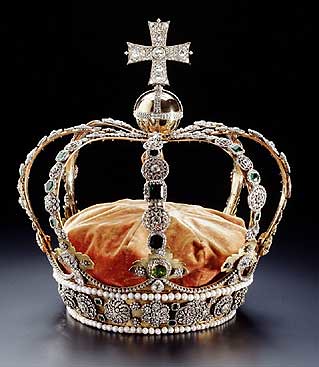

 Posts
Posts


