Inauguration = Coronation, only more frequent
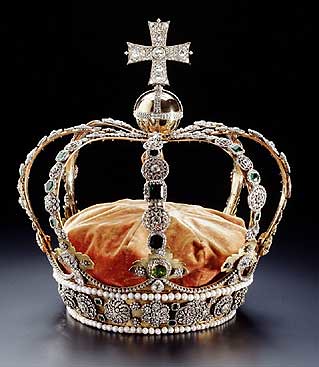
While Washington DC is buzzing with rehearsal stress, the rest of the world awaits Barack Obama’s coronation, oops, inauguration. But is there really any difference?
The pomp, with which Obama will be crowned president is nothing short of that of any 19th century Monarch. The "Potus" - President of the United States – will swear a holy oath on a 150 year old bible, watch a military parade and be honoured by a 21 gun salute. A US Marines Band will intone "Hail to the Chief". As the Queen is head of the armed forces of Australia (and Her other realms), Obama will become commander in chief of the US forces.
The Joint Committee on Inaugural Ceremonies handed out 240,000 colour-coded tickets that give entry to areas right in front of the Capitol in Washington, where the swearing-in will take place. When the coronation of Queen Elizabeth II took place on 2 June 1953, more than twelve months after her accession, hundred of thousands of Britons and over 200,000 tourists from other countries descended upon London for the coronation.
Has anybody criticised the cost of the four-yearly US show? The Coronation of Queen Elizabeth II cost £ 3m (the equivalent of £ 60m today, based on retail price index). A government paper of that period gave an insight into the government's struggle to afford a £3 million coronation in the aftermath of the Second World War. At one point, ministers considered charging guests at Westminster Abbey 16 shillings a head for the food. Churchill later dismissed the idea as "shabby".
Records reveal Queen's 'cut-price' Coronation
The Queen’s Coronation was in danger of becoming a cut-price affair in which the government even briefly considered charging VIP guests for their coronation lunch, according to records just released.
But seats in spectator stands were put up for sale, at a cost of £4-6 each, in order to cover the costs of erecting them. The cost-cutting plans were discussed as the Conservatives, who took over austere Britain at the end of October 1951, immediately faced a financial crisis, struggling to keep even a basic programme going to pay for food imports, housing and defence, the notebooks reveal.
The crowning of the monarch on June 2nd, 1953 attracted an estimated viewing audience of 20 million and gave the new TV networks a most welcome boost, wrote the SundayHerald.
Unlike in political campaigns, there are no legal restrictions in the USA on the amount that one can contribute to an inaugural celebration. The 2005 inauguration saw numerous corporations contribute $250,000 to George W. Bush's second inauguration, which cost more than an estimated $40 million, while Obama's inauguration is expected to cost $40 million from Obama's Presidential Inaugural Committee and "near $50 million" from the city. Barack Obama's inauguration committee set a $50,000 contribution limit to underscore their "commitment to change business as usual in Washington." As of January 6th, 2009, the committee had raised over $27 million and at least 378 gave the maximum $50,000. Although the committee is not accepting donations from PACs (political action committees), federally registered lobbyists, or corporations, they are accepting donations from individuals with active lobbying interest such as Google and Microsoft executives such as Eric Schmidt and Steve Ballmer.
People, who complain about the cost in a Monarchy, never take into consideration that the Monarchy of the United Kingdom had one coronation in 56 years, while the USA have their inauguration every four years. Multiply this year's cost by 14 and you see how much cheaper the Monarchy effectively is.
Showing posts with label Bush. Show all posts
Showing posts with label Bush. Show all posts
Tuesday, 13 January 2009


Saturday, 21 June 2008
May Australia never end up like the USA
Is that what lies ahead of Australia should republicans have their way?
Harper's Magazine:
... one could argue that the American democratic experiment was at least in part an attempt to challenge this “reality,” to establish a political and legal culture from which would emerge, organically, a new sensibility: independent, unburdened by the protocols of class, skeptical of inherited truths. Willing to be disobedient. To moon the lord.
Alas, if that was the plan, it went sideways a long time ago. In today’s America, the majority is nothing if not impressed by power and fame (its legitimacy is irrelevant), nothing if not obedient. As for mooning the lord, the ass to the glass these days is more likely to be the lord’s, and our own posture toward it, well, something short of heroic. Worse yet, should someone decide to take offense, and suggest that it is not the lord’s place to act thusly, he will be set upon by the puckering multitude who will punish him for his impertinence.
At a White House reception a couple of years ago, President George Bush asked Senator-elect Jim Webb how things were going for his son, a Marine serving in Iraq. “I’d like to get them out of Iraq, Mr. President,” Webb replied. “I didn’t ask you that,” the president shot back. “I asked you how your boy was doing.” ...
... Democracy, of course, is not an absolute but a relative value: “We’re not perfect,” the cry will sound, “but show us who is!” I’ll take a pass on perfection, but I’ll say this: when it comes to the egalitarian attitude democracy presupposes, the Brits, for all their wigged getups and parliamentary histrionics, have it all over us. It’s not just the formal, procedural differences between the two political cultures (the mandated brevity of the British election season, or the government’s strictures on how much money a candidate can spend) that cast us in a sad and diminished light; it’s the difference in spirit that lies behind, and informs, these distinctions.
In general, the Brits act as though the government is their business and they have every right to meddle in it. Americans, by and large, display no such self-assurance. To the contrary, we seem to believe, deep in our hearts, that the business of government is beyond our provenance. What accounts for the difference? My wife, whose family hails in part from England, has a theory: unlike us, the Brits don’t confuse their royalty with their civil servants, because they have both, clearly labeled. Acknowledging the universal desire to defer, they channel that desire, wisely, into the place where it can do the least harm, a kind of political sump. Americans, on the other hand, lacking the royal catch basin, are squeezed between pretense and practice. Though we continue to pay lip service to the myth of the independent American, we understand it as a fiction—nice for a Friday night with a pint of Ben & Jerry’s but about as relevant to today’s world as a butter churn. ...
Is that what lies ahead of Australia should republicans have their way?
Harper's Magazine:
... one could argue that the American democratic experiment was at least in part an attempt to challenge this “reality,” to establish a political and legal culture from which would emerge, organically, a new sensibility: independent, unburdened by the protocols of class, skeptical of inherited truths. Willing to be disobedient. To moon the lord.
Alas, if that was the plan, it went sideways a long time ago. In today’s America, the majority is nothing if not impressed by power and fame (its legitimacy is irrelevant), nothing if not obedient. As for mooning the lord, the ass to the glass these days is more likely to be the lord’s, and our own posture toward it, well, something short of heroic. Worse yet, should someone decide to take offense, and suggest that it is not the lord’s place to act thusly, he will be set upon by the puckering multitude who will punish him for his impertinence.
At a White House reception a couple of years ago, President George Bush asked Senator-elect Jim Webb how things were going for his son, a Marine serving in Iraq. “I’d like to get them out of Iraq, Mr. President,” Webb replied. “I didn’t ask you that,” the president shot back. “I asked you how your boy was doing.” ...
... Democracy, of course, is not an absolute but a relative value: “We’re not perfect,” the cry will sound, “but show us who is!” I’ll take a pass on perfection, but I’ll say this: when it comes to the egalitarian attitude democracy presupposes, the Brits, for all their wigged getups and parliamentary histrionics, have it all over us. It’s not just the formal, procedural differences between the two political cultures (the mandated brevity of the British election season, or the government’s strictures on how much money a candidate can spend) that cast us in a sad and diminished light; it’s the difference in spirit that lies behind, and informs, these distinctions.
In general, the Brits act as though the government is their business and they have every right to meddle in it. Americans, by and large, display no such self-assurance. To the contrary, we seem to believe, deep in our hearts, that the business of government is beyond our provenance. What accounts for the difference? My wife, whose family hails in part from England, has a theory: unlike us, the Brits don’t confuse their royalty with their civil servants, because they have both, clearly labeled. Acknowledging the universal desire to defer, they channel that desire, wisely, into the place where it can do the least harm, a kind of political sump. Americans, on the other hand, lacking the royal catch basin, are squeezed between pretense and practice. Though we continue to pay lip service to the myth of the independent American, we understand it as a fiction—nice for a Friday night with a pint of Ben & Jerry’s but about as relevant to today’s world as a butter churn. ...
Thursday, 12 June 2008
Can Australia afford an Emperor’s visit?
While visiting Japan Prime Minister Kevin Rudd and his wife had an audience with the Japanese Emperor Akihito and Empress Michiko on 11th June. According to a newspaper report "Rudd invited the Emperor and the Empress to visit Australia … and extended the invitation also to the Heir to the throne, Crown Prince Naruhito, and Crown Princess Masako.” Not a single journalist seems to have noticed that Prime Minister Rudd was not entitled to invite the Japanese Emperor. It is most likely that he handed over the invitation of the Queen of Australia's representative, the Governor-General, since a head of state can only be invited by another head of state, not by the head of government. Kevin Rudd seems to follow the bad example of his predecessor, John Howard, who continuously sidelined the Governor-General.
One can only hope that the Prime Minister had consulted his republican backbenchers before inviting the royal guests, since recent visits by members of Royal Families were not welcomed by Labor MPs. Take Labor MP Daryl Melham as an example: "I don't begrudge looking after people, but what the royals cost is a bit over the top," he said in September 2006, after a report had revealed that the Queen’s and the Duke of Edinburgh six day stay in Australia had cost “just under $1.5 million”. $662,678 was spent on travel expenses, $81,800 on accommodation, $61,460 on security and a whopping $644,300 for "other expenses'', including entertainment. The same report put George Bush’s brief stay in Sydney as a comparison at $186,000.
Of course the comparison was not done by giving the real figures. A 24 hour stay of George Bush and his entourage in Germany that same year had cost € 20 million or ($ 28 million) and Australia could host the US president at the cheap rate of $186,000? 12,000 policemen shielded him away from the German public. Were there none in Sydney? It seems, no security bill was put up, and certainly no compensation was paid to shop owners who had to close their business for security reasons. Sydney Airport must have forgotten to hand in the bill for the landing strip that was damaged by the president’s Air Force One plane.
The three day visit of the Swedish King and Queen cost double the one day trip of the Chinese dictator-president Hu Jintao to Australia. Not unreasonable, it seems. But republicans cried foul.
Who’s to blame? The Royals, of course, if you follow the critics. The anti-Monarchy reflex makes you wonder if Australian republicans want to avoid any visit of Monarchs and heirs to the throne at all because they fear this might encourage the monarchist sentiment in Australia. “Only a republican visitor is a welcome visitor”, could be the motto.
However, Emperor Akihito and Empress Michiko, Crown Prince Naruhito and Crown Princess Masako will be most welcome in Australia and for once the thrifty republicans should forget their ideological blindness and give the Imperial guests a hearty welcome, if only as a symbol of the long term reconciliation between Austalia and Japan.
Republicans should spare their angry red faces for the time when the Queen of Australia or another member of the Australian Royal Family will be on our soil.
While visiting Japan Prime Minister Kevin Rudd and his wife had an audience with the Japanese Emperor Akihito and Empress Michiko on 11th June. According to a newspaper report "Rudd invited the Emperor and the Empress to visit Australia … and extended the invitation also to the Heir to the throne, Crown Prince Naruhito, and Crown Princess Masako.” Not a single journalist seems to have noticed that Prime Minister Rudd was not entitled to invite the Japanese Emperor. It is most likely that he handed over the invitation of the Queen of Australia's representative, the Governor-General, since a head of state can only be invited by another head of state, not by the head of government. Kevin Rudd seems to follow the bad example of his predecessor, John Howard, who continuously sidelined the Governor-General.
One can only hope that the Prime Minister had consulted his republican backbenchers before inviting the royal guests, since recent visits by members of Royal Families were not welcomed by Labor MPs. Take Labor MP Daryl Melham as an example: "I don't begrudge looking after people, but what the royals cost is a bit over the top," he said in September 2006, after a report had revealed that the Queen’s and the Duke of Edinburgh six day stay in Australia had cost “just under $1.5 million”. $662,678 was spent on travel expenses, $81,800 on accommodation, $61,460 on security and a whopping $644,300 for "other expenses'', including entertainment. The same report put George Bush’s brief stay in Sydney as a comparison at $186,000.
Of course the comparison was not done by giving the real figures. A 24 hour stay of George Bush and his entourage in Germany that same year had cost € 20 million or ($ 28 million) and Australia could host the US president at the cheap rate of $186,000? 12,000 policemen shielded him away from the German public. Were there none in Sydney? It seems, no security bill was put up, and certainly no compensation was paid to shop owners who had to close their business for security reasons. Sydney Airport must have forgotten to hand in the bill for the landing strip that was damaged by the president’s Air Force One plane.
The three day visit of the Swedish King and Queen cost double the one day trip of the Chinese dictator-president Hu Jintao to Australia. Not unreasonable, it seems. But republicans cried foul.
Who’s to blame? The Royals, of course, if you follow the critics. The anti-Monarchy reflex makes you wonder if Australian republicans want to avoid any visit of Monarchs and heirs to the throne at all because they fear this might encourage the monarchist sentiment in Australia. “Only a republican visitor is a welcome visitor”, could be the motto.
However, Emperor Akihito and Empress Michiko, Crown Prince Naruhito and Crown Princess Masako will be most welcome in Australia and for once the thrifty republicans should forget their ideological blindness and give the Imperial guests a hearty welcome, if only as a symbol of the long term reconciliation between Austalia and Japan.
Republicans should spare their angry red faces for the time when the Queen of Australia or another member of the Australian Royal Family will be on our soil.
Subscribe to:
Posts (Atom)

 Posts
Posts


